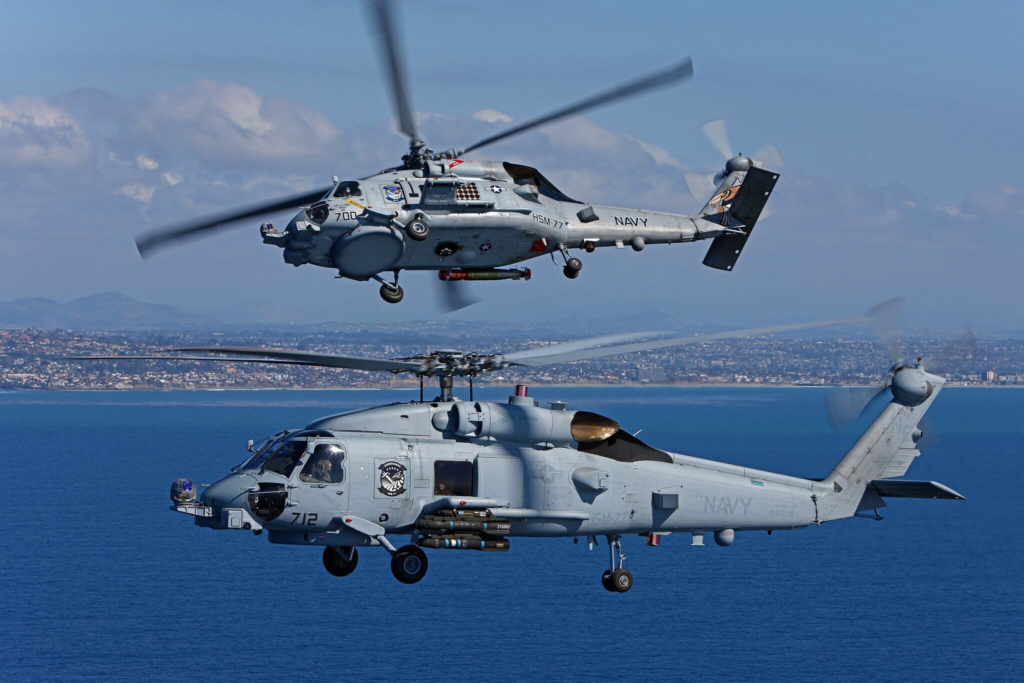
The rapid development of air and sea power has fundamentally reshaped the character of warfare, expanding the battlefield across vast domains and compressing decision-making timelines. Modern air forces deliver decisive reach, precision, and persistent surveillance, enabling commanders to strike deep, disrupt enemy cohesion, and dominate the information battlespace. At sea, enhanced blue-water capabilities, carrier aviation, submarines, and networked fleets now secure global trade arteries while projecting power far beyond national shores. Together, these domains create layered deterrence and joint operational synergy, where control of the skies and seas becomes essential not only for maneuver and logistics, but also for shaping the strategic environment before conflict even begins. In contemporary military thinking, supremacy in air and maritime spheres is no longer an advantage—it is the foundation for tactical freedom, strategic depth, and credible combat power.
CHARACTERISTICS OF AIR POWER
Air power possesses specific characteristics that are quite distinct from those of land power and sea power. These characteristics fall essentially into three categories:
- Positive characteristics or strengths; these can be divided into primary and secondary strengths.
- Negative characteristics or limitations.
- Conditional characteristics, which can be either strengths or limitations depending on the nature of the existing conditions.
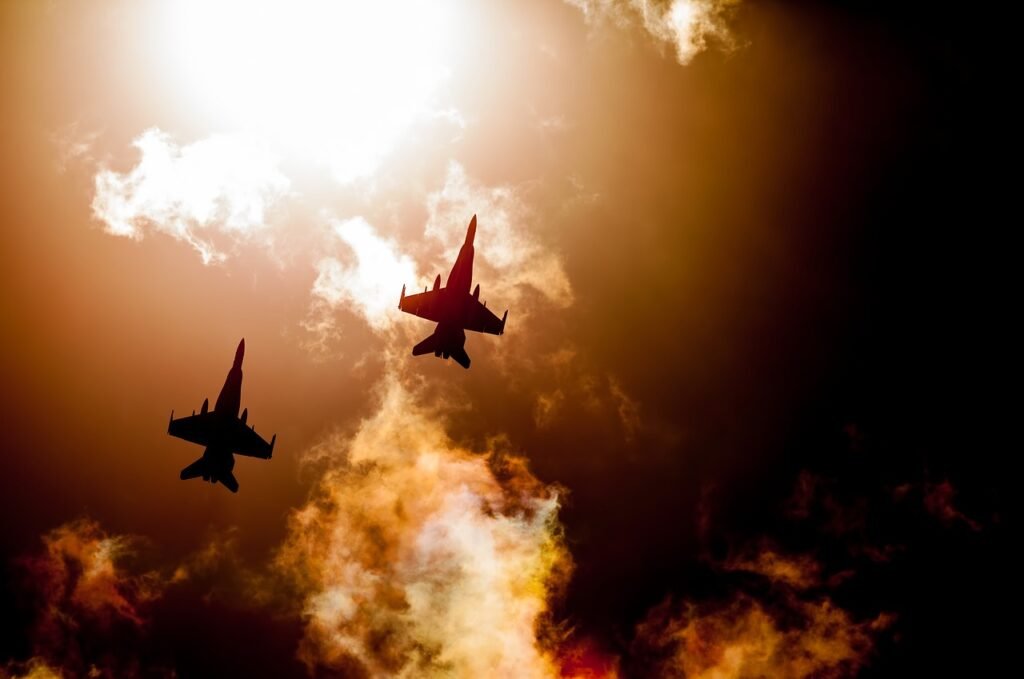
Primary Strengths.
Air power has the unique ability to exploit the third dimension above the surface of the earth. As a result, air vehicles are far faster and have greater reach than naval ships or land vehicles. Thus, height, speed and reach are the primary strengths of air power:-
- Height. The ability of aircraft to operate over a spectrum of heights gives them not only speed and reach, but also the ability to observe and dominate activities on the surface and below the sea.
- Speed. At the tactical level, the speed of aircraft reduces the time they are exposed to hostile fire and thus can help to increase their survivability in battle. At the higher levels of war, it allows military power to be projected more rapidly, missions to be completed in shorter times and a greater number of tasks to be undertaken within a given period. At all levels of war, speed facilitates surprise.
- Reach. Aircraft can reach out to project military power over great distances in any direction, unimpeded by surface features such as mountain barriers or water expanses. Seventy per cent of the world is covered by water, thirty per cent by land and one hundred per cent by air. Thus, air power possesses unrivaled reach.
Secondary Strengths.
The primary air power characteristics of height, speed and reach act together synergistically to produce additional strengths:
- Flexibility. The height, speed and reach of air power allow aircraft to perform a wide variety of actions, produce a wide range of effects and be adapted with comparative ease to meet changing circumstances and situations. As a result air power is uniquely flexible.
- Ubiquity. Within a given level of resources, airpower thanks to its height, speed and reach can counter or pose simultaneous threats across a far wider geographical area than is possible with surface systems.
- Responsiveness. Speed and reach make air power uniquely responsive. It can be deployed rapidly into distant theaters to provide visible and timely support for an ally or to act as a deterrent to aggression. For closer threats, it can be used to project military power rapidly, direct from its peacetime bases. The responsiveness of air power is as important in crisis management as it is in conflict.
- Concentration. Speed, reach and flexibility allow airpower to concentrate military force in time and space, whenever and wherever required.
Limitations.
Air power has inherent limitations, namely impermanence, limited payloads and fragility:-
a. Impermanence. Aircraft cannot stay airborne indefinitely. Although air‑to‑air refueling can greatly extend the range and endurance of aircraft, no means have yet been found to re‑arm, re‑crew or service an aircraft in flight. Therefore, air power is an impermanent form of military force; the effects it creates tend to be transient, and to sustain those effects, operations have to be repeated. In certain circumstances, the impermanence of air power can be an advantage. It can help to avoid the potential military and political liabilities, which can arise from an extended presence in a distant land.
b. Limited Payloads. The payloads that can be carried by aircraft are far more limited than those that can be carried by ships or by land vehicles. Thus, aircraft are most cost effective when they are used for tasks, which give high value pay‑offs. This applies equally to combat and combat support tasks, such as, transportation in terms of volume/ weight but not by technology that provides lot of variety. While relatively small payloads are a disadvantage, they can in part be compensated for by the high sortie rate conferred by an aircraft’s speed. Moreover, a small payload deployed quickly may be of far more value in stabilizing a critical situation than one many times in size which is deployed later.
c. Fragility. Air vehicles are far more fragile than surface vehicles. As a result damage to key components can have a catastrophic effect.
d. Cost. High technology equipment inevitably costs more than simple equipment. Military aircraft tend to be at the cutting edge of technology and can therefore be costly. Similarly, air-crew training can also be very expensive. Less capable aircraft can be purchased cheaper but will have limited performance. For certain tasks, a highly capable aircraft is essential, but for others a far less costly solution may suffice. Similarly, training costs are closely related to the complexity of the aircraft that the aircrew is required to fly. In every case, cost per se must be balanced against cost effectiveness.
e. Dependency on Bases. All forms of modern military power depend on base support. Armies in the field need depots to support them and navies need harbor facilities. However, air power is often seen to be more obviously dependent on its bases than is either land power or sea power. Helicopters and some fixed wing aircraft can take off and land vertically, but most aircraft need runways. And all aircraft need a high level of base support if they are to operate at their maximum sortie rate. If this base support is vulnerable to attack, then base dependency can be a source of potential weakness.
f. Sensitivity to Technology. Air power tends to be more sensitive to technological change than sea power or land power. Air power is a product of technology, and technological advances inevitably affect air power development. Experience has shown that even relatively small technological innovations can have a major impact on air power effectiveness. The offensive capabilities of air power could be inhibited by, say, advances in surface‑to‑air defense technology. But equally, they could be enhanced enormously by developments in “low observable” technology (that is “stealth”). The nature of the balance will always depend on the overall direction and rate of technological development.
APPLICATIONS OF AIR POWER
Peacetime Applications.
Because air power has distinct and specific characteristics, it also has distinct and specific applications, in peace and in war. In peace, air power can be a major stabilizing force because it can be used to perform the following functions:-
a. To Deter Aggression. The ability of air power to generate and project combat power rapidly, and to pose a ubiquitous counter threat, imposes a considerable deterrent effect on a potential aggressor. It makes the opponent potentially vulnerable to rapid retribution, and denies enemy the assurance that his own country can be kept safe from attack. The rapid deployment of powerful air forces to the Gulf in the 1990 Gulf Crisis provided a deterrent to Iraqi aggression against Saudi Arabia.
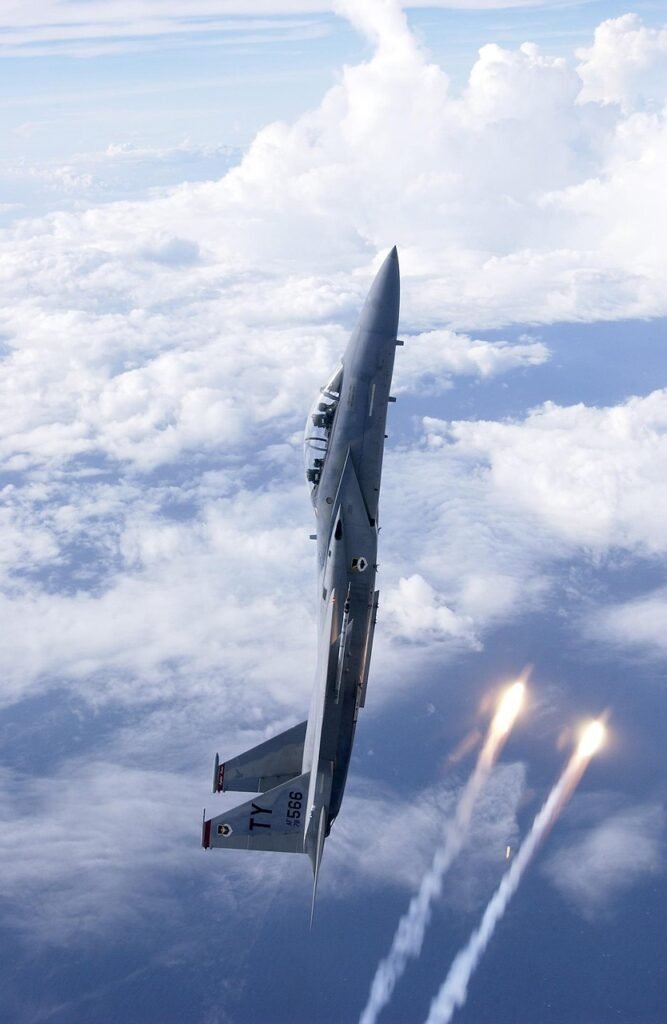
b. To Support. The ability of air power to deploy rapidly to distant lands allows a nation to provide moral and physical support to allies and friendly powers around the world, strengthening their resolve in crisis situations and thus enhancing international stability. The deployment by air of the multinational force to Saudi Arabia after the Iraqi invasion of Kuwait was again an example of this.
c. To Sustain Life. The ubiquity of air power allows large groups of people to be supplied with the necessities of life when surface transportation cannot be used. Large-scale examples include the Berlin Airlift of 1948-49 and the Ethiopian Famine relief operation of 1984-85. Small-scale examples include flood relief and search and rescue operations. Own earthquake experience is worth quoting in this regards.
d. To Observe and/ or Verify. The elevation unique to air power can be used to monitor the activities of potential aggressors, thus providing warning of impending attack or increased assurance of peaceful intentions. Moreover, it can be used for mapping, survey, mineral exploration as well. In 1962 the detection by aerospace systems of Soviet ballistic missile sites in Cuba allowed timely action to be taken to ensure the removal of this potential threat. Three decades later, the ubiquity of aircraft makes them ideal instruments to monitor confidence-building measures and verify arms control agreements.
Wartime Applications.
In wartime, air power has major applications in prosecuting the chosen overall military strategy. It can be used largely independently of land and sea power as well as in joint operations. It has the following purposes:-
a. To Respond to Escalation. The ability of air power to reach deep into enemy territory at any time and deliver nuclear or conventional weapons against the full spectrum of target sets allows air power to be used to respond to escalation during a conflict. An aggressor has to face the possibility that if he escalates the scale or scope of the conflict, the victim may intensify his air action and extend his counter attacks to a wider range of targets. For example, in 1972 when the North Vietnamese stalled the peace negotiations and escalated their aggression against South Vietnam, the United States responded by extending its bombing attacks to Hanoi and Haiphong , thus checking the North Vietnamese aggression and forcing them to rejoin the peace negotiations. In response to “cold start doctrine”, air force will be the first responder.
b. To Deny. Air power can be used to deny an enemy the ability to employ his air, surface and sub-surface forces effectively. The most prominent example of an air-to-air denial battle is the Battle of Britain, where air forces were the only practicable means of protecting the United Kingdom from attack. An example of an air-to-surface denial battle is the Golan Heights battle in the 1973 Yom Kippur War. In that case, the Israelis had to use air power contain the Syrian army’s offensive until the Israeli ground forces were deployed in sufficient strength.
c. To Destroy. Air power’s speed and reach, and its flexibility, allow unparalleled scope for concentrating fire-power in time and space, when and where it is required. Therefore, it has considerable potential to inflict physical destruction on all types of enemy forces including delivery of strategic/ nuclear weapons. Notable examples on land the German 5th Panzer and 7th Armies in the Falaise Gap in 1944 and the North Vietnamese forces attacking an LOC in 1972. At sea the Battles of the Coral Sea and Midway in 1942 can be quoted. The advent of precision guided munitions, with greatly increased accuracy, has tremendously increased the destructive potential of air power, particularly against surface targets. Iraq’s total destruction in 2003 is a display of brute use of air force.
d. To Dislocate. Equal importance, to air power’s ability to destroy, is its ability to disrupt and dislocate. Even if an aircraft fails to destroy its target, the impact on morale of a near miss or of collateral damage may still cause the enemy major mental, moral and physical dislocation. Dislocation causes delay and confusion, and it breaks up unit cohesion. It also makes the enemy far more vulnerable to follow up attacks by our forces. For example, in June 1944 the German Panzer Division, subjected to continuous air interdiction during its deployment from Le Mans failed to contain the Allied D Day landings. The attrition sustained by Panzer Division during this journey was significant (about 10% or 220 vehicles), but more importantly unit cohesion was lost and the division arrived on the battlefield in “penny packets”.
e. To Divert. Air power can be used to divert enemy forces in order to delay or destroy them. At the military strategic and operational levels of war, diversion can be achieved by concentrating attacks against sensitive targets, compelling an enemy to divert forces and resources from offensive into defensive duties. For example, the Allied Strategic Bombing Offensive forced the Germans to divert 10,000 artillery pieces, badly needed by their land forces, into their anti‑aircraft artillery force. As early as 1942, anti‑aircraft artillery took 25%‑30% of the value of Germany’s total weapon production. At the tactical level, air power can achieve diversion by selectively attacking choke points such as bridges etc. This can either delay the arrival of enemy land forces or channel their movement into areas where they can more easily be contained or destroyed.
f. To Delay. Air power can also delay an enemy, through the effects of dislocation, destruction or diversion. In defensive situation, imposing delay allows friendly forces to deal more effectively with an enemy attack, either by strengthening defenses or by launching spoiling attacks. In offensive situations it allows friendly forces to prevent the enemy’s escape. For example, in June 1944 two German Panzer Divisions were transferred from the eastern front to help contain the D Day landings. It took them only five days to cover the 1,000 miles to Nancy in eastern France. But because of air interdiction attacks it took them a further nine days to travel the remaining two hundred miles to Normandy.
g. To Observe. Knowing the enemy’s intentions and dispositions is fundamental to correct planning and successful execution in war. Air power’s unique ability to exploit the third dimension allows it to make a major contribution to monitoring enemy activities and deployment and thus discerning his intentions. The importance of exploiting the third dimension for observation has long been recognised. The use of air reconnaissance in the Cuban missile crisis underlined the key role that air power can play in observation.
ROLES OF AIR POWER – COMBAT AIR OPERATIONS
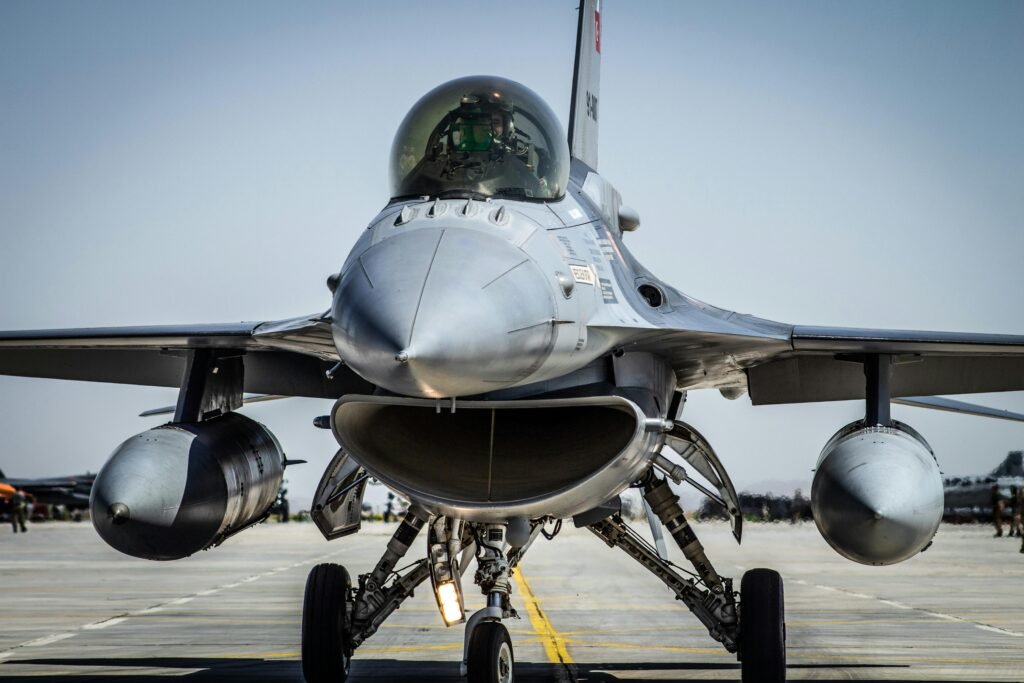
Counter Air Campaign. The strategic aim of the counter air campaign is to achieve and maintain the required degree of control of the air. Achieving friendly control of the air is both an end in itself and a means to an end. It prevents the enemy from using his air power effectively against friendly forces, rear areas and homelands, while allowing own use of air power against him. Control of the air is achieved by deterring, containing or defeating the enemy air forces. There are three basic degrees of control of the air:-
- Favorable Air Situation. A favorable air situation is one in which the extent of air effort applied by the enemy air forces is insufficient to prejudice the success of friendly land, sea or air operations.
- Air Superiority. Air superiority is defined as that degree of dominance in the air battle of a force over another which permits the conduct of operations by the former and its related land, sea and air forces at a given time and place without prohibitive interference by the opposing force.
- Air Supremacy. Air supremacy is defined as that degree of air superiority wherein the opposing air force is incapable of effective interference.
Offensive Counter ‑ Air Operations. Offensive counter ‑ air operations are mounted to destroy, disrupt or limit enemy air power as close to its source as practicable. The following spectrum of offensive roles may be employed in offensive counter air operations:-
- Airfield Attacks.
- Fighter Sweep.
- Escort.
- Suppression of Enemy Air Defenses (SEAD).
Defensive Counter Air Operations. Defensive counter air (or Air Defense) operations comprise all measures and means designed to nullify or reduce the effectiveness of hostile air action. Establishing the correct aim is fundamental to the success of defensive counter air operations. Essentially, there are two choices:-
- To minimize the damage of hostile air action.
- To inflict maximum attrition on the enemy.
Active Air Defense System. Although the aim will shape the relative allocation of the resources between active and passive defense systems, this will be a question of emphasis rather than of alternatives. In all cases, an active air defense system will be needed even though its scale may vary. An active air defense system consists of three basic and closely integrated components, which are:-
- A detection system to track the enemy and direct own aircraft for interception.
- Interceptor aircraft or SAMs to destroy attacking enemy aircraft.
- A C3I system to link all components and make best use of available resources.
Passive Air Defense System. Passive air defenses are defined as all measures, other than active air defense, taken to minimize the effect of hostile air action. These measures include deception, dispersion, camouflage and protective construction.
TYPES OF SURFACE AIR OPERATIONS AND COMBAT SUPPORT OPERATIONS
Anti-Surface Force Campaign
The strategic aim of anti-surface force campaign is to deprive the enemy of the military power that he needs to occupy territory or exploit sea-space for deployment. Anti-surface force action involves the use of air power, in co‑operation with friendly surface and sub‑surface forces to deter, contain or defeat the enemy’s army and/ or navy. The ability to prosecute the anti-surface force campaign effectively will depend heavily on the success of the counter air campaign and invariably these two will be closely integrated. The anti-surface force campaign is a truly joint campaign. The different force elements operate together synergistically, offering each other mutual support to achieve objectives. The dominant force element will vary from situation to situation, determined mainly by the operational conditions. These are discussed as follows.
Land‑Air Operations
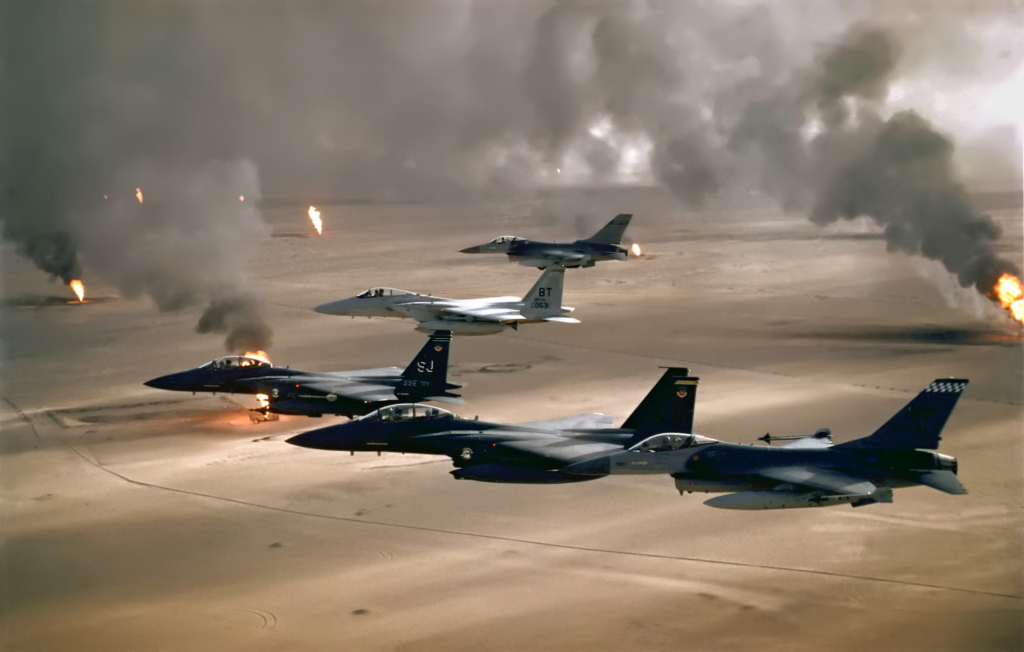
Air Interdiction. Air interdiction is conducted to destroy, disrupt neutralize or delay the enemy’s military potential before it can be brought to bear effectively against friendly forces. Air interdiction missions are conducted beyond the range of army delivered weapons, and thus do not require detailed integration with the fire and movement of friendly forces. Air interdiction is the best means of exploiting the reach of air power against enemy land forces. The capacity of air interdiction for disruption, diversion and, particularly, delay can produce decisive effects.
Battlefield Air Interdiction (BAI). BAI is defined as air action against hostile land targets which are in a position to directly affect friendly forces and which require joint planning and co‑ordination. The basic difference between BAI and CS lies in the proximity of targets to friendly forces and the control arrangements which are therefore needed. BAI attacks are conducted to delay, destroy or neutralize enemy forces which are in the battle area but not yet engaged by friendly land forces. They may be used to isolate the enemy forces in the battle zone from his reinforcements and supply and to restrict his freedom of maneuver. BAI missions are planned against targets in the area well beyond Forward Line of Own Troops (FLOT).
Close Support (CS). CS is defined as air action against hostile targets, which are in close proximity to friendly forces and which require detailed integration of each air mission with the fire and movement of those forces. The firepower and mobility of aircraft can make an immediate and direct contribution to the land battle, especially against targets which are either inaccessible or invulnerable to surface weapons. CS can supplement surface weapons in meeting a particular threat. In offensive actions, it can be especially important as a means of supplementing surface firepower. In defensive actions, it may be the only means of providing the level of fire support necessary to counter enemy breakthroughs, counter‑attacks, assaults and surprise attacks.
Armed Reconnaissance. Armed reconnaissance is defined as air missions flown with the primary purpose of locating and attacking targets of opportunity, i.e.: enemy material, personnel and facilities in assigned general areas or along assigned ground communications routes. Essentially, it is a form of air interdiction against opportunity targets.
Tactical Air Reconnaissance. Although traditionally linked to other land/ air roles, tactical air reconnaissance is not a combat role but is more properly considered as an element of combat support operations.
Maritime Air Operations
In maritime air operations, air forces work in close cooperation with naval forces to ensure the most effective use of available air assets. To this end, command and control is invariably exercised from a joint headquarters using common procedures to ensure proper co‑ordination of operations. Maritime air power roles may be performed unilaterally or in coordination with friendly surface and sub‑surface units. Joint operations help to exploit the natural synergies between air and naval forces. Because of their far greater speed and reach, air forces may also have to carry out unilateral actions. The combat roles specific to maritime air operations are discussed here:-
Anti‑Submarine Warfare. The aim of anti‑submarine warfare is to deny the enemy effective use of its submarines. This may be done initially by surveillance, overtly or covertly, then by deterring the submariner by making him aware of the aircraft’s presence and as a result limiting his freedom of action. Alternatively, the situation may demand that the submarine be destroyed. Detection, location and tracking may be done either covertly or overtly, using fixed wing maritime patrol aircraft or helicopters. These aircraft can either work independently or in co‑operation with friendly submarines, surface ships or other aircraft. Any or all of these assets may be used subsequently to destroy the submarine.
Anti-Surface Vessel Warfare. The aim of anti‑surface vessel warfare by aircraft is to deny the effective employment of enemy naval surface forces by engaging them at long range from friendly naval surface forces. Aircraft may also be employed in response to a short notice request by the sea commander to counter short-range enemy surface threats, or for operations close to shore to counter enemy amphibious forces. Essentially, anti-surface vessel warfare tasks are carried out in three phases: detection, identification, and attack. Maritime patrol aircraft or helicopters may be tasked to search, locate and identify enemy surface forces by overt or covert means.
Combat Support Air Operations
Combat support air operations are designed to enhance or support the effectiveness of air, surface and subsurface combat forces. Combat support air operations fall into the following major categories:-
a. Air Transport Operations; involve the movement by air of personnel and cargo within and between theatres of operation. Air transport operations can be conducted in support of all types of sea, land and air forces.
b. Air‑to‑Air Refueling Operations; involve the transfer of fuel from one aircraft to another in flight.
c. Tactical Air Reconnaissance provide the collection of information, from airborne on the activities, forces and resources of an enemy or potential enemy.
d. Airborne Early Warning (AEW)/ Airborne Warning and Control System (AWACS), defined as air surveillance and control provided by airborne vehicles equipped with search and height finding radar and communications equipment for controlling weapon systems.
e. Search and Rescue Operations involve the use of aircraft (usually helicopters) to locate and rescue personnel in distress and, in particular, to recover aircrew who have abandoned their aircraft.
f. Electronic Warfare Operations involves the military use of electronics to determine, exploit, reduce or prevent hostile use of the electromagnetic spectrum, and actions taken to ensure its effective use by friendly forces.
Some of the roles played by air force in LIC/ MOOTW are mentioned below, while US and UK Air Forces has also conducted most of these missions:-
a. To disperse the enemy, who is trying to fight for a position.
b. To dilute resistance an enemy weapon positions.
c. To protect coalition convoys through close air support missions.
d. To deter through show of force to prevent enemy combatants from their activities.
e. To observe through armed recce missions to support operations by providing surveillance.
f. To Support by employing airlift support.
g. Targeted attacks against individuals, vehicles, logistic setups.
ROLES AND CHARACTERISTICS OF NAVY
Roles of Naval Services
The maritime nations have many interests, global economic interdependence, for which they rely on the oceans to serve as both a defensive barrier and a highway to commerce abroad. Therefore, ensuring that the world’s sea-lanes (commonly known as SLOCs) remain open is not only vital to one’s own economic survival; it is a global necessity.
a. The strategic offensive role of a navy is projection of force into areas beyond a country’s shores (for example, to protect sea-lanes, ferry troops, or attack other navies, ports, or shore installations).
b. The strategic defensive purpose of a navy is to frustrate seaborne projection-of-force by enemies. The strategic task of the navy also may incorporate nuclear deterrence by use of nuclear missiles.
c. Rescue missions at sea.
d. Combat piracy at sea.
e. Protect exclusive economic zone (EEZ).
The Characteristics of Naval Forces
The qualities that characterize most modern naval forces in support of national policies are readiness, flexibility, self-sustainability, and mobility.
a. Readiness. The naval forces must be available and be credible in crises to defend the interests of nation. The naval forces are consistently and readily available to defend one’s vital interests. Readiness of naval forces helps deter conflict and attain a favorable end to hostilities if conflict should occur. The strength of naval forces lies in their immediate availability to respond to contingencies through tangible readiness. Operating as part of international deployment enables Navy to maintain a situational awareness that is critical in gaining edge in any conflict.
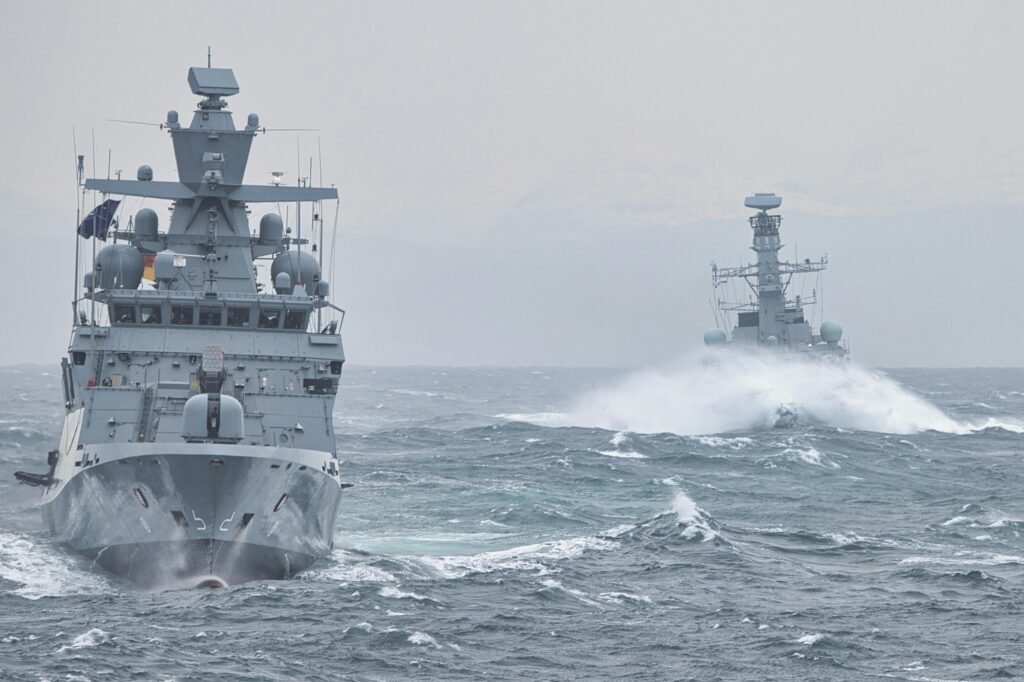
b. Flexibility. The flexibility of naval forces enables us to shift focus, reconfigure, and realign forces to handle a variety of contingencies. The Navy provides the commanders and decision makers a wide range of weapon systems and military options, supported by trained professionals equipped as a sea, air, and land team. The combination of a robust amphibious ready group integrated with a carrier task force, creates a perception and a potential for offensive action ashore without even committing such forces.
c. Self-sustainability. When a nation operates beyond its shores at the end of long supply lines without a significant land based supply structure, it needs the ability to re-supply at sea. Consequently, naval forces carry their own ammunition, spares, and consumables as well as support and repair facilities for use early in a crisis or throughout a protracted conflict. The ships are designed to travel significant distances without replenishment. They carry the striking power of aircraft, guns, and missiles that can execute operations ashore immediately, without an assembly period or a lengthy logistics buildup. If conflict should continue over an extended period, naval forces can remain on station through augmentation and re-supply by combat logistics ships.
d. Mobility. Naval forces, with their strategic and tactical mobility, have the ability to monitor a situation passively, remain on station for a sustained period, respond to a crisis rapidly, and maneuver in combat with authority. Naval forces can respond from over the horizon, becoming selectively visible and threatening to adversaries, as needed. Mobility enables naval forces to respond to indications of pending crises by relocating rapidly from one end of the theater to another or from one theater to another, independent of fixed logistics. Operational speed is part of the flexibility. Maintaining control of the seas permits to exercise mobility in positioning naval forces to meet the crisis of the moment.
FLEET IN BEING & SLOCS
Concept of Fleet in Being. In naval warfare, a fleet in being is a naval force that extends a controlling influence without ever leaving port. Were the fleet to leave port and face the enemy, it might lose in battle and no longer influence the enemy’s actions, but while it remains safely in port the enemy is forced to continually deploy forces to guard against it. A fleet in being can be part of a sea denial doctrine but not one of sea control. A fleet (force) avoids decisive action, but, because of its strength and location, causes or necessitates counter-concentrations and so reduces the number of opposing units available for operations elsewhere. Naval forces can achieve effect and influence in various ways. Should a nation to have an inferior fleet, Mahan suggested that its most useful disposition would be to secure itself with an impregnable defended port and so impose upon the enemy the duty of constant guard to prevent its escape.
Sea Lines of Communication (SLOC). This is a term describing the primary maritime routes between ports, used for trade, logistics and naval forces. It is generally used in reference to naval operations to ensure that SLOCs are open, or in times of war, to close them. Now a days international naval force is guarding the SLOCs through Arabian Sea of the coast of Somalia to protect international shipping from pirates and keep SLOCs open to sea trade.
ELEMENTS OF SEA POWER AND TYPES OF NAVAL PLATFORMS ARE USED IN NAVAL OPERATIONS
Elements of Sea Power. Sea power is composed of various elements of material and moral nature. Elements of moral nature-aptitude, character and courage are common in varying degrees to the growth of any form of nation-building activity and are not peculiar to sea power alone. The elements of material nature, which form the basis of sea-power, however, are as follows:
a. Fighting units capable of overcoming whatever resistance the enemy can offer to the desired movement of personnel and trade across the sea and of closing the sea to the enemy.
b. Positions and bases in which these fighting units can be continuously maintained and supplied as long as desired.
c. Merchant and supply ships in which personnel and trade can be carried.
COMPONENTS OF NAVAL FORCE
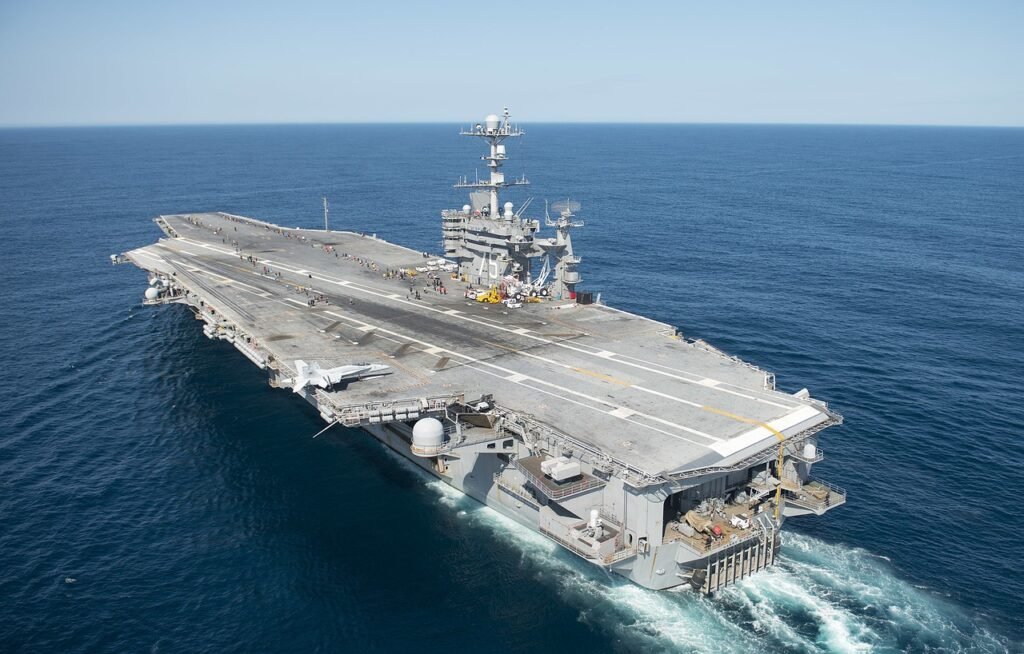
a. Aircraft Carrier. Due to its mobility, aircraft carrier provides offensive power well away from home bases due to its ship-borne aircraft, which can also intercept and destroy enemy’s attacking and reconnaissance aircraft, in-addition to long-range reconnaissance for their own fleet. Carriers have limited defensive armament but rely on their aircraft and other ships to provide protection against various types of attacks. They may displace between 20,000 and 90,000 tons, and are from 700 to 1,100 ft in length. They are easily recognized by their long flush flight deck which is used by aircraft for assembly, take off (usually by catapult) and landing. Modern carriers also have an angled flight deck which assists in take-off. Some carriers have been converted to carry commando troops. They also carry helicopters for varied tasks.
b. Cruisers. Cruisers are general purpose fighting ships, whose main function is to provide support to convoys or other task groups. They displace between 5000-20,000 tons and have an overall length between 500- 700 feet. A concept in new design of a cruiser was developed during 1960’s and 70’s which was basically to give A/S (Anti-Submarine) role to a cruiser while carrying A/S helicopters and in addition VSTOL (Vertical Short Take-off and Landing) aircraft for strike and air defense role.
c. Destroyers. Destroyers are the versatile fast small ships for providing protection to the fleet against surface, air and sub-surface attacks. These are also capable of undertaking shore bombardment and providing naval gun fire support to the land forces. Modern destroyers are fitted with missiles. Mostly their displacement is between 3000-5000 tons.
d. Frigates. General purpose destroyers, referred as frigates, are specialized ships which have bias in their design toward any one type of warfare. Their size is about the same as that of a destroyer and the displacement can vary from 2000-5000 tons.
e. Corvettes are similar to frigates but are lighter in tonnage and armament. Their displacement can vary from 450 to 1500 tons. Mainly there are three types of frigates:-
(1) The A/S frigate, whose primary function is the destruction of submarines.
(2) The A/A frigate for the protection of convoys against air threat.
(3) The Air Defense (AD) frigate for the direction of carrier-borne or shore-based aircraft.
f. Submarines. Primary role for submarines is to attack the enemy’s merchant shipping, surface warships and support ships. They usually operate independently and patrol focal areas in enemy waters. Their main armaments consist of torpedoes and may also carry missiles. Submarines can also be employed to lay mines or land frogmen in enemy waters. Submarines rely on stealth to achieve success, and emphasis in their construction is placed on quietness and endurance. S/Ms can also be employed in locating and destroying other submarines (SSK role). Nuclear powered submarines are immensely versatile; they are designed to remain deployed for longer duration and completely submerged and are capable of proceeding at high speed with unlimited endurance. Conventional submarines have limited endurance. Due to limitation imposed by the requirement of battery charging, they can remain submerged depending upon the battery endurance which could be around 10 hours. While charging batteries, the submarine has to snorkel, thereby placing it at risk of being detected by the enemy in the process.
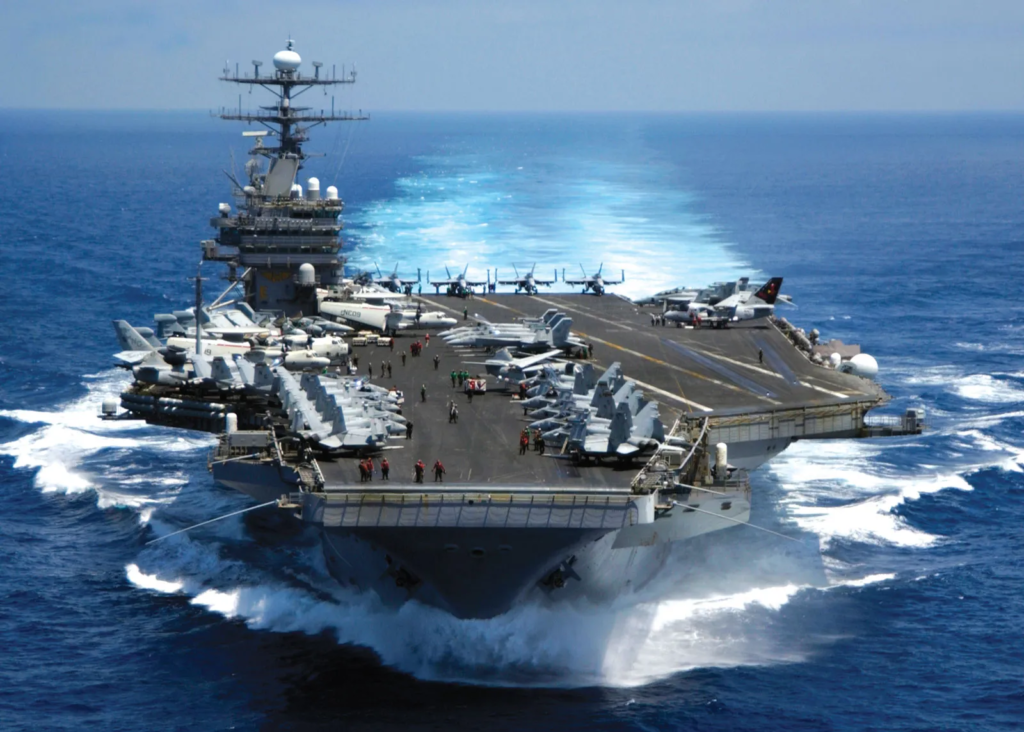
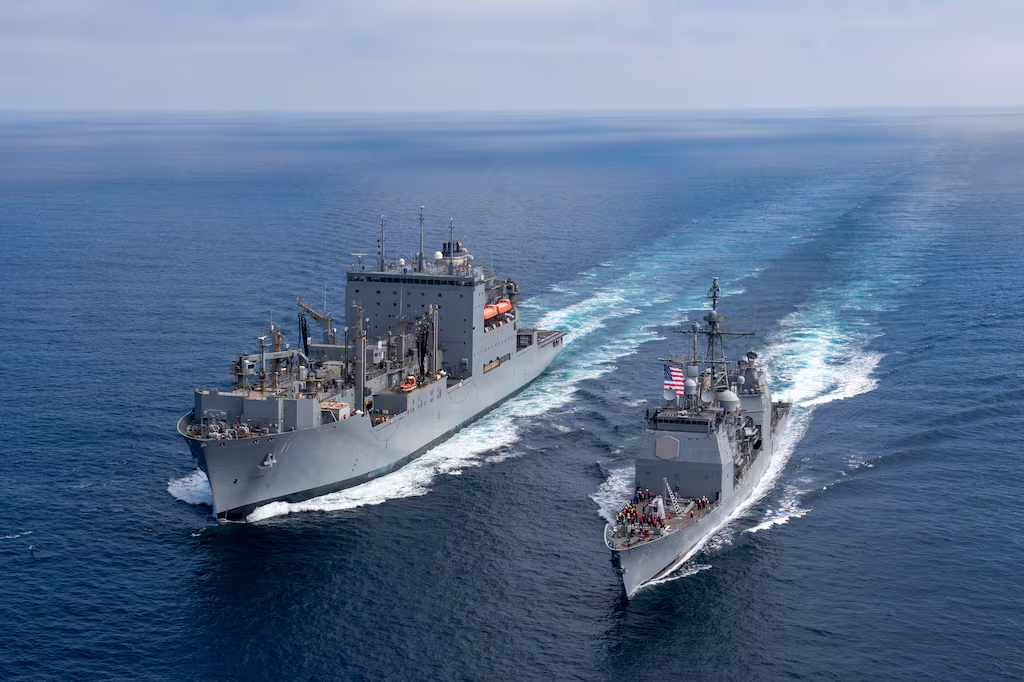
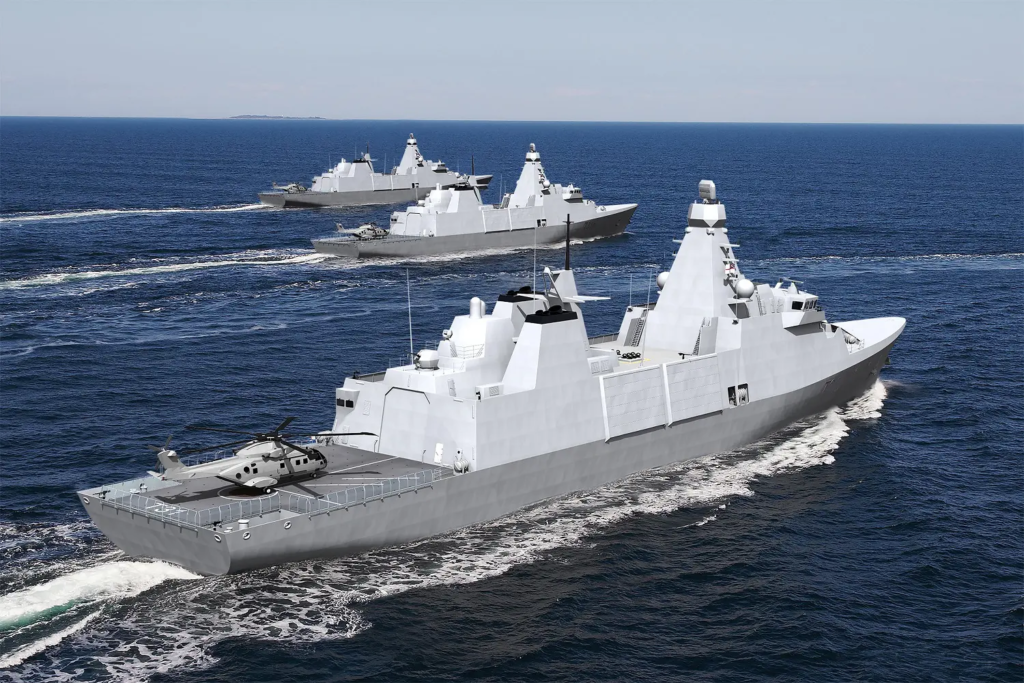
at sea...Source: Royal Navy.
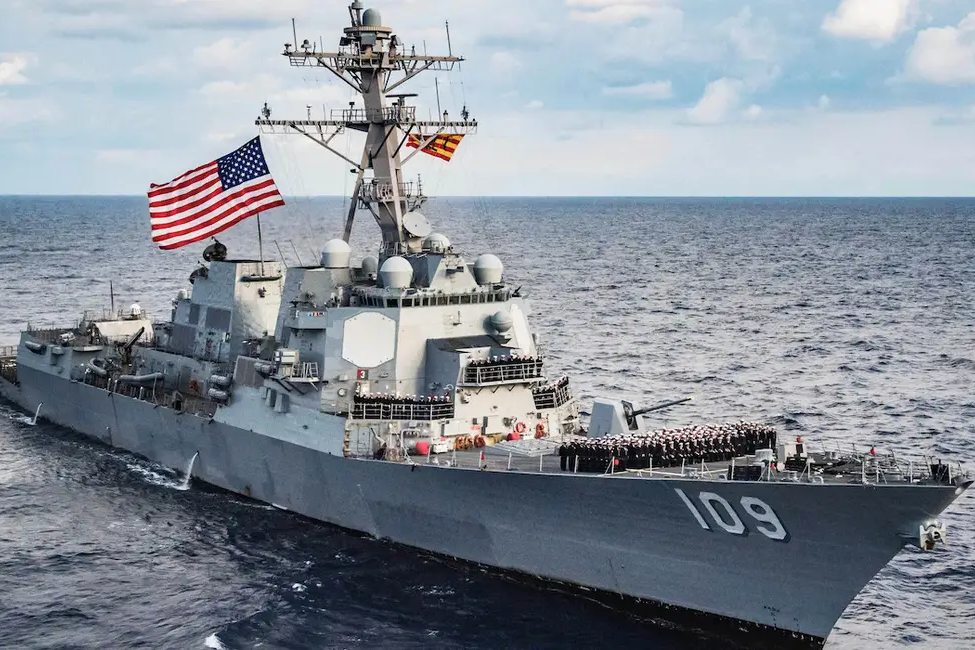
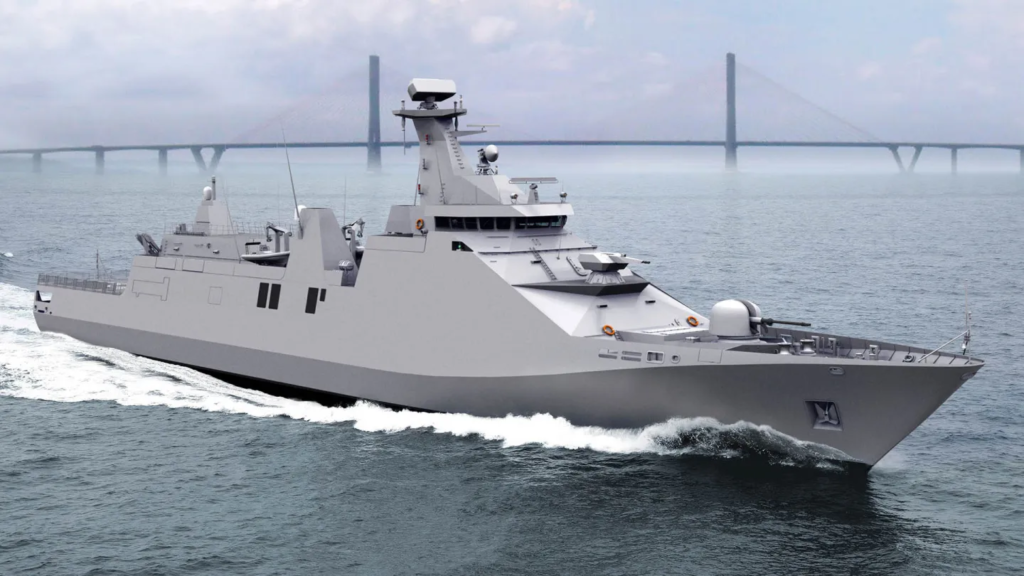
the WW2 Flower-Class (UK)
g. Mine Warfare Forces. Mine counter measure forces are employed to sweep mines. There are four types: Ocean Minesweepers, Coastal Minesweepers, Inshore Minesweepers, and Mine Hunters. In the modern concept, specially equipped helicopters are also employed to sweep mines. The tonnage of Minesweepers can vary from 40-450 tons. The present day emphasis is on mine-hunters, which employ sophisticated sonars for detecting underwater mines and then neutralizing them one by one.
h. Amphibious Warfare Forces. The ships and craft employed in amphibious warfare include amphibious command ship (LCC), amphibious assault ships (LHA and LPH), amphibious transport docks (LPD), deck landing ships (LSD), tank landing ships (LST), amphibious cargo ships (LKA) and landing craft (LCU, LCM, LCVP). These ships and craft are specially designed to carry troops, guns, tanks, equipment and stores for assault/landing on the beaches. The tonnage of these craft varies from 14-40,000 tons. The LHA and LPD, depending on the design, can carry onboard 6 to 26 helicopters/VSTOL aircraft and can operate them from their decks to support amphibious operations.
i. Fast Attack Craft. These consist of small Fast Attack Craft (FAC), which may be equipped in any suitable combination with guns, torpedoes, mines and missiles for operation in coastal waters and are classified as per the weapons onboard such as FAC (Missile), FAC (Gun), FAC (Torpedo).
j. Mine Warfare Forces. May include Ocean Minesweepers, Coastal Minesweepers, Inshore Minesweepers, and Mine Hunters.
k. Amphibious Warfare Forces. It can be composed of any ships which can support Amphibious operations like Amphibious command ship (LCC), assault ships (LHA and LPH), amphibious transport docks (LPD), deck landing ships (LSD), tank landing ships (LST), amphibious cargo ships (LKA) and landing craft (LCU, LCM, LCVP).
l. Fleet Auxiliaries. In naval warfare, the fleet while operating away from home base for long periods is dependent on support. Fleet auxiliaries, which include depot and repair ships, tankers, oilers cum store ships, ammunition ships, hospital ships and ocean-going tugs, provide the requisite support at sea. These ships are specially equipped for replenishing at sea while remaining underway. The fleet train as the auxiliaries are collectively known, thus give the fleet great operational range, endurance and capability to operate independent of a parent base.
NAVAL AVIATION
Naval aviation includes Maritime Patrol Aircraft, Airborne early warning , Interceptors, bombers, helicopters with an aim to provide early warning on assembly of enemy forces as well as destruction of these units.
a. Maritime Patrol Aircraft (MPA). These are utilized for reconnaissance, anti-submarine warfare as well as against surface ships if equipped with air to surface missiles. Their patrol endurance is between 5 to 16 hours and is shore based.
b. Fighter/Interceptor /Bombers. For interception of enemy aircraft and attacking enemy ships as well as ground targets. These could be shore or carrier based.
c. Helicopters. These are utilized for anti-submarine, anti-surface, special operations and command and liaison purposes. These could be shore or ship based.
d. RPV. On surface and under water are a new dimensions of naval platform that can effectively challenge bigger area platforms in modern wars.