
Chemical and Biological Agents
Chemical and biological weapons fall under the broader category of weapons of mass destruction. However, history shows that chemical weapons generally cause fewer casualties than even conventional arms, while biological weapons have rarely been used in open warfare. Despite this, a well-planned chemical or biological attack still has the potential to kill thousands. The earliest large-scale battlefield use of chemicals occurred during World War I, when Germany released chlorine gas—an agent that destroys lung tissue—allowing the wind to carry it toward enemy lines. Ironically, chlorine is widely used today in municipal water treatment to kill bacteria. Since then, modern chemical weapons have evolved to become far more lethal, meaning smaller quantities can cause devastating effects.
Biological weapons, on the other hand, rely on living organisms such as bacteria, viruses, or toxins derived from them to infect and kill. A primitive example would be contaminating a town’s water source with human or animal waste. Modern biological warfare, however, would employ highly lethal strains capable of infecting and killing large populations. Although such weapons have not yet been deployed widely in modern conflicts, their potential impact requires serious consideration.
Use of Chemical Weapons in the Modern Era
- 1963–1968: Egypt employed mustard gas in Yemen, while the United States used chemical defoliants in Vietnam.
- 1979–1983: The Soviet Union tested new chemical compounds in Afghanistan.
- 1975–1983: Vietnam used toxins against Laotian rebel forces.
- Iran-Iraq War (1980s): Iraq employed mustard gas, cyanide, and tabun against Iranian troops, exposing around 27,000 soldiers and causing heavy casualties.
- 1995: Iraq admitted loading anthrax spores into missiles during the Gulf War.
- Iraq also used chemical agents against Kurdish and Shia populations, killing thousands.
- 1984: The Rajneesh cult in Oregon contaminated restaurant salad bars, infecting hundreds.
- 1987–1990: The United States resumed chemical weapons production after a long pause.
Today, several states still retain chemical and biological stockpiles.
- Harassing Agents (Riot Control Agents – RCAs)
These are non-lethal substances designed to disperse or incapacitate rather than kill. Used by police and military forces, they force personnel out of cover and deny access to terrain or equipment. Their effects are temporary and usually resolve without medical care. Common types include:- Tear agents: Cause intense eye and respiratory irritation.
- Vomiting agents: Trigger coughing, sneezing, and nausea.
- Incapacitating agents: Temporarily disable personnel; fatalities may occur in rare cases.
- Psychological agents: Cause hallucinations or delirium.
- Lethal Agents
These chemicals are designed to cause serious injury or death:- Blister agents: Damage skin and eyes.
- Blood agents: Block oxygen transport in the body.
- Choking agents: Damage lung tissue, leading to suffocation.
- Nerve agents: Disrupt nerve signals by blocking enzymes, ultimately causing respiratory failure.
Biological Agents and Their Effects
Biological warfare involves the deliberate release of bacteria, viruses, fungi, or toxins to incapacitate or kill humans, animals, or crops. Unlike chemicals, biological agents may take days or weeks to reveal symptoms, making detection difficult. Examples include:
- Ebola & Marburg viruses: Highly lethal, spread through contact.
- Botulinum toxin: One of the deadliest substances known.
- Tularemia: Fatal if untreated, though vaccination exists.
- Pneumonic plague: Rapidly fatal and contagious without antibiotics.
- Anthrax spores: Extremely resilient and deadly when inhaled.
- Smallpox: Eradicated globally, but weaponized strains remain a concern.
Delivery Methods for Chemical and Biological Agents
Chemical and biological agents can be disseminated through:
- Airborne release (bombs, missiles, aerosol sprays)
- Contaminated water supplies
- Food sources
- Crop infection
The airborne method remains the greatest concern due to its reach and speed of spread.
Counter-CBRN Measures and International Controls
Advances in biotechnology now allow scientists to recreate genetic material, which presents both threats and opportunities. The same technology can support the development of vaccines, detection tools, and forensic tracing, as demonstrated during the 2001 anthrax attacks.
Governments counter these threats by:
- Installing detection systems
- Stockpiling vaccines
- Training medical systems
- Conducting emergency simulations
International agreements, such as the 1925 Geneva Protocol, 1972 Biological Weapons Convention, and 1992 Chemical Weapons Convention, prohibit the use and development of such weapons.
CBRNE Use by Terrorists
While traditional terrorism relies largely on bombings, kidnappings, or hijackings, groups continue exploring CBRNE options. Confirmed incidents include:
- 1995 Tokyo subway sarin attack
- 2001 U.S. anthrax letters
- Attempts to develop radiological “dirty bombs”
Although most CBRNE plots fail or turn out to be hoaxes, the threat remains credible. Explosives—both high and low grade—continue to be the most frequently used terrorist weapons worldwide, including suicide bombings and IEDs.
Response and Countermeasures
Counter-CBRNE strategy focuses on:
- Detection technologies
- Protective gear and barriers
- Rapid medical response
- Inter-agency coordination
- Public safety drills
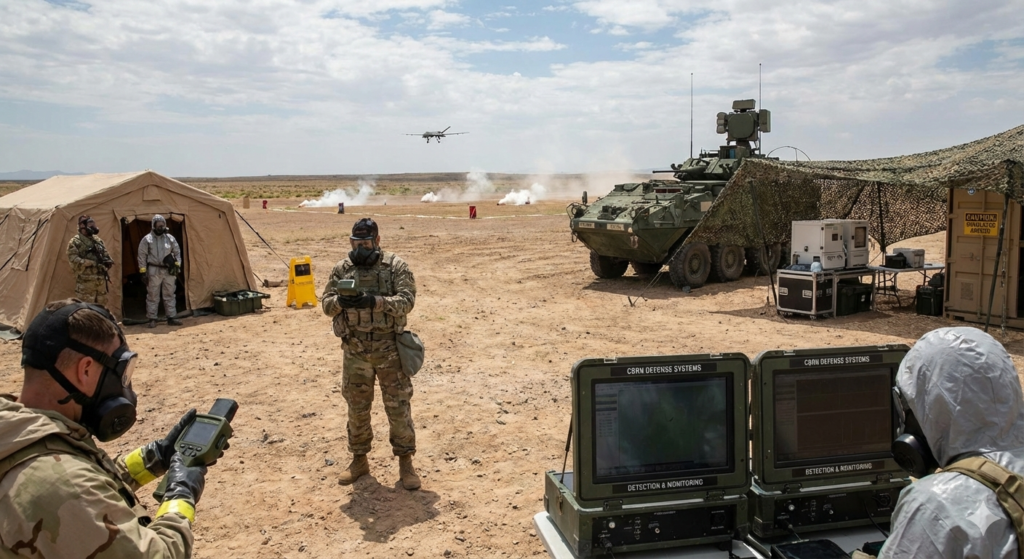
Technologies include explosive “sniffers,” x-ray scanning, chemical detectors, and protective infrastructure. Incident response systems aim to neutralize threats, rescue casualties, and restore security as quickly as possible.
FUTURE TRENDS: AI AND EMERGING CBRNe TECHNOLOGY
AI & Machine Learning Integration
AI and machine learning are rapidly transforming CBRNE detection and analysis, drastically improving speed and accuracy in identifying threats such as nerve agents or pathogens in complex environments. Advanced AI-driven systems now outperform traditional methods by reducing false positives and improving detection even in cluttered or noisy environments. Emergen Research
Miniaturized and Networked Sensors
Internet of Things (IoT)-based sensors and wearable devices enable real-time monitoring for chemical, biological, and radiological agents. These can be deployed as distributed networks across urban areas, battlefields or critical infrastructure to provide early warning. Allied Market Research
Nanotechnology Applications
Nanomaterials are being developed for ultra-light protective equipment and advanced filters that don’t sacrifice mobility for protection. Nanotech also shows promise for decontamination at room temperature without generating harmful byproducts. Army Technology
Advanced Spectroscopy & Deep Learning Sensors
New detection techniques like terahertz time-domain spectroscopy combined with deep learning enable stand-off detection of concealed chemicals and explosives with very high accuracy — even through packaging or barriers. arXiv
Evolving Capabilities in Military CBRNE Operations
Enhanced Joint Operations
Modern armed forces are integrating their CBRNE units into joint and multinational task forces to streamline rapid response across land, sea, and air. Symposiums — such as the Joint CBRN Symposium — highlight these efforts with senior military thinkers focused on AI, autonomy, and advanced sensing in CBRNE readiness. Joint CBRN Symposium
Specialized CBRNE Units
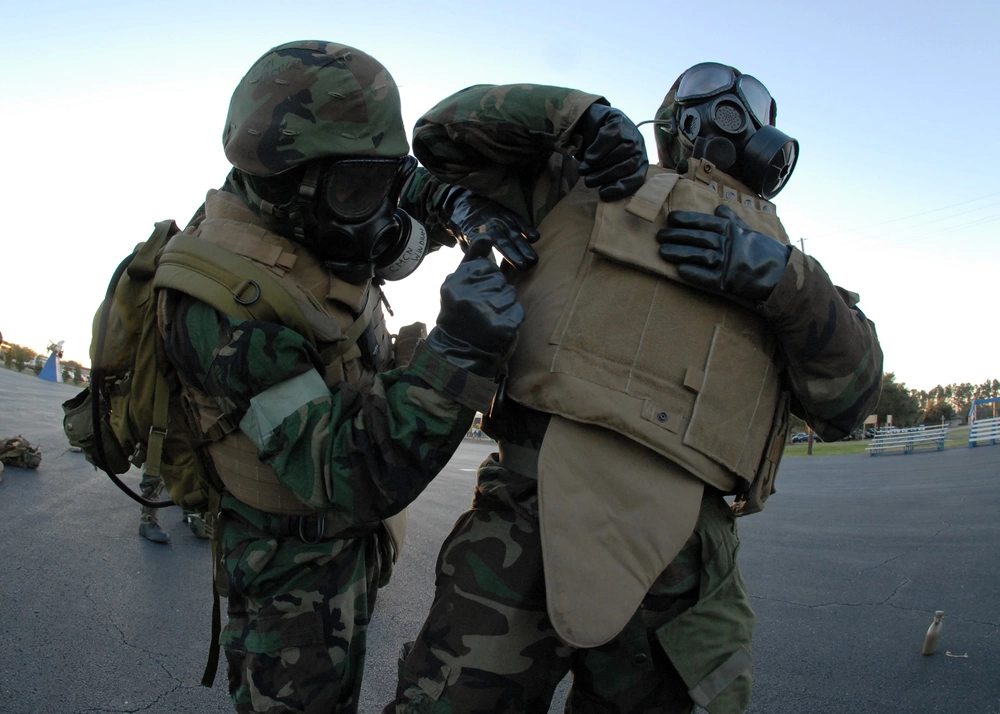
Units like the U.S. Marine Corps Chemical Biological Incident Response Force (CBIRF) specialize in countering CBRNE incidents, supporting civil agencies, and conducting urban search and rescue in contaminated environments. Wikipedia
Large-Scale Decontamination
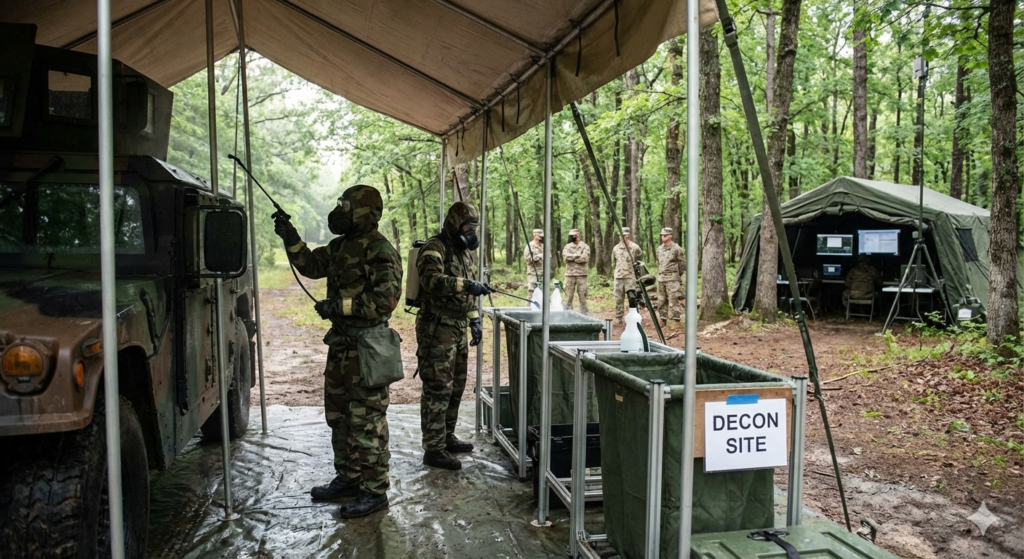
Exercises conducted by units like the U.S. Army’s 20th CBRNE Command demonstrate operational and tactical decontamination capabilities to ensure maneuver forces can continue operations after a chemical incident. U.S. Army
Medical Countermeasures & Public Health
Challenges in Medical Countermeasure Development
Although an increasing number of drugs, vaccines, and antidotes are in development, many CBRNE medical countermeasures have not yet received regulatory approval — highlighting gaps in readiness and the need for faster translational research. PubMed
Strategic Importance for Civil Defense
Investment in stockpiling vaccines, rapid diagnostics, and broad-spectrum therapeutics remains a priority for governments to mitigate biological or chemical attacks. These measures not only support military personnel but protect civilian populations during pandemics or terror incidents. (This area intersects epidemiology, biodefense, and homeland security strategy.)
Market & Strategic Investment Data
CBRNE Defense Market Growth
The global CBRNE defense market was valued around $18.7 billion in 2023 and is projected to reach nearly $30 billion by 2033. Growth is driven by geopolitical instability, asymmetric warfare threats, and increasing demand for advanced defense and response systems. Joint CBRN Symposium
Research & Consumer Standards
National strategies such as the U.S. National Strategy for CBRNE Standards guide the development and coordination of equipment used for detection, protection, and decontamination across federal and civilian responders, reflecting a holistic national preparedness approach. DHS
New Dimensions in Future Warfare
Dual-Use Technology Risks
The dual-use nature of frontier technologies — especially large language models and advanced computational tools — poses a new class of CBRNE risk because such systems can inadvertently accelerate proliferation of dangerous knowledge or design methods for harmful agents if safeguards are weak. arXiv
AI, Autonomy, and Governance
Academic analysis highlights the need to expand international governance frameworks (like UNSCR 1540) to account for AI’s role in weaponization, autonomous threat delivery systems, and the ease of covert proliferation of targeting and surveillance assets. arXiv
Integration with Cyber and Information Domains
Future warfare increasingly links CBRNE threats with cyber attacks and misinformation campaigns, forming part of hybrid conflict strategies. This requires integrated defense frameworks combining physical, informational, and digital resilience.