
“No one can realize how substantial the air is until he feels its supporting power beneath him. It inspires confidence at once.” — Otto Lilienthal (An aviation pioneer; sometimes called the “Father of Flight“)
The evolution of military helicopters is a narrative of engineering persistence over physical laws—a transition from a fragile experimental toy to the “cavalry” of the modern battlefield. While fixed-wing aircraft dominated the early 20th century, the helicopter’s ability to “park” in the sky and land where there are no runways made it an indispensable tool for military doctrine.
The Dawn of Vertical Flight (1930s–1945)
The dream of vertical flight dates back centuries, but the practical military helicopter was born in the mid-1930s. Heinrich Focke’s Fw 61, which first flew in 1936, is widely recognized as the first functional helicopter. However, the configuration that would eventually dominate the world—a single main rotor with a tail rotor to counter torque—was perfected by Igor Sikorsky with the VS-300 in 1939. This design solved the “torque effect,” where the fuselage would otherwise spin in the opposite direction of the blades.
Military adoption followed swiftly during World War II. The Sikorsky R-4 became the first mass-produced helicopter to enter service, primarily serving with the U.S. Army Air Forces and the British Royal Air Force by 1944. Its first operational tests took place in the rugged terrain of Burma, where it proved its worth in casualty evacuation and liaison missions—roles that fixed-wing aircraft simply could not perform in the dense jungle.
The Turbine Revolution and the Vietnam Era
The most significant leap in helicopter capability occurred in the late 1950s with the introduction of the turboshaft engine. Prior models relied on heavy, underpowered piston engines that were prone to overheating and mechanical failure. The turboshaft—a jet engine modified to turn a shaft rather than provide thrust—offered a massive increase in power-to-weight ratio.
The Bell UH-1 Iroquois, famously known as the “Huey,” became the face of this revolution. Powered by the Lycoming T53 engine, the Huey allowed the U.S. military to develop “Air Mobility” doctrine during the Vietnam War. For the first time, entire battalions could be shuttled across terrain barriers, bypassing enemy lines and landing directly in “Hot LZs” (Landing Zones).
Specialization and Modern Battlefield Dominance
By the 1980s, the helicopter had branched into highly specialized roles. The “Big Five” modernization program in the U.S. introduced the AH-64 Apache and the UH-60 Black Hawk. The Apache redefined the attack role with its Integrated Helmet and Display Sighting System (IHADSS), allowing the pilot to slave the 30mm chain gun to their head movements.
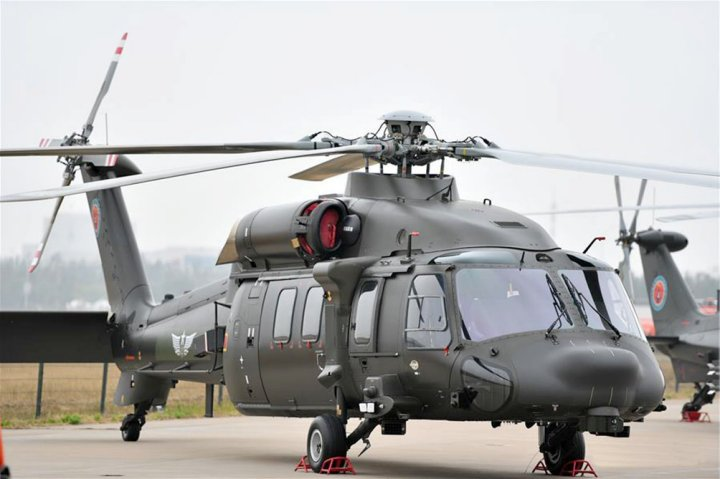
Simultaneously, the Soviet Union developed the Ka-52 Alligator, which utilized a unique coaxial rotor system. Unlike the Apache, the Alligator has two sets of main rotors spinning in opposite directions, eliminating the need for a tail rotor and making the aircraft exceptionally agile and stable at high speeds. China has recently followed suit in modernizing its fleet with the Z-20, a medium-utility platform that mirrors the Black Hawk’s versatility but incorporates fly-by-wire controls and five-bladed rotors for better high-altitude performance in mountainous regions.
The Future of Vertical Lift (2026 and Beyond)
As we look toward the future, the traditional helicopter is reaching its physical speed limit. To overcome this, the U.S. Army’s Future Vertical Lift (FVL) program is focusing on tiltrotors like the Bell V-280 Valor. Unlike a standard helicopter, the V-280 can tilt its rotors forward to fly like a fixed-wing plane, reaching speeds of 280 knots (approx. 520 km/h)—nearly double the speed of the Black Hawk.
Current trends also point toward distributed survivability and autonomy. Modern electronic warfare suites, such as the APR-39, are designed to protect entire missions rather than just single aircraft. Additionally, the industry is moving toward optionally piloted vehicles, allowing helicopters to perform dangerous resupply missions in contested environments without risking a human crew.
The helicopter’s evolution has been defined by a constant struggle for more lift, more speed, and better armor. From the fragile R-4 to the high-speed V-280, these machines remain the only assets capable of bridging the gap between the earth and the sky on the modern battlefield.
Building on the technological shifts of the late 20th century, modern military aviation has entered a period of divergent evolution. While the core roles of attack, transport, and reconnaissance remain, global powers have specialized their fleets to match specific geographical and strategic threats. Today, the landscape is defined by a race for speed, high-altitude performance, and the integration of “unmanned” teammates.
The Western Vanguard: Speed and Networked Lethality
The United States Army continues to maintain the world’s most massive and technologically advanced fleet, with over 4,300 active airframes. However, the American strategy is currently undergoing a radical transition. After decades of relying on the AH-64 Apache and UH-60 Black Hawk, the U.S. is pivoting toward the “Future Vertical Lift” (FVL) initiative. The cornerstone of this program is the V-280 Valor, a tiltrotor platform that promises to double the speed and range of existing utility helicopters, essentially blurring the line between a helicopter and a fixed-wing aircraft.
Crucially, the U.S. recently canceled its future scout helicopter (FARA) program, signaling a belief that traditional light reconnaissance is now better handled by “launched effects”—small drones released from helicopters that can scout ahead in contested airspace. This “human-machine teaming” is the new benchmark for Western aviation.
The Eastern Resilience: Armor and High-Altitude Domination
Russia and China have taken different paths, often dictated by their unique borders. Russia remains the second-largest operator, with its doctrine emphasizing heavily armored “flying tanks” like the Ka-52 Alligator and the Mi-28NM Havoc. Combat experiences in recent years have pushed Russia to upgrade these platforms with long-range precision missiles like the LMUR (Product 305), allowing pilots to strike targets from over 14 kilometers away, well outside the range of most shoulder-fired anti-aircraft systems.
China’s People’s Liberation Army (PLA) has focused on indigenous self-reliance. The Z-10 attack helicopter, now equipped with upgraded engines and graphene armor for weight reduction, serves as the primary offensive tool. Meanwhile, the Z-20—often compared to the Black Hawk but featuring a five-bladed rotor for better performance in the mountainous Tibetan plateau—has become the universal workhorse for Chinese troop transport and naval operations.
The High-Altitude Specialists: India and South Korea
A significant development in global aviation is the rise of indigenous “specialty” helicopters. India, facing the world’s highest battlefields in the Himalayas, developed the HAL Prachand. It is currently the only attack helicopter in the world capable of taking off and landing at altitudes exceeding 5,000 meters (16,400 ft) with a full load of weapons and fuel. This capability allows the Indian Army to provide close air support in regions like Siachen and Ladakh where Western or Russian heavy-weights struggle to breathe.
Similarly, South Korea has moved from importing technology to building its own, exemplified by the KUH-1 Surion and the newly unveiled Marine Attack Helicopter (MAH). These platforms are tailored for amphibious assaults and coastal defense, reflecting the specific maritime threats of the Korean Peninsula.
Global Military Helicopter Comparison and Capabilities
To understand the current balance of aerial power, it is essential to compare the flagship rotary-wing assets of the world’s major military powers. These platforms represent the pinnacle of vertical lift technology, specialized for high-intensity conflict, rapid troop insertion, and heavy logistics.
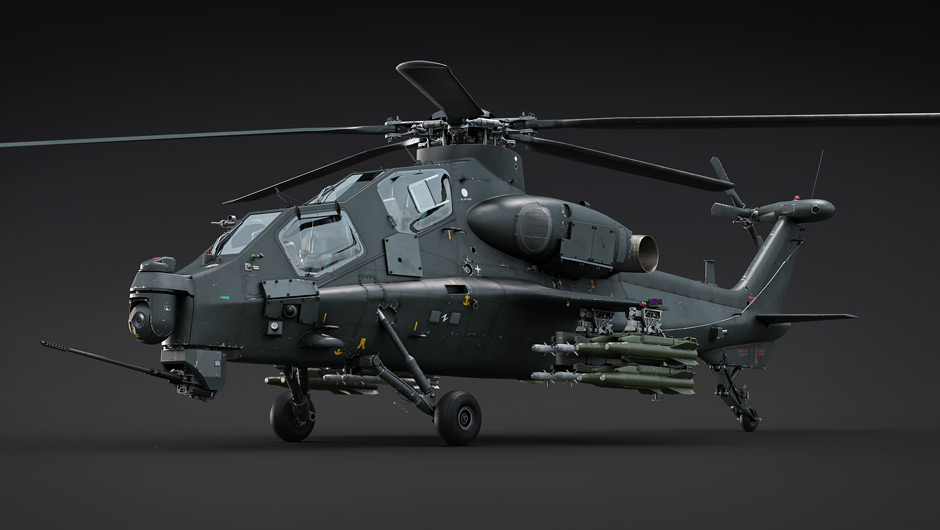
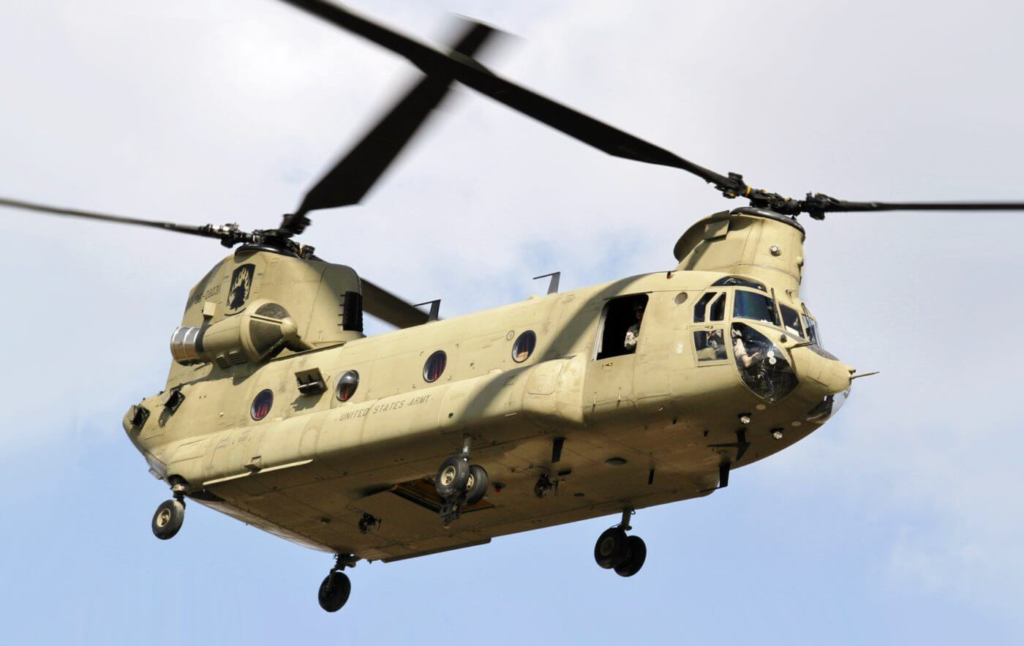
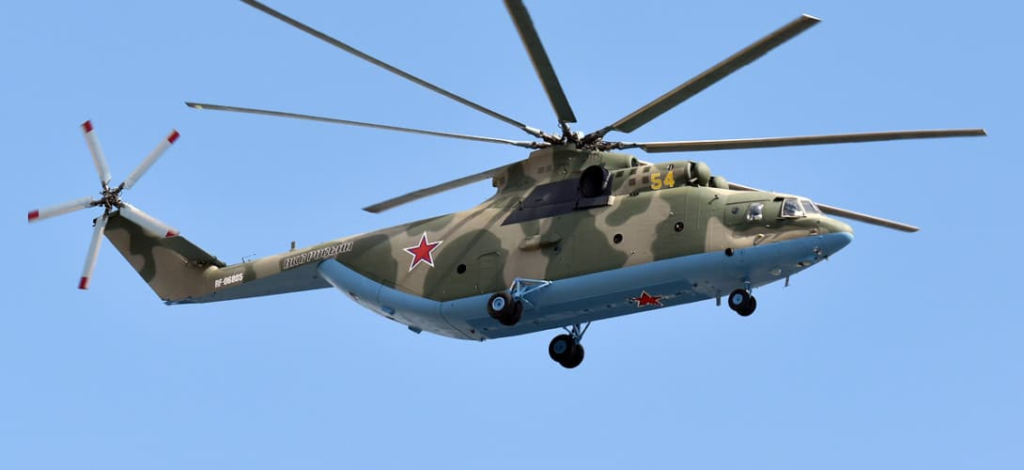
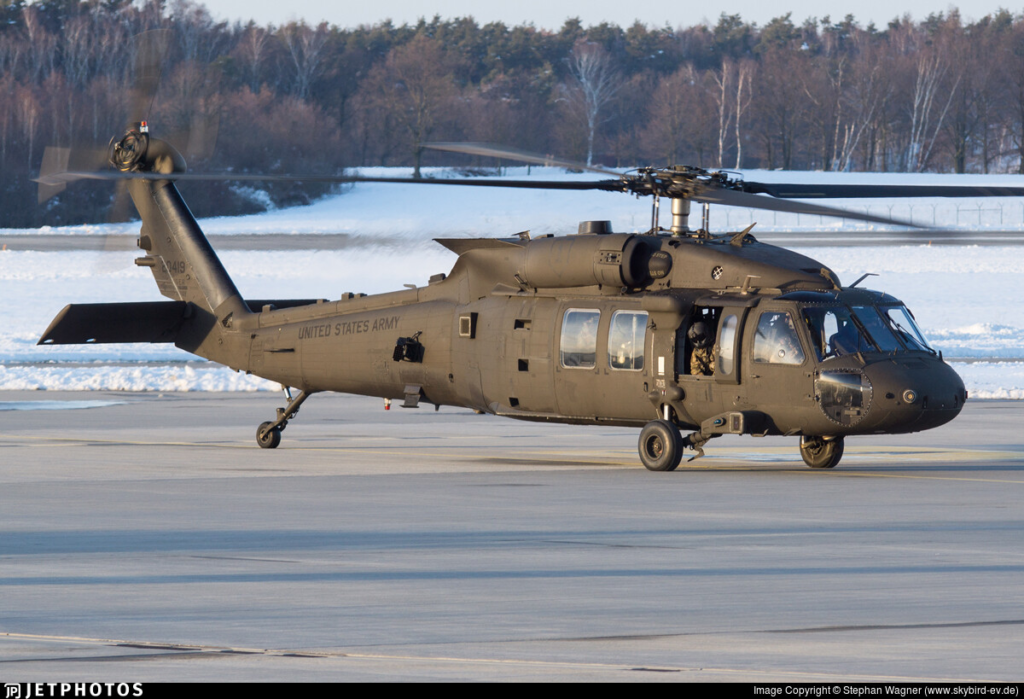
The following table provides a fact-based comparison of the most prominent military helicopters currently in operation or entering service across the United States, Russia, China, and Europe.
| Helicopter | Primary Role | Max Speed | Range | Key Capabilities & Distinctions |
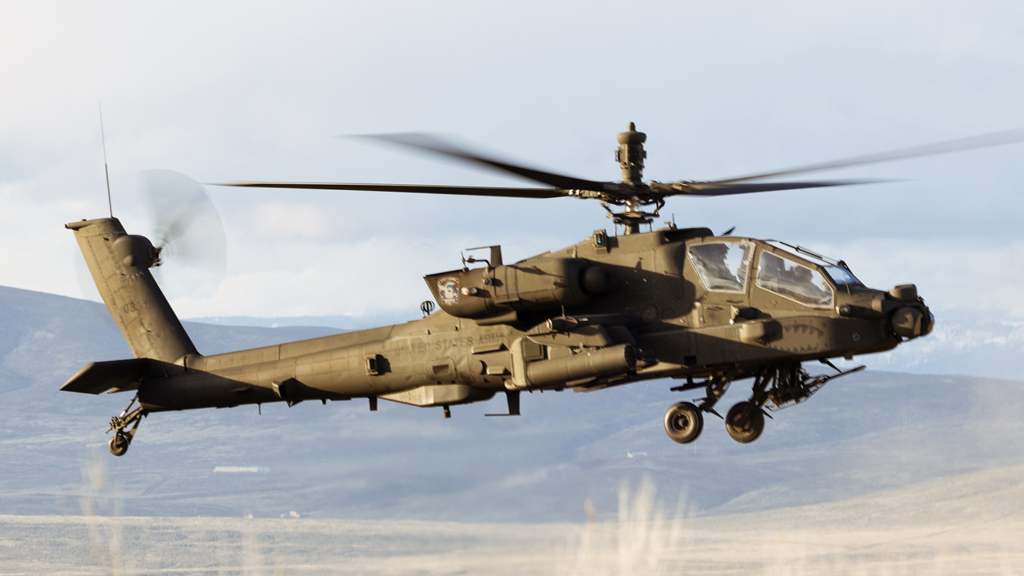
| AH-64E Apache (USA) | Attack / Anti-Armor | ~280 km/h | ~485 km | Features advanced fire-control radar (Longbow) and integrated helmet-mounted displays for night/all-weather combat. |
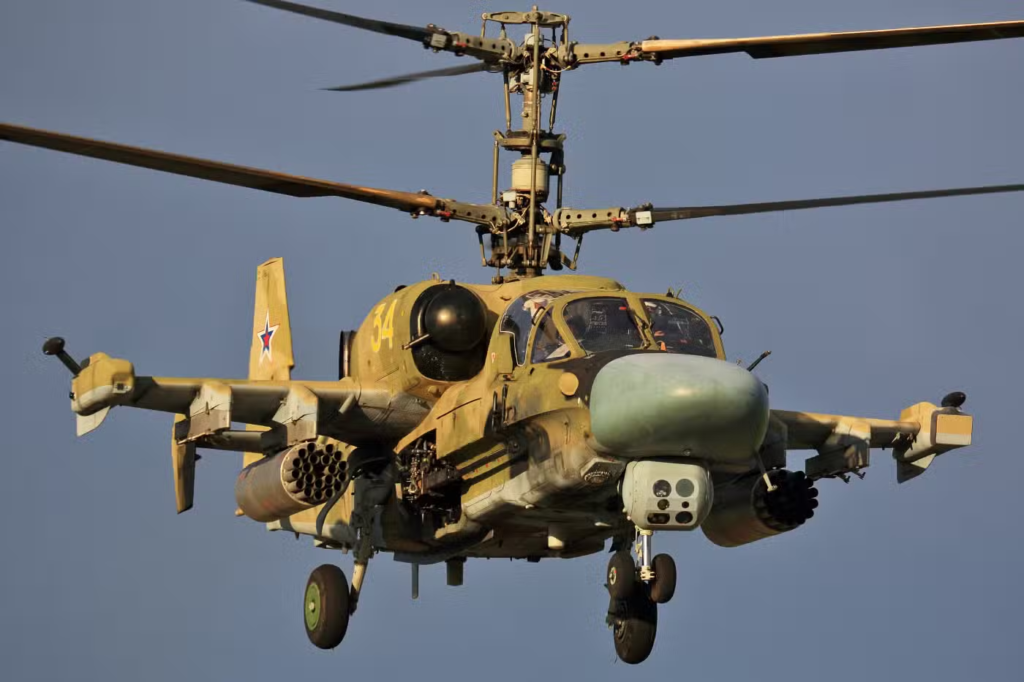
| Ka-52 Alligator (RUSSIA) | Attack / Recon | ~300 km/h | ~460 km | Uses a unique coaxial rotor system for extreme agility and features an ejection seat for crew survivability. |
| Z-10ME (CHINA) | Attack / CAS | ~270 km/h | ~820 km | China’s premier dedicated attack helicopter, designed for anti-tank missions and close air support with indigenous avionics. |
| CH-47F Chinook (USA) | Heavy Transport | ~315 km/h | ~741 km | Tandem rotor design optimized for high-altitude heavy lift and “pinnacle landings” in rugged terrain. |
| Mi-26 (Halo) (RUSSIA) | Super-Heavy Lift | ~295 km/h | ~800 km | The world’s largest production helicopter, capable of carrying up to 20 tons of cargo or 80+ combat-equipped troops. |
| UH-60M Black Hawk (USA) | Medium Utility | ~294 km/h | ~593 km | The global standard for multi-role utility, featuring high crash-survivability and modular mission equipment. |
| Z-20 (CHINA) | Medium Utility | ~300+ km/h | ~560 km | Features fly-by-wire controls and a five-bladed rotor specifically designed for high-altitude lift in mountainous regions. |
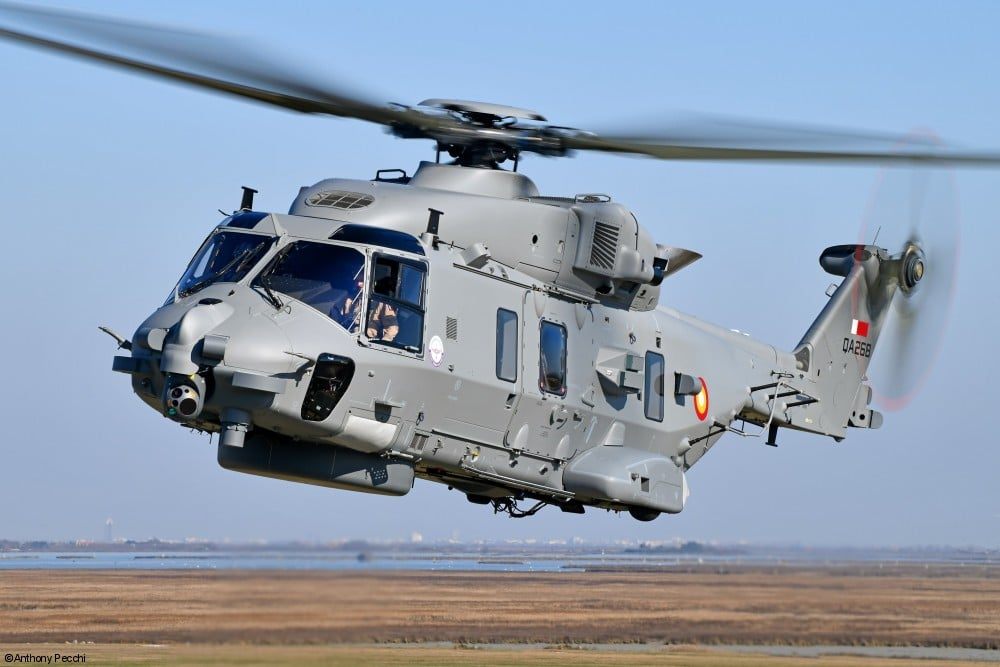
| NH90 (TTH/NFH) (EUROPE) | Multi-Role / Naval | ~300 km/h | ~800 km | A joint European project featuring an all-composite airframe and 4-axis fly-by-wire flight control system. |
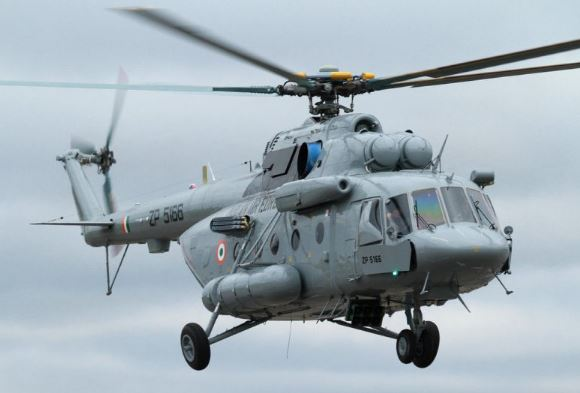
| Mi-8/17 Hip (RUSSIA) | Utility / Armed Transport | ~250 km/h | ~465 km | The most widely produced helicopter series in history; known for its ruggedness and ability to operate in extreme environments. |
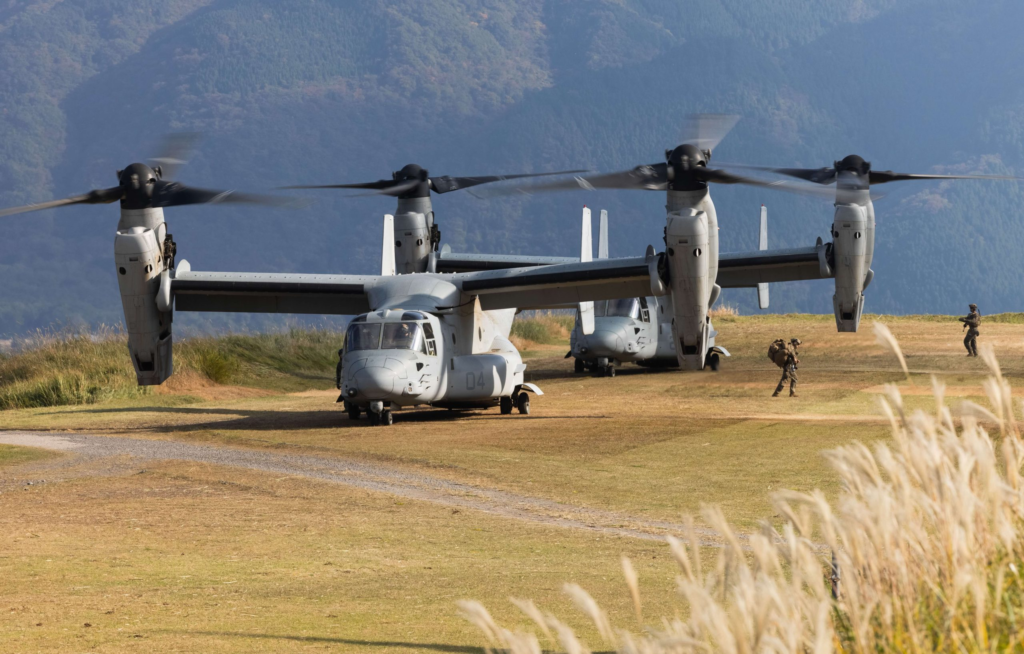
| V-22 Osprey (USA) | Tiltrotor Transport | ~509 km/h | ~1,600 km | Combines the VTOL capability of a helicopter with the high speed and long range of a fixed-wing turboprop aircraft. |
Comparative Capability Analysis
1. Attack and Firepower
The AH-64E Apache remains the benchmark for networked warfare, utilizing its ability to share target data with other aircraft and ground units. In contrast, Russia’s Ka-52 relies on its coaxial design to perform maneuvers—such as flying sideways at high speeds—that are impossible for traditional tail-rotor helicopters, making it harder to track for ground-based defenses.
2. Utility and Global Reach
The UH-60 Black Hawk and Mi-8/17 series represent two different philosophies in utility. The Black Hawk is designed for precision and survivability during “air assault” missions. The Mi-8/17 is often referred to as a “truck with rotors,” emphasizing volume and simple maintenance, which has led to its adoption by over 80 countries. China’s Z-20 fills this gap by modernizing the medium-lift role with advanced digital flight controls.
3. Heavy Lift and Specialized Logistics
The CH-47 Chinook stands alone in the tandem-rotor category, providing a level of stability in thin mountain air that single-rotor helicopters cannot match. While the U.S. relies on the Chinook for theater-level logistics, Russia utilizes the massive Mi-26, which has a cargo capacity nearly double that of the Chinook, essentially acting as a flying freight train for heavy armor and equipment.
4. The Shift to High Speed
Future capabilities are best represented by the V-22 Osprey and the upcoming V-280 Valor. These platforms address the “speed gap” where traditional helicopters struggle to exceed 300 km/h due to aerodynamic limits. By tilting their engines, these aircraft can fly twice as fast and twice as far, fundamentally changing how quickly a military can respond to a crisis.
TACTICAL DEPLOYMENT OF AVIATION IN WARFARE
The tactical deployment of helicopters has fundamentally redefined the “geometry” of the modern battlefield, transitioning military perspective from two-dimensional surface warfare to a fluid, multi-domain environment. From a military perspective, the helicopter’s primary value lies in its ability to bypass traditional geographic obstacles and enemy defensive lines, a concept known as Vertical Envelopment. During the Vietnam War, this tactical shift was perfected through “Air Mobility,” where the helicopter became the primary vehicle for shifting the “center of gravity” rapidly, allowing commanders to insert high-density firepower and infantry into “Hot LZs” that were otherwise inaccessible to ground armor. This maneuverability forces the adversary to defend 360 degrees of their perimeter, as the threat is no longer confined to a predictable frontline.
Modern deployment strategies have further specialized these roles: Attack helicopters like the AH-64 Apache and Ka-52 Alligator function as “aerial tanks,” providing close air support (CAS) and anti-armor interdiction with advanced sensors that allow them to strike from stand-off distances. Meanwhile, utility and heavy-lift platforms like the UH-60 Black Hawk and CH-47 Chinook ensure the “logistical tail” of an army remains as mobile as its “teeth,” enabling rapid casualty evacuation (MEDEVAC) and the “pinnacle landing” of supplies on remote mountain peaks. In contemporary warfare, the perspective has shifted toward Network-Centric Warfare, where the helicopter acts as a digital node—sharing real-time intelligence with unmanned “wingmen” and ground units to saturate the battlespace with information. This evolution ensures that the rotary-wing asset is not merely a transport vehicle, but a force multiplier that dictates the tempo, reach, and lethality of modern combined-arms operations.
DEPLOYMENT OF AVIATION IN SCW ENVIRONMENT
In sub-conventional and urban warfare environments, often categorized as Symmetric and Unconventional Warfare (SCW), the helicopter’s role shifts from a vehicle of mass maneuver to one of high-precision surgical intervention. In these “cluttered” environments, the traditional safety of altitude is replaced by the necessity of “masking”—using urban canyons and buildings as cover to break the line of sight from ground-based threats like Rocket Propelled Grenades (RPGs) and Man-Portable Air-Defense Systems (MANPADS). Tactically, helicopters like the MH-6M Little Bird or armed variants of the Z-20 are deployed for “Fast-Rope” insertions on rooftops, allowing special operations forces to seize high ground and dominate street-level movements without entering the fatal funnels of urban alleyways. This capability transforms the vertical dimension of a city into a tactical advantage, providing commanders with persistent “Overwatch” where sensors like Forward-Looking Infrared (FLIR) can identify insurgents hidden among civilian populations.
In sub-conventional conflicts, the helicopter serves as the ultimate psychological and logistical lifeline, performing “pinnacle landings” on narrow ridges or in restricted urban squares to evacuate casualties under fire—a role popularized by the UH-60 Black Hawk and Mi-17. Because these environments lack defined frontlines, aviation units must employ “Distributed Survivability,” where helicopters operate in small, coordinated teams to provide 360-degree security for one another during hover-hole operations. The military perspective in these settings prioritizes “Discriminate Lethality”; attack platforms like the AH-64 Apache or Z-10 use precision-guided munitions to neutralize specific threats in densely populated areas, minimizing collateral damage that could otherwise undermine the strategic goals of a counter-insurgency. As warfare continues to migrate toward “megacities,” the helicopter remains the only asset capable of maintaining the tempo of operations while providing the rapid response needed to counter the fluidity of irregular adversaries