A Comprehensive Analytical Study of Modern and Future Air Combat
Introduction
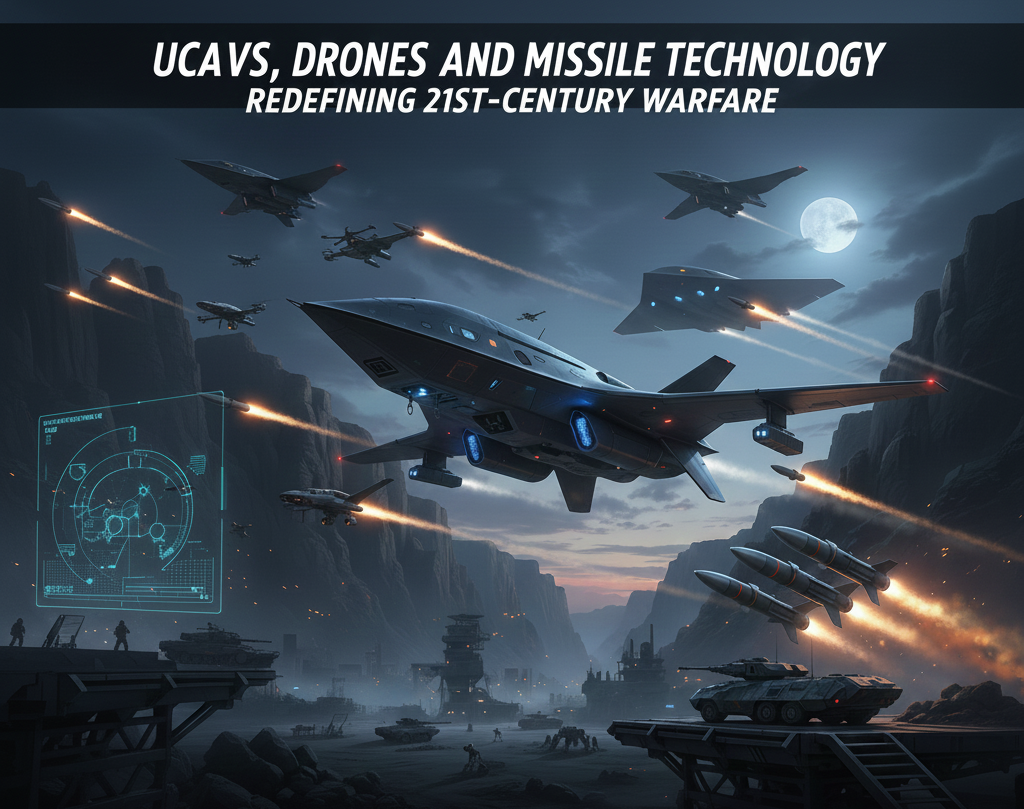
Modern fighter jets are no longer merely fast, agile machines designed to outmaneuver adversaries in close-range dogfights. They have evolved into highly integrated, networked combat systems that fuse sensors, weapons, electronic warfare, cyber resilience, and information dominance into a single operational construct. Air combat today is increasingly decided long before opposing pilots ever see each other, shaped instead by stealth characteristics, data fusion, off-board sensing, and command-and-control architectures spanning air, space, and cyber domains. This study examines the full spectrum of contemporary fighter jet technology and doctrine, tracing the evolution from fourth-generation designs to fifth-generation platforms and onward to emerging sixth-generation concepts. It analyzes technical foundations, operational doctrines, economic realities, and geostrategic implications to explain how fighter jets continue to shape the balance of power in modern warfare.
1. Foundations of Modern Air Superiority
The concept of air superiority has undergone a profound transformation since the Cold War. During the era of fourth-generation fighters such as the F-15, F-16, MiG-29, and Su-27, dominance in the air was largely determined by kinematic performance, pilot skill, and radar-guided beyond-visual-range engagements supported by airborne early warning aircraft. Although dogfighting remained relevant, success increasingly depended on who could detect, track, and fire first. The introduction of active radar missiles like the AIM-120 AMRAAM further reduced the importance of close maneuvering combats.
Fifth generation fighters fundamentally redefined this paradigm. Platforms such as the F-22 and F-35 were designed around stealth, sensor fusion, and network centric operations rather than raw aerodynamic performance alone. Air superiority in this context is not merely about shooting down enemy aircraft but about denying the adversary the ability to operate effectively across the entire battlespace. Stealth reduces detection ranges, electronic warfare degrades enemy sensors, and data links allow aircraft to act as nodes in a larger combat network. The pilot becomes an information manager as much as a tactician.
Emerging sixth generation concepts push this transformation even further by integrating air operations with cyber and space effects in real time. Satellite-based sensing, resilient communications constellations, and cyber-enabled disruption of enemy command systems are increasingly inseparable from aerial combat. In this environment, air superiority is no longer a purely atmospheric contest but a multidomain condition in which control of information flows is as decisive as control of airspace itself.
2. Technical Architecture of Modern Fighter Jets
Stealth Technology; The Invisible Edge
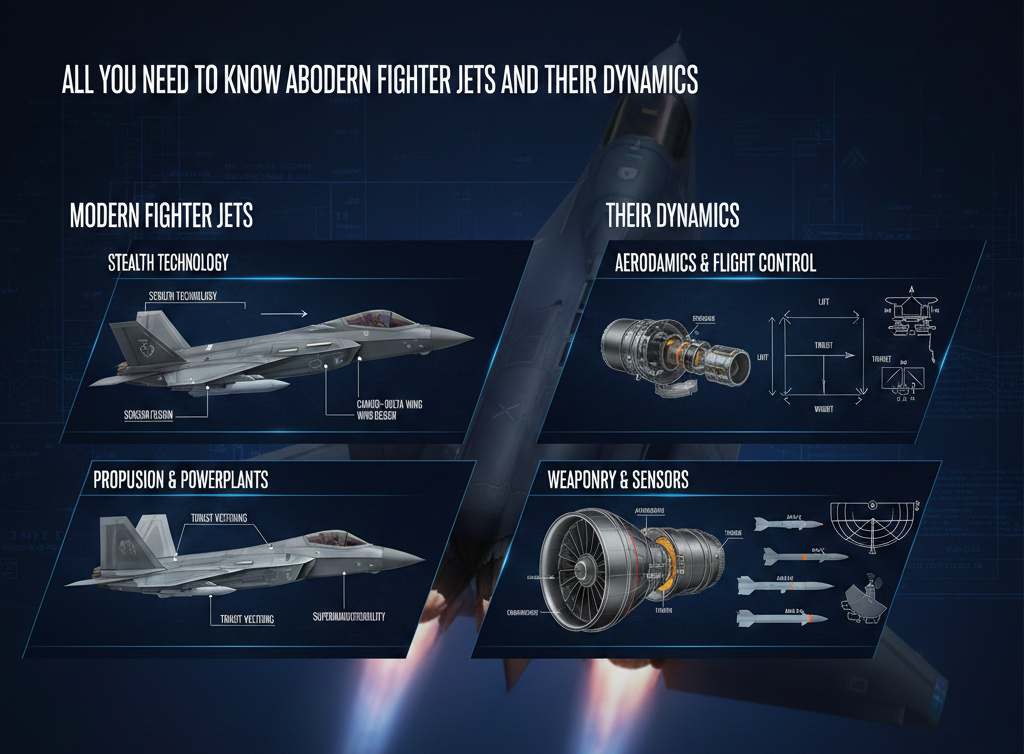
Modern fighter jets rely on a combination of advanced propulsion systems, stealth-focused Radar Absorbent Material (RAM) technology, and sophisticated acoustic management to achieve high-speed, low-observable performance.
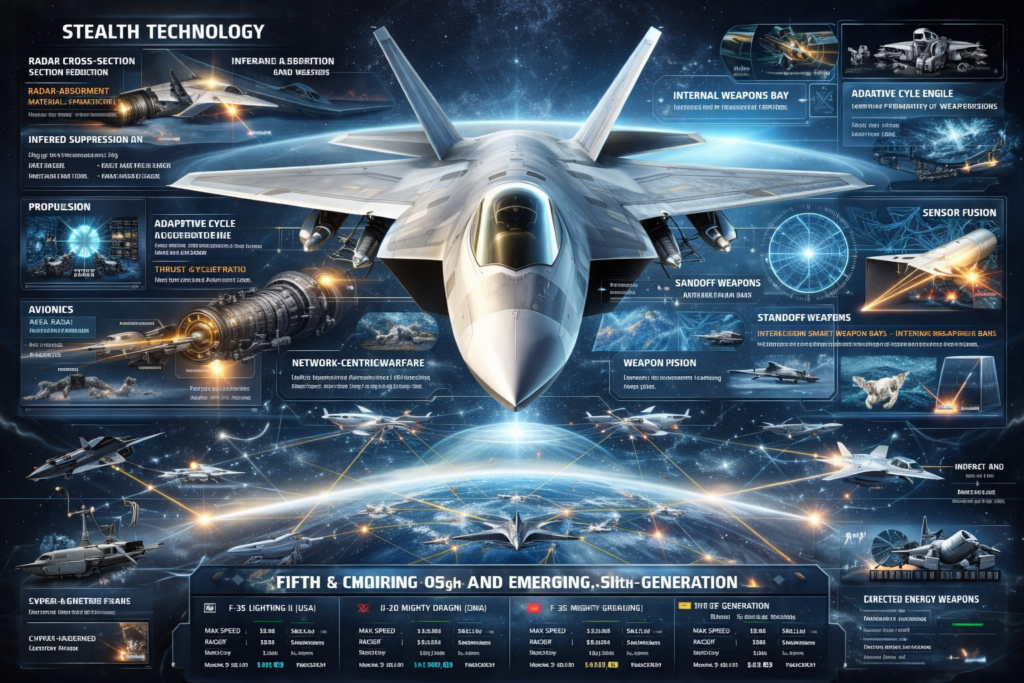
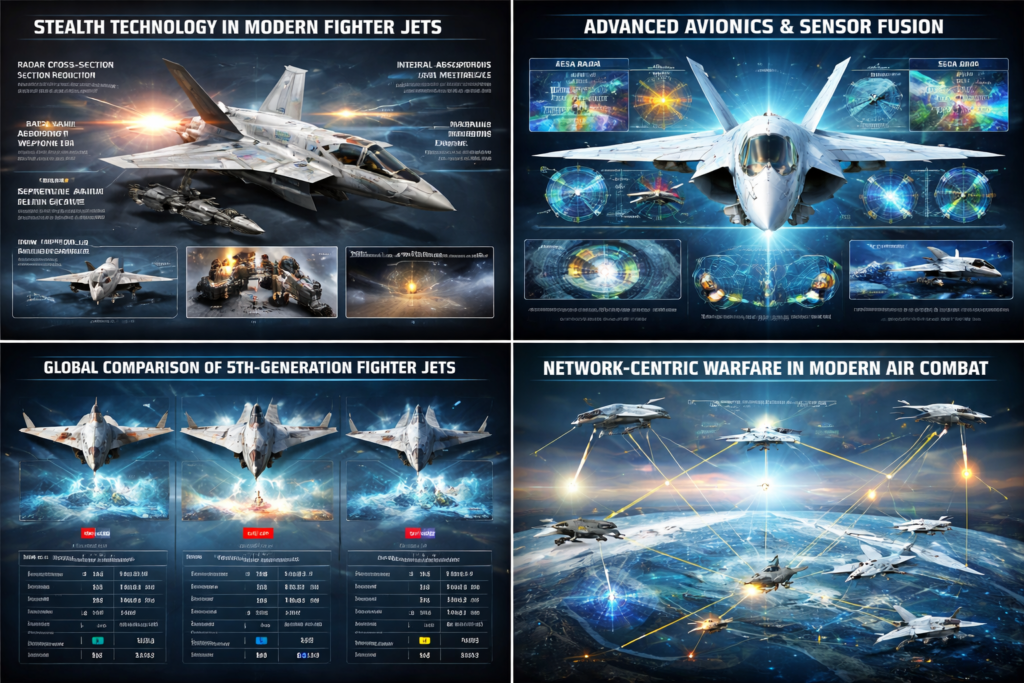
Stealth is the defining characteristic of fifth-generation fighters and a foundational assumption for sixth-generation designs. Radar cross-section reduction relies primarily on shaping rather than materials alone. Faceted surfaces and carefully aligned edges are used to deflect radar energy away from the emitting source rather than reflecting it back. Panel gaps, fasteners, and surface discontinuities are tightly controlled because even small imperfections can significantly increase detectability at certain frequencies. Internal weapons bays eliminate the radar reflections caused by external stores, while serpentine engine inlets prevent radar waves from directly illuminating compressor faces, which are among the strongest radar reflectors on an aircraft.
Radar-absorbent materials complement shaping by attenuating residual reflections. Modern RAM is often structurally integrated into composite airframes rather than applied as fragile surface coatings, improving durability and reducing maintenance burdens compared to early stealth aircraft. Nevertheless, RAM effectiveness is frequency-dependent, and no aircraft is truly invisible across the entire electromagnetic spectrum.
Infrared signature suppression has grown in importance as passive sensors have improved. Engine nozzle designs that mix cooler bypass air with hot exhaust gases reduce thermal contrast, while embedded or shielded exhausts limit line-of-sight exposure to ground-based infrared sensors. Advanced thermal management systems distribute heat loads from avionics and engines across the airframe, reducing localized hotspots that could be detected by infrared search and track systems.
Acoustic and visual stealth receive less attention but remain relevant, particularly in low-altitude or permissive environments. Engine and inlet designs can reduce noise in certain flight regimes, while adaptive coatings and research into active camouflage seek to minimize visual detection. These measures are supplementary rather than decisive, but they reflect a holistic approach to observability reduction.
Propulsion technology underpins both survivability and lethality. The thrust-to-weight ratios of modern fighters have steadily increased, enabling sustained high-energy maneuvering and rapid acceleration. Fifth-generation aircraft emphasize supercruise, the ability to fly at supersonic speeds without afterburner, which reduces infrared signature and fuel consumption while improving responsiveness. The F-22 remains the benchmark in this regard, capable of sustained Mach 1.7-class flight under operational conditions.
Thrust vectoring, implemented in two-dimensional or three-dimensional configurations, enhances post-stall maneuverability and control authority at high angles of attack. While often associated with close-in combat, thrust vectoring also improves takeoff performance, survivability during evasive maneuvers, and overall handling margins. Russian designs have traditionally emphasized three-dimensional vectoring, whereas Western fighters have focused more on integrated flight control laws and energy management.
The next major leap in propulsion is represented by adaptive cycle engines such as General Electric’s XA100 and Pratt & Whitney’s XA101. These engines can dynamically shift between high-thrust and high-efficiency modes by altering airflow paths, offering greater range, increased electrical power generation, and improved thermal management. Such capabilities are particularly important for sixth-generation aircraft expected to power advanced sensors, electronic warfare systems, and potentially directed-energy weapons.
Avionics and Sensor Fusion
Modern fighter avionics are defined by integration rather than individual sensor performance. Active electronically scanned array radars have replaced mechanically scanned arrays due to their ability to steer beams electronically, track multiple targets simultaneously, and operate in low-probability-of-intercept modes. AESA radars can interleave air-to-air, air-to-ground, and electronic attack functions, blurring the distinction between sensors and jammers. Ground moving target indication further expands the fighter’s role into the intelligence and strike domains.
Distributed aperture systems provide spherical situational awareness by combining multiple infrared sensors placed around the airframe. These systems enable missile launch detection, passive tracking of airborne targets, and even pilot vision enhancement through helmet-mounted displays. The result is a form of synthetic perception in which the aircraft “sees” the battlespace in all directions regardless of pilot orientation.
Sensor fusion architectures tie these inputs together with electronic warfare receivers, off-board data from other aircraft, drones, and satellites, and mission databases. The fused picture presented to the pilot reduces cognitive load and accelerates decision-making. Artificial intelligence increasingly assists by prioritizing threats, suggesting courses of action, and managing sensor tasking, transforming the cockpit into a cognitive environment rather than a collection of gauges and displays.
Weapon Systems Integration
Internal weapons bays are essential to maintaining low observability, but they impose constraints on weapon size and loadout. Modern designs use sophisticated bay door actuation and ejection mechanisms to minimize exposure time during weapon release. The concept of the aircraft as a “flying magazine,” exemplified by the F-35, emphasizes software-defined integration, allowing new weapons to be added through updates rather than extensive hardware modifications.
Standoff weapons play a central role in contemporary doctrine. Long-range air-to-air missiles, cruise missiles, and precision-guided munitions allow fighters to engage targets while remaining outside the densest threat envelopes. Directed-energy weapons, particularly lasers for self-defense against missiles or drones, are under active development, though power generation and thermal management remain significant challenges.
3. Strategic Capabilities and Doctrine
Network-Centric Operations
Secure, high-bandwidth data links such as MADL and IFDL enable stealth aircraft to share information without compromising their low observability. These links support the formation of distributed “combat clouds” in which multiple platforms collaborate dynamically, sharing sensor data and targeting solutions. In this construct, individual aircraft matter less than the collective performance of the network.
Fifth-generation fighters increasingly act as quarterbacks, orchestrating operations by cueing legacy aircraft, surface fires, and unmanned systems. Intelligence, surveillance, reconnaissance, and targeting functions converge at the tactical edge, compressing decision cycles and enabling rapid exploitation of fleeting opportunities. Integrated electronic attack capabilities allow fighters to degrade enemy sensors while simultaneously conducting kinetic missions.
Survivability and Electronic Warfare
Survivability is achieved through a layered approach combining stealth, electronic warfare, cyber resilience, and tactics. Modern EW suites are deeply integrated rather than pod-based, enabling real-time threat geolocation and adaptive jamming. Threat libraries are continuously updated to counter evolving systems, while cyber hardening protects mission systems from intrusion or manipulation.
Counter-stealth technologies, including low-frequency radars and multistatic sensor networks, complicate the operating environment but do not negate stealth advantages. Instead, they shift the contest toward information fusion and targeting accuracy, reinforcing the importance of networked operations.
4. Global Rivalry: Comparative Analysis of Frontline Platforms
United States
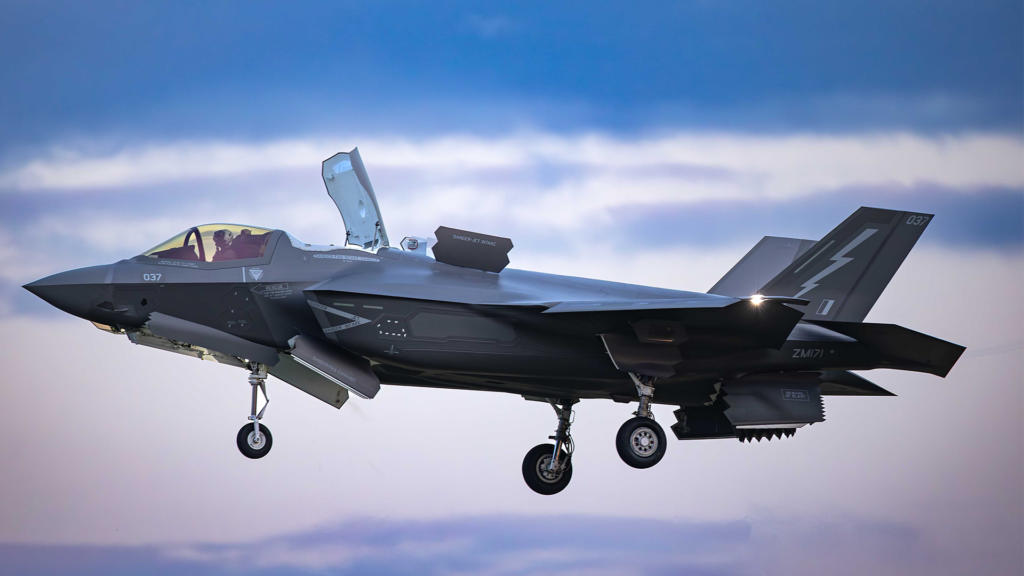
The F-22 Raptor remains the most capable dedicated air superiority fighter ever fielded, combining exceptional stealth, supercruise, and sensor integration. Its limitations lie in small fleet size, high sustainment costs, and lack of growth margin due to production termination. The F-35 represents a different philosophy, prioritizing sensor fusion, multirole flexibility, and coalition interoperability. While debates persist regarding its kinematic performance, operational exercises such as Red Flag have consistently demonstrated its effectiveness as an information dominance platform.
The Next Generation Air Dominance program seeks to overcome the limitations of both by embracing digital engineering, rapid upgrade cycles, and manned-unmanned teaming. Public disclosures suggest a system-of-systems approach rather than a single aircraft, emphasizing adaptability over platform longevity.
China
China’s J-20 reflects a strategic emphasis on long-range operations and anti-access roles. Its size and internal fuel capacity support extended reach, while ongoing improvements to the WS-15 engine aim to close performance gaps with Western counterparts. The J-35 and FC-31 indicate a parallel effort to develop carrier-capable and exportable stealth fighters. Chinese sixth-generation concepts, while opaque, appear to prioritize range, speed, and integration with space-based assets.
Russia
The Su-57 incorporates unique features such as L-band wing root radars and advanced kinematic performance, but its stealth effectiveness and production scale lag behind Western and Chinese peers. Operational use has been limited, reflecting both technical and economic constraints. The Su-35S demonstrates the strengths of advanced fourth-generation designs but also their vulnerability in heavily defended environments. The Su-75 Checkmate aims to compete in the export market, though its prospects remain uncertain.
Europe and Asia
European fighters such as the Eurofighter Typhoon and Rafale have evolved through continuous upgrades, incorporating AESA radars and advanced weapons to remain competitive. The Gripen E emphasizes cost-effectiveness and network-centric design. New entrants like South Korea’s KF-21 and Turkey’s TF Kaan illustrate a technology ladder approach, incrementally advancing toward stealth and indigenous capability.
5. Modern Conflicts Reshaping Air Power Employment
Recent conflicts highlight the changing character of air warfare. The 2020 Nagorno-Karabakh conflict demonstrated the disruptive impact of drones and precision fires against traditional air defenses. The war in Ukraine has underscored the lethality of integrated air defense systems, limiting the freedom of action of both sides’ manned aircraft and elevating the importance of standoff weapons and space-based ISR. Western air defense systems have constrained Russian air operations, while commercial satellite imagery has blurred the line between military and civilian intelligence capabilities.
In the Middle East, operational use of the F-35 has provided real-world validation of stealth concepts, with reports indicating successful penetration of defended airspace without detection, reinforcing the value of low observability when combined with intelligence and electronic warfare.
6. Economic and Industrial Dimensions
The economics of modern fighters are as consequential as their technical attributes. Flyaway costs tell only part of the story; lifetime sustainment dominates total program expenditure. The F-35’s program cost illustrates the scale of investment required to field and maintain a fifth-generation fleet. Cost per flight hour varies widely across platforms, influencing force structure decisions.
Industrial capacity and supply chain resilience have become strategic considerations. The United States and China possess the production scale to sustain high output, while Russia faces constraints exacerbated by sanctions. Dependence on rare earth elements and advanced microelectronics introduces vulnerabilities, while export control regimes shape global fighter markets.
7. Future Trajectory and Emerging Technologies
Sixth-generation fighters are envisioned as central nodes in a manned-unmanned ecosystem. Optionally manned designs, AI-enabled decision support, and loyal wingman drones promise to extend reach and survivability while reducing risk to pilots. Directed-energy weapons may provide new defensive layers, while advances in autonomy challenge traditional notions of command and accountability.
Supporting systems are evolving in parallel. Stealthy tankers, survivable airborne sensors, proliferated satellite constellations, and integrated cyber capabilities will shape how fighters are employed. Alternative paradigms, including attritable aircraft and swarm intelligence, suggest a future in which mass and adaptability may rival exquisite performance.
8. Geostrategic Implications and Arms Racing Dynamics
The competition between stealth and counter-stealth technologies is most intense in the Pacific theater, where range, basing vulnerability, and information dominance are decisive. In Europe, interoperability and alliance cohesion shape procurement and doctrine. The Middle East remains a focal point for proliferation concerns, while technology espionage and reverse engineering continue to influence capability diffusion. Export politics increasingly determine strategic alignments, as access to advanced fighters confers not only military power but also industrial and diplomatic leverage.
Conclusion
Stealth is not obsolete, but its advantages are increasingly contextual rather than absolute. As sensors proliferate and networks densify, the decisive factor shifts toward integration, adaptability, and information control. The debate over the “last manned fighter” reflects broader questions about trust in autonomy, ethical constraints, and operational resilience. A balanced force structure combining high-end manned platforms, unmanned systems, and robust support networks appears most viable.
By 2040, air dominance will likely be defined less by individual aircraft performance and more by the coherence of the combat ecosystem. Nations that can integrate stealth, networking, AI, and industrial sustainability into a flexible doctrine will shape the future of air power.
References and Sources
United States Air Force Air Combat Command doctrinal publications.
RAND Corporation studies on air superiority and future air combat.
Congressional Research Service reports on F-35 and NGAD programs.
Royal United Services Institute analyses of air warfare in Ukraine.
Jane’s Defence Weekly and FlightGlobal technical assessments.
Air Power Australia and MIT Lincoln Laboratory publications on stealth and radar.
International Institute for Strategic Studies, Military Balance.