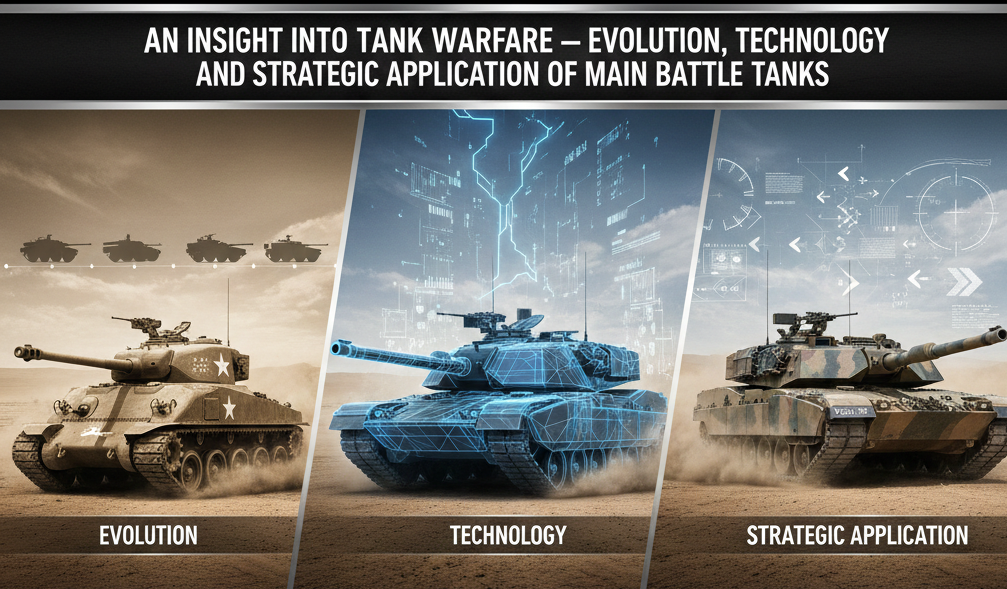
EVOLUTION, TECHNOLOGY, AND STRATEGIC APPLICATION OF MAIN BATTLE TANKS
“If the tanks succeed, then victory follows.” — Heinz Guderian
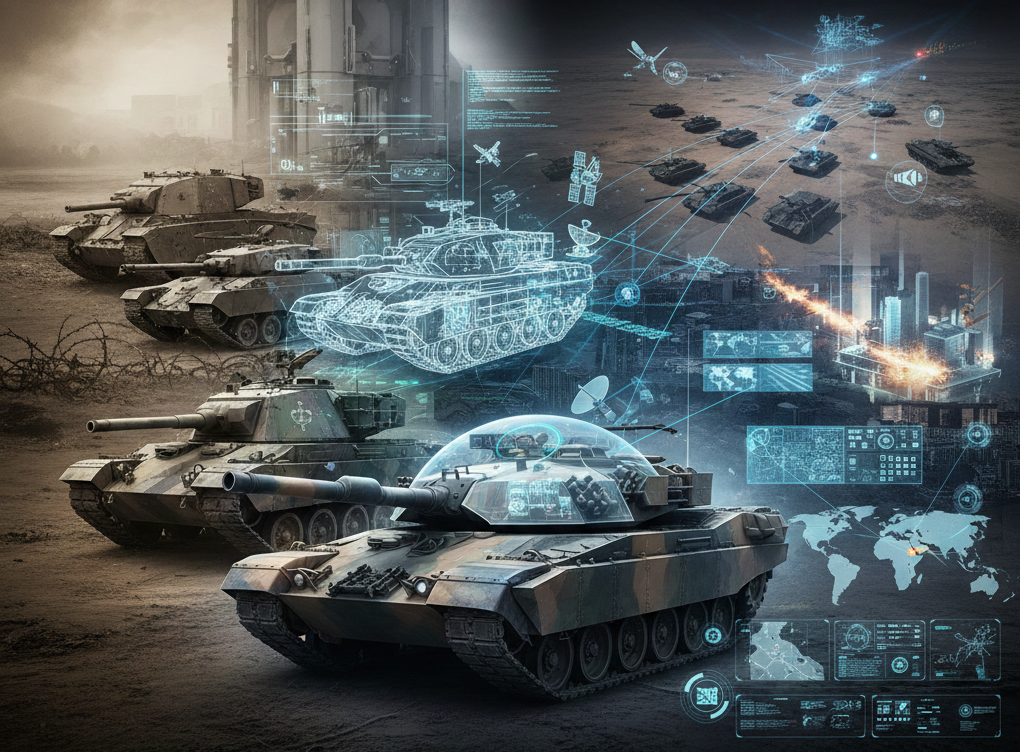
For over a century, the tank has been the centerpiece of mechanized land warfare. Tanks are a deadly fusion of firepower, protection, and mobility delivered in a heavily armored chassis capable of both shock action and sustained maneuver under fire. From the trench-smashing machines of World War I to today’s sensor-fused, networked platforms, Main Battle Tanks (MBTs) continue to adapt to shifting technologies and threat environments. Far from obsolete, modern tanks remain crucial in combined arms maneuver, deterrence strategy, and high-intensity conflict, especially as adversaries field top-attack missiles, drones, and integrated air defenses.
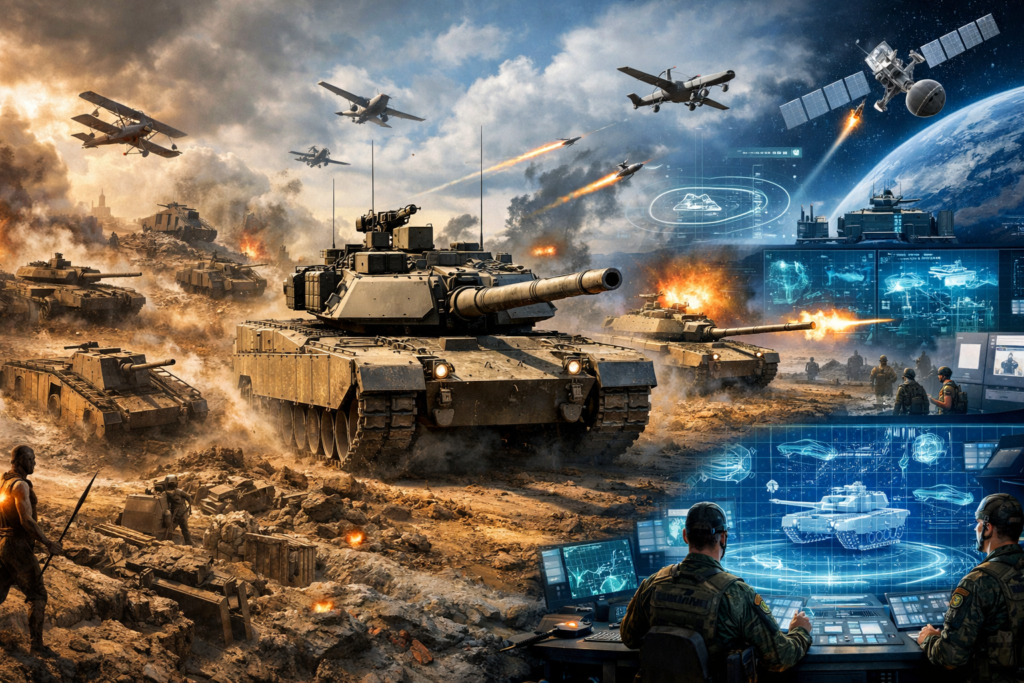
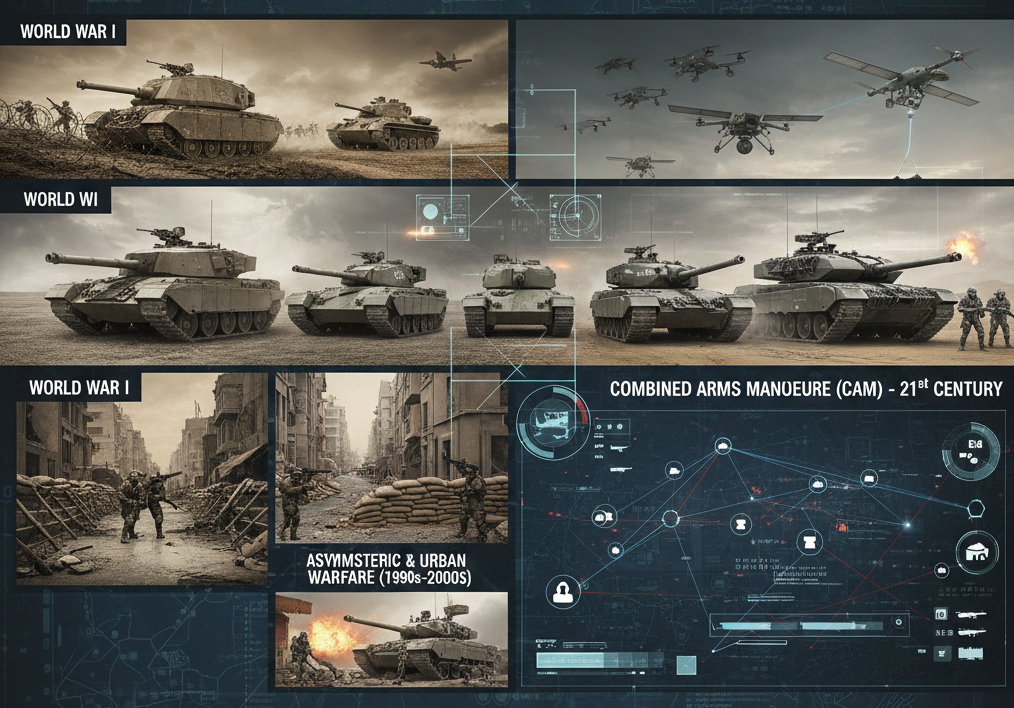
Evolution of Tank Warfare: Historical Context and Doctrinal Shifts
The first operational tanks in World War I were slow, clumsy armored tractors designed to cross trenches and resist small arms fire. By World War II, tanks had become faster, more reliable, and decisive maneuver instruments; the likes of Germany’s Panzer divisions executing deep envelopments in the Blitzkrieg doctrine. This concept emphasized combined arms thrusts using tanks to fracture front lines and create operational breakthroughs. During the early Cold War, planners on both sides envisioned massive armored clashes across Europe. MBTs like the Soviet T-54/55, U.S. M60, and British Centurion were built around high-velocity guns, broad frontal armor, and mechanical reliability. Fire control was analog, and battlefield awareness largely depended on crew optics and raw gunnery skill.
The collapse of the Warsaw Pact shifted focus from superpower pitched battles to asymmetric conflicts, peacekeeping, and urban warfare. Tanks operating in places like the Balkans, Iraq, and Chechnya encountered threats they were not originally optimized for: infantry anti-tank teams in built-up areas, improvised explosive devices (IEDs), and precision-guided munitions. These experiences accelerated advances in protection and networked situational awareness.
In the 21st century, doctrinal thinking matured into Combined Arms Manoeuvre (CAM); the integration of tanks with infantry, artillery, air defense, aviation, drones, and electronic warfare to create synergistic effects on the battlefield. Tanks are no longer isolated strike vehicles; they are nodes within a shared sensor and effect grid that extends beyond line of sight, often controlled or supported by unmanned systems.
Technical Architecture of Modern MBTs
1. Firepower
At the heart of every MBT is its primary weapon system, traditionally the main gun. Modern MBTs almost universally employ smoothbore cannons; 120 mm for NATO and allied designs, 125 mm for Russian and many Eastern-block derivatives due to better handling of high-pressure kinetic rounds and guided munitions.
Contemporary firepower encompasses:
- Ballistics & Ammunition: Armor-Piercing Fin-Stabilized Discarding Sabot (APFSDS) rounds deliver extremely high penetration against modern armor at long ranges. Programmable Multi Purpose (PMP) and Airburst munitions allow tanks to defeat infantry, light vehicles, and low-flying threats with a single round.
- Fire Control Systems (FCS): Digital FCS integrates laser rangefinders, thermal imagers, wind meters, and digital ballistic computers to calculate firing solutions on the move. “Hunter-killer” modes enable commanders to designate targets independently while gunners engage others, shortening engagement times to seconds.
- ATGM Integration: Some MBTs, such as Russian T-90 and T-14 Armata variants, can fire anti-tank guided missiles (ATGMs) from their main guns, extending effective engagement ranges beyond direct-fire line-of-sight. This capability allows MBTs to threaten targets at distances where traditional kinetic rounds would be less effective.
These systems are complemented by coaxial machine guns and remote weapon stations for close defense, enabling tanks to engage mixed target sets without exposing the main gun unnecessarily.
2. Protection
Tank protection has matured from homogeneous steel plates to multilayered defense systems combining passive, reactive, and active elements.
- Composite Armor: Modern modular armor arrays use layers of ceramics, metals, and composite materials to dissipate kinetic energy and disrupt shaped charge jets. Many nations’ most advanced tanks (e.g., German Leopard 2A8 or Korean K2 Black Panther) employ modular elements that can be replaced or upgraded to respond to evolving threats.
- Explosive Reactive Armor (ERA): ERA panels consist of explosive-filled tiles that detonate outward upon impact, disrupting the penetrating jet of a shaped charge warhead. Newer ERA designs protect against tandem-charge warheads and are widely integrated on Eastern-designed tanks.
- Active Protection Systems (APS): Hard-kill APS like Israel’s Trophy or Russia’s Arena-M detect incoming ATGMs or rocket attacks and physically intercept them before they strike the tank’s hull. Soft-kill systems employ jamming or decoying techniques to break missile guidance. APS has become a must-have as cheap guided weapons proliferate.
- Crew Survivability: Western designs often isolate ammunition with blow-off panels to protect occupants in case of internal detonation, whereas Russian and some Asian designs use autoloaders and compact crew arrangements with varying risk profiles.
Protection is no longer about thick armor alone; it’s about multi-domain resilience; minimizing detection, denying hits, and managing effects when struck.
3. Mobility
Mobility determines where and how quickly a tank can exert influence on the battlefield.
- Power-to-Weight Ratio: Modern MBTs tend to have high horsepower engines (1,200–1,500+ hp). Diesel engines offer fuel efficiency and logistical compatibility, while gas turbines (e.g., U.S. M1 series) provide power density but at higher fuel costs. Future designs like hybrid-electric powerpacks aim to reduce thermal signatures and supply electrical power for sensors and countermeasures.
- Suspension: Torsion bar remains common, but hydropneumatic suspension; as on the K2 Black Pantheallows adjustable ride height and superior cross-country agility.
- Operational Considerations: Weight affects strategic mobility. Heavy MBTs (70 + tons) face constraints on bridges, rail transport, and airlift, necessitating robust logistics planning.
Mobility is assessed not just in speed but in sustainability; fuel logistics, terrain adaptability, and ease of maintenance in forward areas.
4. Strategic Doctrine: Tanks in the Combined Arms Era
The doctrinal role of tanks has shifted dramatically:
- In the Blitzkrieg model, tanks were shock penetrators with supporting infantry and artillery following in echelon.
- In Deep Battle, tanks operated in waves to exploit breakthroughs across operational depths.
- In the Combined Arms Manoeuvre model, tanks are integrated elements of a networked force rather than independent strike axes.
Modern doctrine sees tanks working in concert with:
- Infantry Fighting Vehicles (IFVs): Protect dismounted infantry and suppress anti-tank teams.
- Artillery & Fires: Shape the battlespace before armored advances.
- Aviation & UAVs: Provide ISR, overwatch, and even direct attack support.
- Electronic Warfare: Disrupt enemy sensors and communications, reducing the effectiveness of guided munitions aimed at tanks.
This integration dramatically improves survivability and lethality. Tanks no longer operate alone; they are components of a larger cognitive combat system that includes cyber, space, and ISR assets.
5. Tactical Deployment Across Environments
Urban and Built-Up Terrain (MOUT)
Urban environments are arguably the most threatening for MBTs because:
- Lines of sight are constrained, reducing engagement ranges.
- Roof armor is thinner, making tanks vulnerable to top-attack weapons like Javelin, NLAW, and loitering munitions.
- Enemy forces can approach from multiple directions, using concealment and vertical angles.
In cities, tanks serve as mobile protected fire platforms, supporting infantry clearing buildings and streets. They rely heavily on APS, crowd-trained situational awareness systems, and infantry screening to avoid close-range ambush kills.
Open Terrain and Maneuver Warfare
In wide open terrain, tanks regain their traditional advantages:
- Long engagement ranges favor advanced optics and fire control systems.
- High mobility enables rapid flanking maneuvers.
- Combined with UAV reconnaissance and artillery fires, tanks can dominate large tactical spaces.
The ability to engage at long distances with first-round hits is a hallmark of modern MBTs, making them crucial in any high-intensity mechanized confrontation.
Entrenched Defensive Lines
In static defenses, tanks:
- Act as mobile reserves to counter breakthroughs.
- Provide direct fire support against dismounted formations.
- Exploit gaps as part of rotational counterattacks.
However, static deployment without support exposes tanks to precision artillery and drone strikes; underscoring the need for mobility and networked protection.
6. Threat Assessment & Evolution
Top-Attack Missiles and Loitering Munitions
Weapons like FGM-148 Javelin and NLAW are designed to strike tank roofs, where armor is lightest. Their proliferation forces armor designers to rethink overhead protection and APS coverage. Loitering munitions (suicide drones) complicate defense: they can surveil then strike on demand, saturating defenses. Traditional armor cannot protect against omnidirectional threats without active systems and comprehensive aerial defense integration.
Reactive and Learning Adaptations
Tank designers have responded by:
- Emphasizing APS as fundamental rather than optional.
- Improving roof and turret defenses with composite and reactive arrays.
- Integrating counter-drone detection and jamming systems.
- Networking tanks with ISR assets to preempt incoming threats.
Conflicts like Ukraine have highlighted that unsupported tanks are vulnerable to cheap, ubiquitous guided threats; not obsolete, but dependent on comprehensive combined arms support.A
7. Logistics & Sustainability
In modern high-intensity warfare, the effectiveness of armored formations is determined as much by their logistical resilience as by their firepower or protection. History consistently demonstrates that tanks do not fail primarily because they are destroyed by enemy fire, but because they run out of fuel, ammunition, spare parts, or recoverability. In the 21st-century battlefield characterized by persistent ISR, long-range precision fires, and drone-saturated airspace, the logistical “tail” of armor has become both a critical enabler and a prime vulnerability. Main battle tanks remain among the most fuel-intensive systems on the battlefield. High-output engines, heavy armor, and continuous movement under combat conditions result in extraordinary consumption rates, often measured in hundreds of liters per 100 kilometers. This dependency creates a constant demand for fuel convoys, which in turn generate predictable patterns of movement that are easily detectable by modern surveillance assets.
Fuel Consumption and Energy Dependency
The logistical burden is particularly pronounced for tanks such as the M1 Abrams, whose gas turbine engine offers exceptional power and reliability but at the cost of significant fuel consumption. While diesel powered tanks exhibit greater efficiency, no contemporary MBT escapes the fundamental reality that armored maneuver is energy-hungry. As seen in Ukraine, fuel shortages have repeatedly halted armored thrusts long before enemy resistance became decisive. In response, modern armies are exploring hybrid propulsion, auxiliary power units, and improved energy management systems to reduce consumption during idle periods and low-speed operations. These innovations aim not only to extend operational range but also to reduce the exposure of fuel logistics to enemy interdiction.
Ammunition Supply and Sustainment Under Fire
Modern tank ammunition whether kinetic energy penetrators or programmable multi-purpose rounds is expensive, specialized, and logistically demanding. Unlike Cold War-era stockpiles designed for massed engagements, contemporary armored units rely on precision fires, which demand reliable resupply to maintain tempo. Resupplying tanks under fire has become increasingly hazardous. Drone surveillance, loitering munitions, and long-range artillery mean that ammunition resupply points are frequently targeted. As a result, modern doctrine emphasizes distributed logistics, smaller resupply packets, and rapid “shoot-and-scoot” replenishment techniques rather than centralized dumps. Digitally enabled logistics systems now allow commanders to track ammunition expenditure in near real time, enabling predictive resupply rather than reactive replenishment. This capability ensures that armored units can sustain combat operations without operational pauses that expose them to enemy action.
Maintenance, Repair, and Battlefield Recoverability
The ability to repair and recover damaged tanks is a critical yet often overlooked aspect of sustainability. Modern MBTs are complex machines, integrating advanced electronics, optics, and protection systems that require skilled maintenance even under field conditions. Damage that would once have rendered a tank combat-ineffective can now often be repaired if recovery assets can reach the vehicle. Recovery operations themselves have become increasingly dangerous. Disabled tanks frequently attract follow-on strikes from drones or artillery, turning recovery sites into kill zones. This has forced armies to adapt with armored recovery vehicles equipped with electronic countermeasures, smoke systems, and rapid extraction techniques. Predictive maintenance technologies are now reshaping this domain. By monitoring component health, forces can replace parts before failure occurs, reducing the number of breakdowns in exposed positions. This shift significantly improves operational availability and reduces non-combat losses, which historically account for a substantial proportion of armored attrition.
Spare Parts, Industrial Capacity, and Supply Chain Vulnerabilities
Sustainability in modern armored warfare extends beyond the battlefield into the industrial base. Spare parts for advanced tanks often rely on specialized manufacturing, rare materials, and complex electronics, making them vulnerable to supply chain disruption. Sanctions, export controls, and wartime attrition can rapidly degrade a nation’s ability to sustain high-end armored fleets. The conflict in Ukraine has starkly illustrated this reality. Nations with deep industrial capacity and access to international supply networks have demonstrated greater resilience, while those reliant on limited domestic production have struggled to replace losses or conduct major repairs. As a result, many modern tank programs emphasize modular design, allowing damaged components to be swapped quickly rather than repaired in place. Digital logistics systems increasingly link battlefield consumption to factory output, enabling strategic-level planners to anticipate bottlenecks before they become operational crises. In prolonged conflicts, this integration between industry and frontline units becomes a decisive advantage.
Logistics Under Persistent ISR and Precision Fires
The modern battlefield offers no rear area sanctuary. Persistent ISR from satellites, UAVs, and electronic surveillance has erased the traditional distinction between front lines and support zones. Fuel convoys, maintenance parks, and logistics hubs are now routinely targeted by long-range precision fires. To survive, armored forces must adopt mobility, deception, and dispersion as core logistics principles. Camouflage, emissions control, rapid relocation, and decoy logistics sites are increasingly standard practice. Logistics units must operate with the same level of tactical awareness and protection as combat units; a profound cultural shift from earlier doctrines that treated logistics as a rear-echelon activity.
In contemporary warfare, the combat effectiveness of an armored brigade is increasingly measured not by the number of tanks it fields, but by the number it can keep operational over time. A smaller force with high readiness, reliable resupply, and rapid repair capability may outperform a numerically superior formation crippled by logistical shortfalls. Modern armies are therefore redefining sustainability as an integral component of combat power. Logistics is no longer a supporting function; it is a strategic weapon. Those who can fuel, arm, repair, and recover their tanks faster than the enemy will dominate the armored battlefield regardless of whose gun is larger or whose armor is thicker.
8. Global Armor Capabilities & Contemporary MBT Profiles
Modern main battle tanks are not merely weapons systems; they are expressions of how states intend to fight, deter, and survive on future battlefields. Differences in design philosophy crew survivability versus firepower, mass versus quality, autonomy versus manned control reflect deeply rooted strategic cultures. A comparative examination of contemporary MBTs therefore reveals as much about national military thought as it does about metallurgy and electronics.
United States
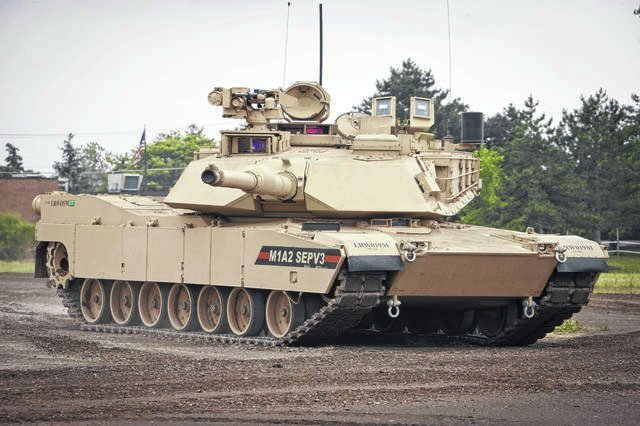
M1A2 SEP v3 / v4 Abrams: The M1A2 SEP v3 and emerging v4 Abrams remain the backbone of U.S. armored forces and represent a distinctly American approach to tank warfare: overwhelming survivability, superior fire control, and deep integration into a joint, network-centric force. The Abrams was never designed to operate alone; its true strength lies in synergy with ISR assets, artillery, airpower, and logistics depth.
The SEP v3 introduces significant upgrades in power management, thermal sights, ammunition data links, and onboard diagnostics, enabling improved performance against both armored threats and dismounted targets. The continued use of depleted uranium composite armor augmented by modular add-on protection keeps Abrams among the most survivable MBTs ever fielded. The integration of Active Protection Systems, such as Trophy, marks a recognition that passive armor alone is no longer sufficient against modern top-attack and tandem-charge threats.
Looking ahead, the SEP v4 concept emphasizes a digital backbone, enabling rapid software upgrades, enhanced sensor fusion, and deeper interoperability with unmanned systems. Hybrid propulsion concepts under study aim to reduce fuel consumption and thermal signature addressing one of Abrams’ long-standing vulnerabilities. The U.S. approach prioritizes battlefield dominance through information, sustainment, and combined arms, rather than massed armored maneuver alone.
Germany and NATO
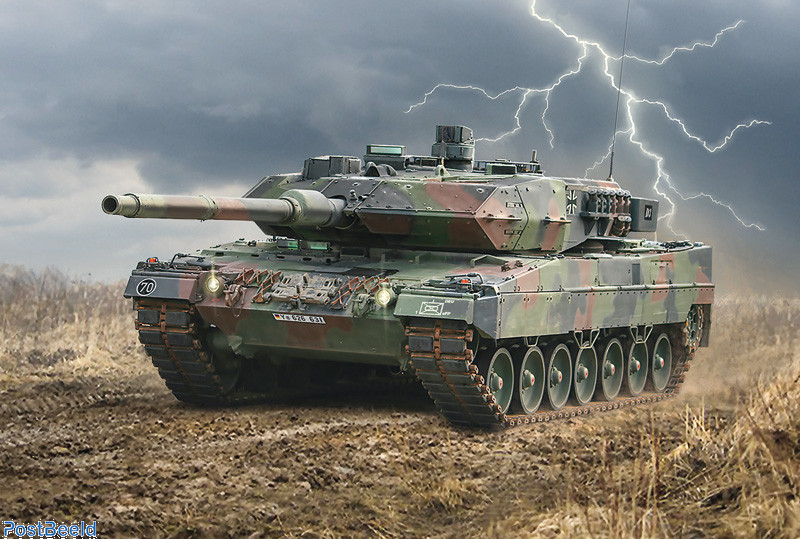
The Leopard 2 series, particularly the 2A7 and forthcoming 2A8, stands as the most widely deployed Western MBT family and the cornerstone of European armored capability. Its success lies in a balanced design emphasizing fire control excellence, modular protection, and adaptability to coalition operations. The Leopard 2A7 incorporates enhanced frontal and side armor, improved climate control for extended deployments, and advanced optics optimized for both high-intensity conflict and urban operations. The 2A8 further integrates hard-kill APS, upgraded digital architecture, and improved survivability against drones and loitering munitions, reflecting lessons drawn from Ukraine.
Germany’s decision to deploy a permanent armored brigade on NATO’s eastern flank, equipped with Leopard 2A8s, underscores continued confidence in heavy armor as a deterrent even in an era of drones and precision missiles. Within NATO, the Leopard’s widespread adoption simplifies logistics, training, and interoperability, making it not just a tank but a strategic enabler of alliance cohesion.
United Kingdom
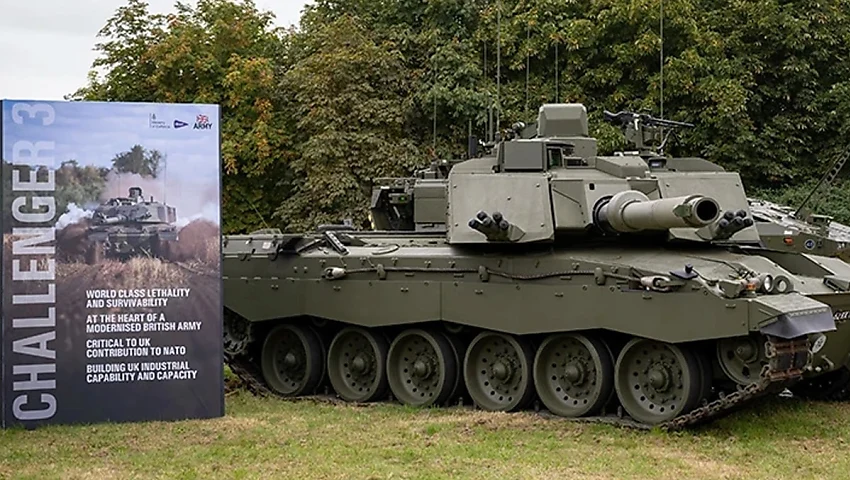
The Challenger 3 program represents a fundamental shift in British armored doctrine. By replacing the unique rifled gun of Challenger 2 with a NATO-standard 120 mm smoothbore, the UK signals a renewed commitment to interoperability, lethality, and sustainability. Beyond armament, Challenger 3 introduces a fully digital fire control system, modern thermal imaging, and a layered survivability approach incorporating both passive composite armor and hard-kill APS. The emphasis is on crew survivability, situational awareness, and the ability to fight effectively within a NATO digital battlespace. Rather than pursuing large numbers, Britain’s approach focuses on quality, survivability, and integration positioning Challenger 3 as a high-end contributor to coalition warfare rather than a mass armored force.
Asia and Eastern Europe
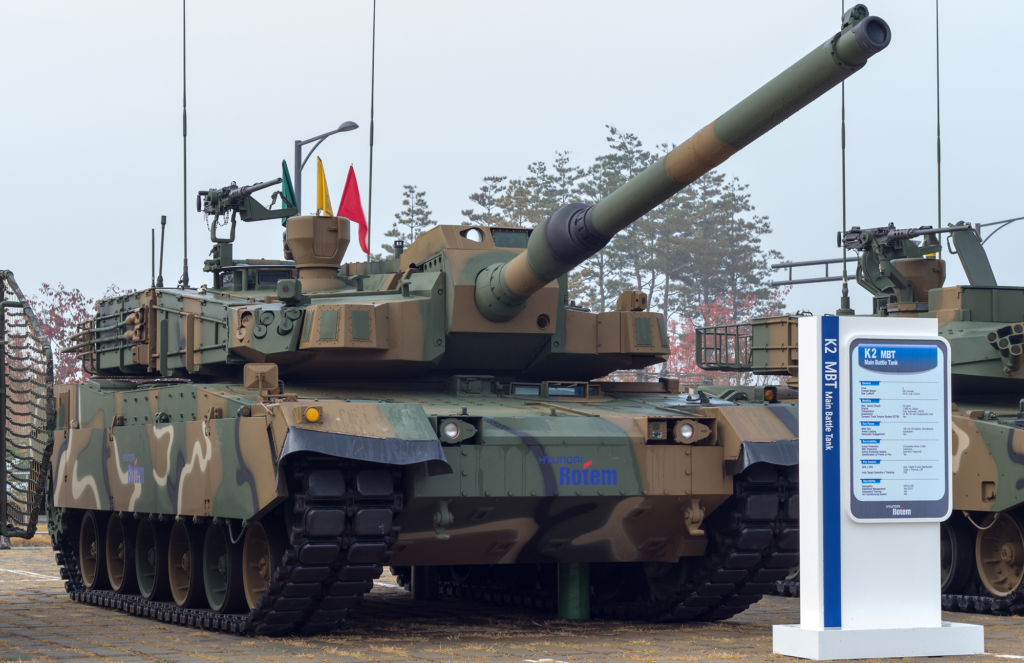
K2 Black Panther (South Korea): The K2 Black Panther of South Korea represents one of the most technologically sophisticated MBTs currently in service. Designed for Korea’s mountainous terrain, it combines high mobility with advanced automation. Its hydropneumatics suspension allow the tank to “kneel” or adjust posture for hull-down firing positions; an advantage in both defensive and urban combat. The K2’s autoloader reduces crew size while maintaining high rates of fire, and its modular armor architecture allows rapid adaptation to evolving threats. The tank’s export to Poland and its selection as a cornerstone of Warsaw’s armored modernization highlights a growing trend: Asian-designed MBTs competing successfully with traditional Western platforms.
Future-oriented programs such as Germany’s KF51 Panther and South Korea’s K3 push this trajectory further. Larger-caliber guns (130 mm and beyond), unmanned turrets, and hybrid-electric propulsion concepts suggest a deliberate move toward crew isolation, increased lethality, and reduced signatures, shaping the post-2035 design paradigm.
Russia and China
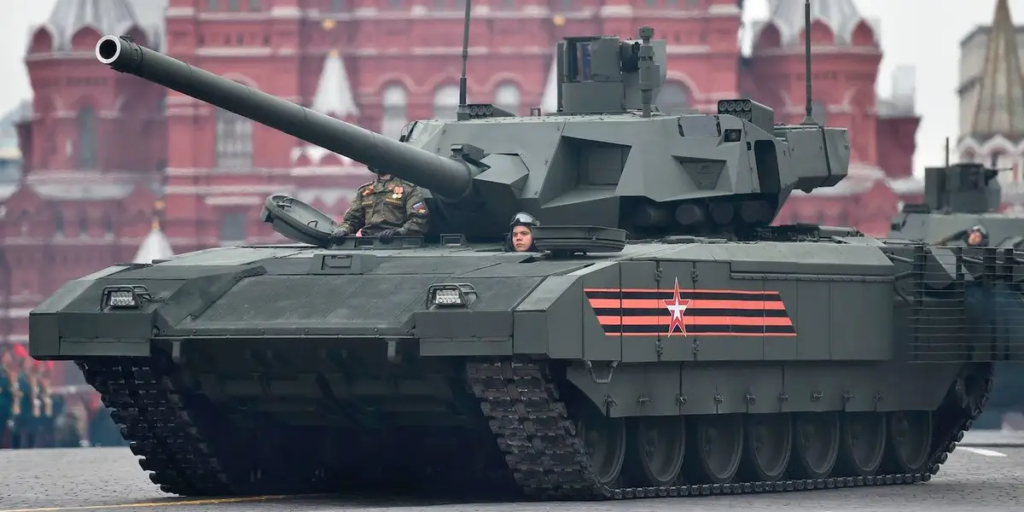
Russia’s T-14 Armata represents a radical departure from Soviet-era tank design. Its unmanned turret and isolated crew capsule reflect lessons learned from decades of catastrophic ammunition detonations in older T-series tanks. In theory, Armata offers superior crew survivability, automated threat detection, and growth potential for AI integration.
However, limited production, high costs, and industrial constraints have restricted its operational impact. Instead, Russia continues to rely heavily on upgraded legacy platforms, supplemented by ad hoc survivability measures such as ERA proliferation and cage armor. The Armata thus represents more a conceptual bridge to future automation than a decisive battlefield presence.
China’s Type 99A, by contrast, reflects a methodical and scalable approach. Combining a 125 mm gun, advanced fire control, composite armor, and increasing network integration, the Type 99A anchors China’s elite armored units while thousands of modernized older tanks provide mass. China’s strength lies not only in technology but in industrial capacity and numerical depth, allowing rapid force regeneration in prolonged conflict.
Other Global Players
Several nations maintain significant armored forces and domestic MBT programs, including:
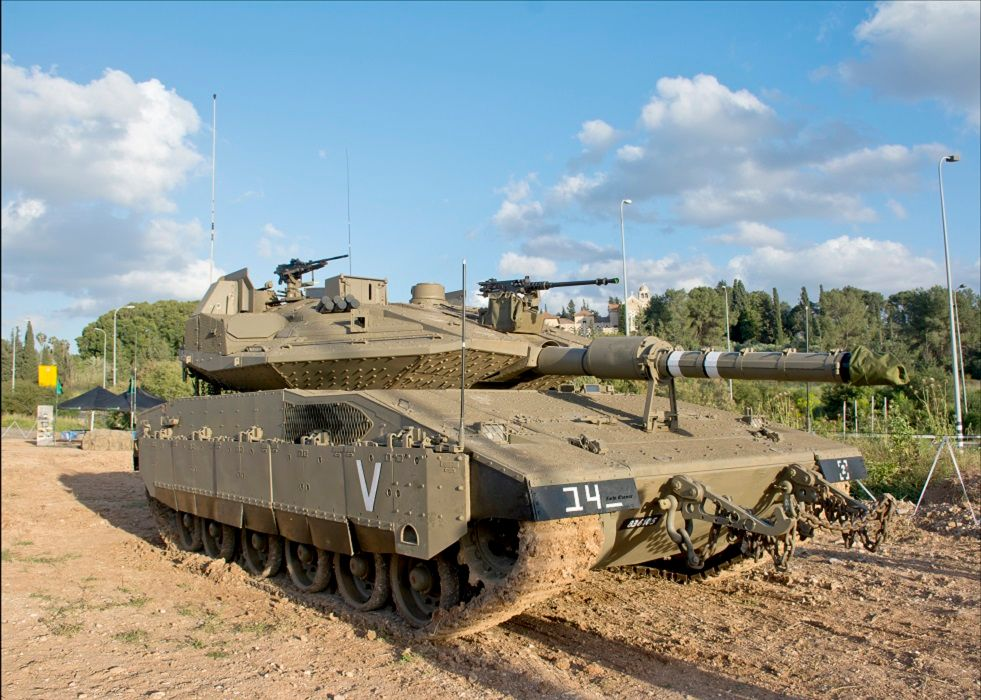
- Israel’s Merkava Mk.4 with Trophy APS emphasizing crew protection.
- India’s Arjun Mk.1A with Kanchan armor and advanced fire control.
- Turkey’s Altay integrating domestic powerpacks and fire control systems.
- Serbia’s M-84AS3 upgrade incorporating Phase-III ERA and APS.
Israel’s Merkava Mk.4, with its forward-mounted engine and emphasis on crew survival, reflects decades of asymmetric conflict and urban warfare. Its integration of the Trophy APS has already demonstrated combat effectiveness, influencing global APS adoption. India’s Arjun Mk.1A emphasizes heavy protection and fire control sophistication, though logistical challenges and terrain constraints have limited widespread deployment. Turkey’s Altay program highlights the strategic importance of indigenous defense industries, as Ankara seeks autonomy in power packs, electronics, and protection systems. Upgraded legacy platforms, such as Serbia’s M-84AS3, illustrate how smaller states adapt existing fleets with modern ERA, APS, and digital sights maintaining relevance without the cost of clean-sheet designs.
Future Trajectory of Armored Warfare
Over the coming decades, the evolution of main battle tanks will be defined less by dramatic increases in armor thickness or gun caliber and more by the integration of artificial intelligence, digital networking, and man–machine collaboration. The tank of the 2030s will remain a heavily protected direct-fire system, but its true combat value will increasingly derive from its role as an information-dominant battlefield node rather than a standalone kinetic asset. Artificial intelligence is set to fundamentally transform fire control systems, shifting tanks from reactive platforms to predictive engagement systems. Future fire control architectures will integrate AI algorithms capable of rapidly analyzing multispectral sensor inputs—thermal, optical, radar, acoustic, and drone-fed ISR—to identify, classify, and prioritize threats in real time. Rather than merely computing ballistic solutions, AI-assisted systems will recommend firing sequences, ammunition selection, and engagement timing based on probabilistic models of enemy behavior and terrain constraints.
Perhaps the most profound doctrinal shift will be the normalization of manned–unmanned teaming (MUM-T) within armored units. Rather than operating as isolated platforms, future MBTs will coordinate with robotic scouts, autonomous logistics carriers, and unmanned weapon platforms. These systems will extend the tank’s sensing, striking, and survivability envelope without exposing crewed vehicles to unnecessary risk. Robotic scouts can move ahead of armored formations to detect ambushes, minefields, or drone launch sites, feeding real-time data back to MBTs. Unmanned turreted vehicles or remote missile carriers may accompany tank platoons, providing additional firepower or serving as decoys that draw enemy fires. This distributed architecture allows tanks to dominate terrain through system-of-systems warfare, where the loss of individual platforms does not collapse overall combat effectiveness.
As armor becomes increasingly networked, the decisive factor in tank warfare will shift toward information superiority and network resilience. Future MBTs will be deeply integrated into digital battle management systems, sharing targeting data with infantry, artillery, drones, attack helicopters, and even space-based ISR assets. In such an environment, a tank’s effectiveness is inseparable from the integrity of its data links and electronic protection measures. Electronic warfare and cyber resilience will therefore become core survivability attributes. Protecting communications, countering GPS denial, resisting data spoofing, and maintaining trusted situational awareness will be as vital as resisting kinetic penetration. Tanks that lose their network connectivity risk becoming blind and tactically irrelevant, regardless of how well armored they are.
Taken together, these trends indicate that the tank is not becoming obsolete—but it is being redefined. Rather than serving primarily as a brute-force breakthrough weapon, the MBT of the next decade will function as a heavily protected command-and-fire node, anchoring combined arms formations through information dominance, precision fire, and integration with unmanned systems. Kinetic power will remain necessary—there is no substitute for direct fire in many combat scenarios—but it will no longer be sufficient on its own. Tanks that cannot sense first, decide faster, communicate securely, and operate within a digitally contested battlespace will be outmatched, regardless of their armor thickness or gun caliber.
Conclusion
In a nutshell, Main Battle Tanks have evolved far beyond iron and firepower. Today’s armored warfare integrates digital networking, multi-layered protection, and combined arms synergy to sustain battlefield relevance despite increasingly lethal threats. Contemporary MBTs are not obsolete; they are highly adaptive platforms whose future will be defined by connectivity, autonomy, and integrated survivability.