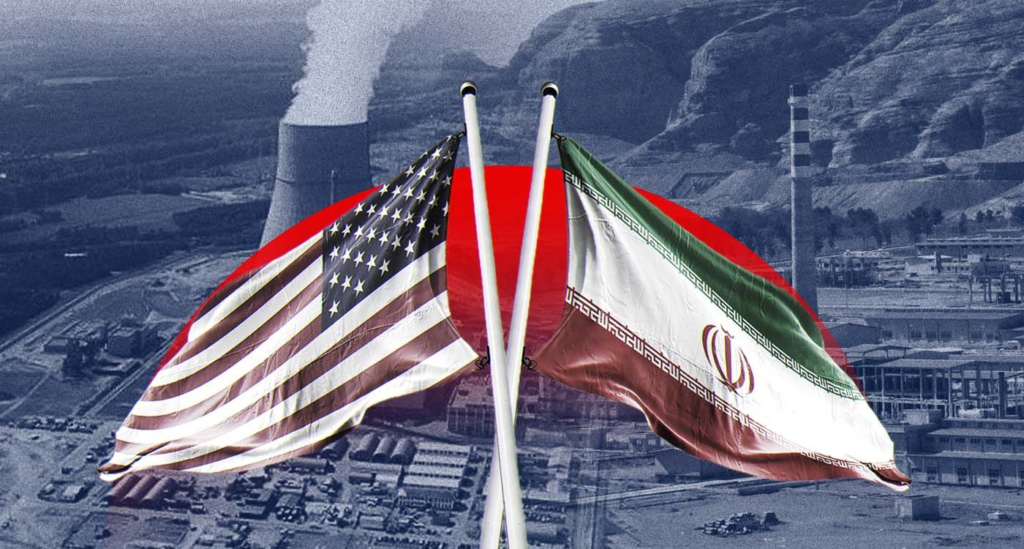
The Middle East has rarely been short of crises. But something categorically different has crystallized since 2023; a tectonic shift that has redefined not just the Iran–USA rivalry, but the entire architecture of regional power. Old frameworks no longer hold. New rules of engagement, new actors, and new weapons of statecraft have emerged. Understanding this transformation is not merely an exercise in geopolitical curiosity; it is increasingly, a matter of global consequence.
“In nearly five decades of deep antagonism and occasional collaboration, the Islamic Republic and the U.S. have never been so close to the precipice of a major conflict.” (International Crisis Group, February 2026)
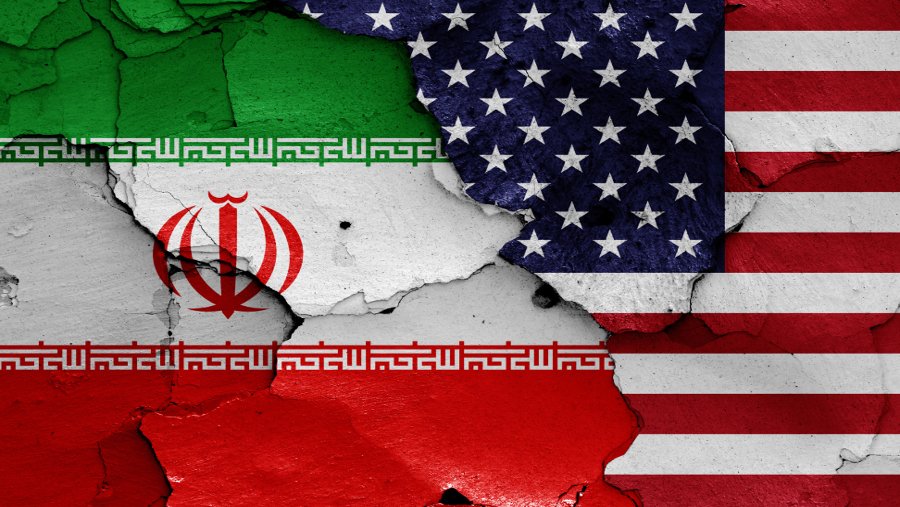
This analysis traces the arc from Cold War-era proxy tensions to the multi-domain, multi-front reality of today; a world in which Iran and the United States no longer simply confront each other bilaterally.
But do so through layered networks of allies, proxies, cyber operations, and nuclear brinkmanship.
The Old Paradigm: Containment, Sanctions, and Proxy Distance
For most of the post-1979 era, the Iran–USA conflict followed a relatively predictable grammar. The 1979 Islamic Revolution upended Washington’s regional order and produced a hostility that never fully cooled, but it was also a hostility with guardrails.
Both sides engaged in what scholars’ call ‘managed antagonism’ enough friction to signal resolve, not enough combustion to trigger full-scale war.
The pattern held across decades. Through the Iran–Iraq War of the 1980s in which Washington covertly backed Saddam Hussein to the tanker wars, the sanctions regimes, and the nuclear standoffs of the 2000s and 2010s, both sides managed escalation with an implicit awareness of limits.
Iran built its ‘Axis of Resistance’; a network of allied militias across Lebanon, Syria, Iraq, and Yemen as a low-cost deterrent that projected power without direct confrontation. Washington, in turn, used sanctions, covert operations, and strategic positioning as pressure tools short of war.
The 2015 Joint Comprehensive Plan of Action (JCPOA) represented the high-water mark of this managed engagement. It constrained Iran’s nuclear program in exchange for sanctions relief; a transactional arrangement that acknowledged neither side’s full demands but provided workable stability. When President Trump withdrew from the deal in 2018 and reimposed sweeping sanctions under his ‘maximum pressure’ campaign, he did not merely end a diplomatic agreement. He pulled the last structural pillar out of the old order. The JCPOA’s collapse in 2018 set in motion a chain of events Iranian nuclear acceleration, proxy escalation, and the eventual June 2025 military strikes on Iranian nuclear facilities that define the current crisis.
The Tipping Points: A Cascade of Irreversible Shocks
No single moment broke the old paradigm. It was a cascade; a sequence of shocks that, taken together, made return to the status quo ante impossible. The first major rupture came in January 2020, when the Trump administration ordered a drone strike that killed IRGC-Quds Force commander Major General Qasem Soleimani at Baghdad airport. Soleimani was not merely a military commander; he was the architect of Iran’s entire regional proxy network, a figure of strategic irreplaceable significance. Iran’s retaliation, a limited missile strike on a US base in Iraq, signalled both resolve and restraint. But the psychological and strategic damage was done: the era of implicit red lines had ended.
The second rupture was the October 7, 2023 Hamas attack on Israel and the war that followed. Iran had long supported Hamas financially and militarily, but the scale and coordination of the attack and the devastating Israeli campaign in Gaza that followed, pulled every regional actor into a new alignment. The Houthis in Yemen, backed by Iran, began targeting commercial shipping in the Red Sea, disrupting global trade routes. Hezbollah in Lebanon opened a second front. Iraqi militias struck US bases across the region. Iran’s proxy network, once a background hum of regional tension, became the foreground of a multi-front conflict.
Then came June 2025. In a coordinated operation, Israeli forces with US backing and ultimately direct US military strikes targeted Iran’s nuclear infrastructure and senior military leadership in a 12-day conflict. Iran retaliated with an estimated 550 ballistic missiles and over 1,000 attack drones, striking US facilities in Qatar and Israel. The conflict ended via ceasefire, but it shattered the last remaining assumption of bilateral restraint.
“The era of calibrated restraint has ended.” — Middle East Council on Global Affairs, February 2026
The New Paradigm: From Bilateral Rivalry to Regional System War
What has emerged from this cascade is not a new Cold War; it is something more structurally complex and more immediately dangerous. Three features define the new paradigm.
First, the conflict has become multi-domain. Traditional state-on-state confrontation army versus army, navy versus navy has given way to a battlefield that simultaneously spans kinetics, cyber operations, proxy warfare, economic pressure, information warfare, and nuclear brinkmanship.
Following the June 2025 strikes, CSIS analysts noted a 700% increase in cyberattacks targeting Israel in just the two days after the conflict: a preview of Iran’s intent to impose costs across multiple domains simultaneously without triggering conventional escalation.
Second, the geography of conflict has radicalized. Iran’s chief of staff, Major General Abdolrahim Mousavi, publicly declared that Iran has ‘revised its defense doctrine and shifted to an offensive doctrine’ in which actions will be ‘swift, decisive, and unconstrained by America’s calculations.’
The Defence Council went further, declaring that Iran no longer limits itself to responding only after an attack ‘objective signs of threat are now part of its security calculus.’ This doctrine shift represents a move from reactive deterrence to pre-emptive posturing with existential stakes.
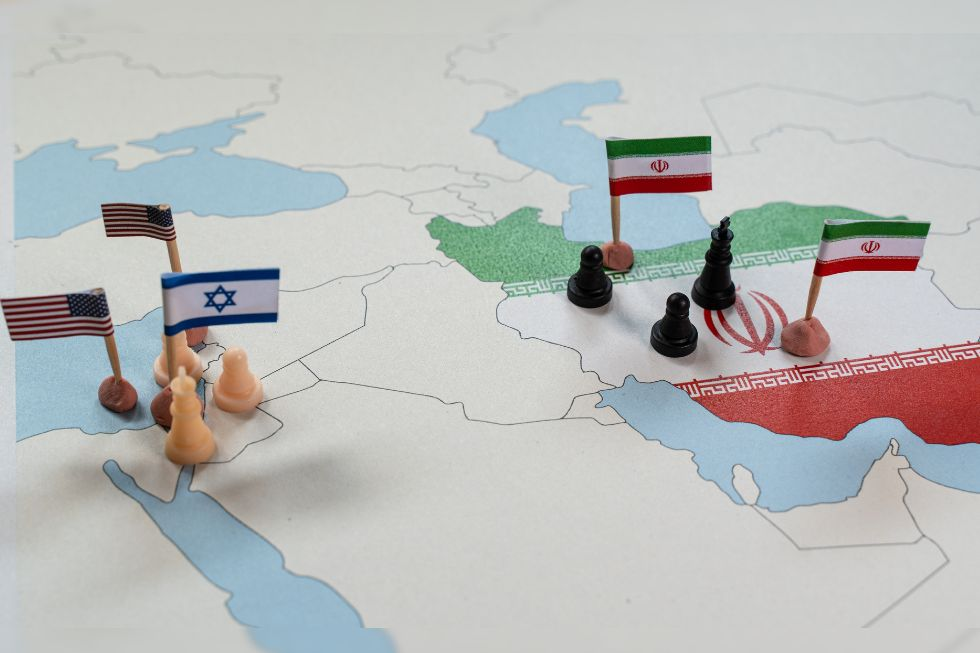
Third, the regional fault lines have fractured and re-formed in unexpected configurations. Saudi Arabia and Turkey long-standing rivals of Iran rallied behind Tehran when US-backed regime change became a real possibility in late 2025, fearing the strategic vacuum that would result from Iran’s collapse. As analysts at the Geopolitical Monitor observed, what emerged was an informal coalition of ‘Middle East elders’; Riyadh, Ankara, Doha, Muscat prioritizing stability over ideology. Meanwhile, a counter-bloc of the UAE, Israel, and Azerbaijan converged on the shared interest of a strategically diminished Iran.
The conflict is no longer primarily bilateral (Iran vs. USA). It is a contested regional system in which multiple actors, alliances, and domains interact simultaneously making escalation pathways exponentially more complex and dangerous.
Key Actors and Fault Lines
Understanding the new paradigm requires mapping its actors precisely. Iran’s Axis of Resistance: Hezbollah in Lebanon, the Houthi movement in Yemen, Hamas in Gaza, and Shiite militias in Iraq and Syria was once the centerpiece of Tehran’s deterrence strategy. By 2025, however, the axis had been severely degraded. Israel’s campaign systematically decapitated Hamas and Hezbollah leadership; the fall of the Assad regime in Syria removed a key logistics corridor; and the June 2025 strikes damaged Iran’s missile infrastructure significantly.
Yet Iran has proven its resilience. Despite heavy blows, Tehran reconstituted its medium-range ballistic missile stockpile to near pre-war levels, reportedly with solid-fuel components ordered from China and expanded military cooperation with Russia, both of which rejected the legality of October 2025 snapback sanctions and saw no legal barriers to continuing collaboration. Iran now maintains an arsenal estimated at over 3,000 ballistic missiles capable of striking US bases and allied territory across the region.
On the US side, the current military posture represents the largest concentration of American air and naval power in the Middle East since the 2003 invasion of Iraq; two aircraft carrier strike groups, squadrons of F-22 Raptors, Tomahawk-equipped destroyers, and purpose-deployed minesweeping vessels in the Strait of Hormuz. Pentagon planning, confirmed by US officials to Reuters, has moved beyond symbolic strikes to contingency preparations for ‘sustained, weeks-long operations against Iran.’
Israel occupies a uniquely complicated position. While strongly supportive of pressure on Iran, it has also depleted the June 2025 conflict cost Israel an estimated $12 billion and consumed roughly 25% of total US THAAD interceptor stockpiles. It strongly opposes nuclear negotiations, viewing any diplomatic accommodation of Iran as an existential threat, yet its own military sustainability for another large-scale exchange is constrained.
Russia and China hover at the strategic periphery neither willing to openly enter the conflict, but both deeply invested in Iran’s survival as a counterweight to US regional hegemony. Their rejection of snapback sanctions and continued military-technical cooperation with Tehran represent a quiet but consequential intervention in the balance of power.
Current Dynamics: War on the Horizon
As of early 2026, the Middle East stands at perhaps its most precarious juncture since the Gulf War. US–Iran nuclear negotiations conducted through Omani intermediaries have produced several rounds of talks, but each round has exposed the gulf between the sides. Washington has progressively expanded its demands beyond the nuclear file to include Iran’s ballistic missile programme and regional proxy relationships. Tehran views these expansions as bad-faith maximalism designed to humiliate rather than negotiate.
Domestically, Iran is under extraordinary strain. Rolling electricity blackouts, economic exhaustion from compounding sanctions, and protests in late 2025 amplified, Iranian officials noted, by Trump’s supportive messaging have tested the regime’s social contract. Yet the regime has held. The Islamic Republic’s leadership appears to have drawn a clear lesson from the June 2025 strikes: the domestic rally-around-the-flag effect proved more durable than Washington anticipated.
On the diplomatic track, talks resumed in Oman after the June ceasefire, with both sides adopting the same paradoxical posture ready for war but preferring a deal. The International Crisis Group’s assessment is particularly stark: the twelve-day war cost Israel up to $12 billion and depleted a quarter of all US THAAD interceptors, worth roughly $12 million apiece.
The financial and strategic cost of another conflict particularly for a White House with 2026 midterm elections on the horizon creates its own countervailing pressure against escalation.Iran’s Defence Council has signalled that the next conflict ‘will not be geographically contained or operationally limited.’ American bases, naval assets, and Gulf Arab partner facilities are explicitly named as targets a posture that transforms any bilateral strike into a potential regional conflagration.
Scenarios: What Comes Next?
Three plausible scenarios define the near-term horizon, each carrying vastly different consequences.
The first is a negotiated freeze; an imperfect, limited-scope nuclear agreement that allows both sides to declare partial victory. This would involve Iran accepting enrichment limits and intrusive IAEA verification in exchange for meaningful sanctions relief, while leaving the missile programme and proxy networks off the immediate table. Both the Trump administration and Tehran have signalled openness to this architecture, but the window is narrow and the trust deficit is severe.
The second scenario is limited military escalation; a US-led strike campaign on Iran’s remaining nuclear infrastructure and missile facilities, larger in scope than June 2025 but still short of a full-scale war. Iran retaliates asymmetrically through missiles, drones, cyber operations, and proxy attacks on Gulf Arab oil infrastructure and US bases imposing costs without crossing the threshold of a full conflict. The region absorbs the shock, but the underlying dynamic is unchanged or worsened.
The third and most dangerous scenario is full regional conflagration; an escalation spiral in which a US strike triggers Iranian retaliation against Israel and Gulf states, drawing in Hezbollah remnants, Iraqi militias, and Houthi forces simultaneously, and creating the conditions for a prolonged, multi-front war with severe consequences for global energy markets and the world economy. The Strait of Hormuz through which roughly 20% of global oil flows is the single most consequential chokepoint in this scenario.
Analysts across the spectrum from the International Crisis Group to the Middle East Institute broadly agree that Iran seeks the first scenario but is preparing for the second, while both parties risk sliding into the third through miscalculation.
Why This Matters Beyond the Middle East
The Iran–USA conflict has never been merely a regional story. What happens in the next twelve to twenty-four months will shape the architecture of global order in ways that extend far beyond the Middle East’s borders. Energy security sits at the centre of this globalisation of stakes. A conflict that disrupts Strait of Hormuz traffic even temporarily would send oil prices spiralling, triggering inflationary shocks across every economy dependent on imported energy. The Red Sea disruptions caused by Houthi attacks since 2024 have already demonstrated how a sub-state actor with Iranian backing can reroute global shipping and add billions to global trade costs.
The nuclear proliferation dimension is equally consequential. IAEA chief Rafael Grossi has warned explicitly that a nuclear-armed Iran could trigger broad proliferation, as Saudi Arabia, Turkey, and the UAE, all of whom have made no secret of their own nuclear ambitions would face irresistible pressure to develop matching capabilities. The Middle East currently sits on the edge of a potential proliferation cascade that would permanently alter the global non-proliferation regime.
Finally, the conflict’s outcome will test the credibility of the US as a security guarantor in an era of great-power competition. If Washington is seen to back down under pressure, the signal sent to China regarding Taiwan and to Russia regarding European NATO commitments will be deeply damaging. If it escalates into a costly, inconclusive war, the domestic political consequences and strategic resource drain could have equally far-reaching effects on America’s global posture.
“The underlying assumption is that any military response is part of a larger bargaining strategy. States talk and fight at the same time.” — CSIS, February 2026
A New Era, An Old Imperative
The paradigm has shifted. Iran and the United States are no longer managing a bilateral rivalry through proxies and sanctions alone; they are navigating a multi-front, multi-domain system conflict with existential dimensions for both sides and catastrophic potential for the wider world. The old guardrails are gone. New ones have not yet been built.
History suggests that great-power confrontations at this pitch of intensity rarely resolve neatly. They tend to escalate, de-escalate unevenly, or persist in volatile stalemate until one side’s domestic pressures force a decision. What is clear is that the choices made in Oman, in Washington, in Tehran, and in Tel Aviv over the coming months will define the trajectory of not just the Middle East but of the international order itself.
For observers, analysts, and concerned citizens everywhere, the imperative is the same: to understand this moment not through the simplifying lenses of good versus evil, or strength versus weakness.
But through the complex, contingent, and deeply human dynamics of power, fear, and the desperate search for stability in a world that has lost its footing.