The War That Refuses to Die…
Introduction
The Russia–Ukraine war stands as one of the most consequential military and geopolitical conflicts of the 21st century. What began as a political and strategic dispute following the collapse of the Soviet Union has evolved into a full-scale war with far-reaching implications for European security, global energy markets, international law, and the future of great‑power competition. The conflict is not merely a clash of armies; it is a struggle shaped by history, identity, economics, and competing visions of regional order.
At its core, the war reflects Ukraine’s assertion of sovereign choice—particularly its desire to integrate with Western political and economic structures—and Russia’s determination to prevent what it perceives as strategic encirclement and loss of influence in its near abroad. The annexation of Crimea in 2014 marked a decisive turning point, while Russia’s large-scale military invasion in February 2022 transformed a regional dispute into a global crisis.
This article provides a structured and analytical overview of the Russia–Ukraine conflict, tracing its historical roots, examining the economic and military capacities of both states, assessing the strategic motivations of Russia and the response of the West, and evaluating broader implications—particularly for countries such as Pakistan navigating an increasingly polarized world.
Historical Roots of Russia–Ukraine Relations
The shared history of Russia and Ukraine stretches back more than a millennium to Kyivan Rus, the first major East Slavic state, with Kyiv as its political and cultural center. Both modern Russia and Ukraine trace their civilizational origins to this period. Over centuries, however, Ukraine’s territory became a geopolitical crossroads, contested by Mongols, Poles, Lithuanians, and eventually the Russian Empire.
By the 17th century, Ukraine was effectively divided along the Dnieper River. The eastern regions, known as Left Bank Ukraine, came under Russian control, while western territories fell under Polish influence. This division contributed to enduring differences in political outlook, language use, and identity between eastern and western Ukraine—fault lines that continue to shape the conflict today.
Russia and Ukraine were part of the 15 Soviet republics that made up the Soviet Union. Following the collapse of the Soviet Union in 1991, Ukraine declared independence on August 24. While independence was broadly welcomed, nation‑building proved complex. Western Ukraine leaned strongly toward European integration and a distinct Ukrainian national identity, while eastern regions retained closer economic, linguistic, and cultural ties with Russia. These internal divisions became a persistent source of political tension.
From Post‑Soviet Transition to Open Conflict
The dissolution of the USSR fundamentally altered the regional balance of power. Russia viewed the post‑Soviet space as vital to its security and influence, while Ukraine sought to diversify its foreign relations and reduce dependence on Moscow. Millions of ethnic Russians continued to live in Ukraine, particularly in Crimea and the Donbas, adding another layer of sensitivity.
Tensions escalated sharply in 2013 when Ukrainian President Viktor Yanukovych suspended plans to sign an association and free‑trade agreement with the European Union in favor of closer economic ties with Russia. This decision triggered mass protests—known as the Euromaidan movement—which culminated in Yanukovych’s removal from office in February 2014.
In response, Russian forces moved swiftly into Crimea. Following a controversial referendum in March 2014, Russia annexed the peninsula, an act widely condemned as a violation of international law. Soon after, pro‑Russian separatist movements emerged in the Donetsk and Luhansk regions of eastern Ukraine, sparking a conflict that would claim over 14,000 lives between 2014 and 2021, despite multiple ceasefire attempts under the Minsk agreements.
RUSSIA AND UKRAINE: STRATEGIC AND ECONOMIC PROFILES
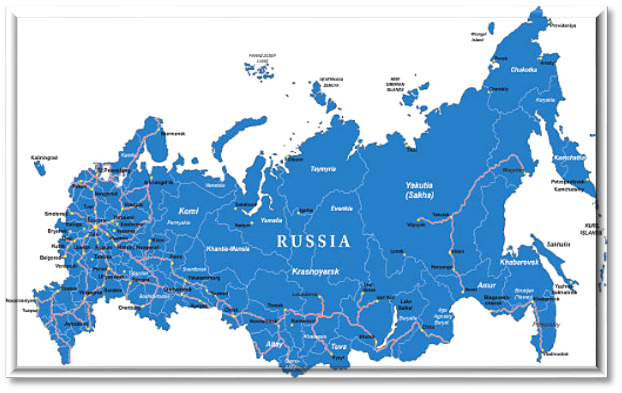
RUSSIA
Russia is the world’s largest country by land area, spanning eleven time zones across Europe and Asia. It possesses immense natural resources, making it a global energy powerhouse. Russia holds the world’s largest natural gas reserves and is among the top exporters of oil, coal, wheat, and minerals.
Militarily, Russia maintains one of the world’s most sophisticated armed forces, supported by a large defense‑industrial base capable of producing advanced fighter aircraft, ballistic missiles, nuclear submarines, and space systems. It is the second‑largest arms exporter globally, and its military strength underpins its assertive foreign policy.
UKRAINE
Ukraine is the second‑largest country in Europe by area and occupies a strategically critical position between Russia and NATO member states. Its fertile plains make it a global agricultural heavyweight, particularly in wheat, corn, and sunflower oil exports. Ukraine also inherited a substantial industrial and defense base from the Soviet era, including aerospace, missile, and armored vehicle production.
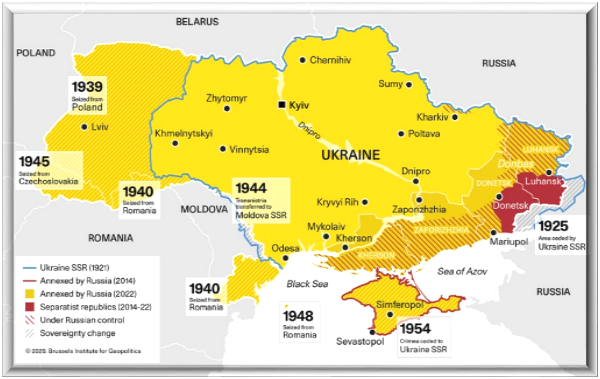
Ukraine is exceptionally rich in natural resources, especially minerals. It holds the world’s largest reserves of commercial-grade iron ore—about 30 billion tonnes, nearly one-fifth of global reserves. Ukraine also has Europe’s second-largest known natural gas reserves, most of which remain largely undeveloped. The country’s flat terrain and fertile soil make it a major agricultural powerhouse. Ukraine is among the world’s leading wheat exporters and is the largest global exporter of seed oils, particularly sunflower and rapeseed oil. In addition to agriculture, Ukraine’s economy is supported by key industrial sectors, including coal mining, chemicals, heavy engineering, aircraft manufacturing, turbines, locomotives, tractors, and shipbuilding.
The Ukrainian economy suffered significant setbacks following the 2014 conflict but gradually stabilized before facing renewed devastation after 2022. Ukraine’s growing information technology sector and skilled human capital remain notable strengths despite wartime pressures.
Why Ukraine Matters to Russia
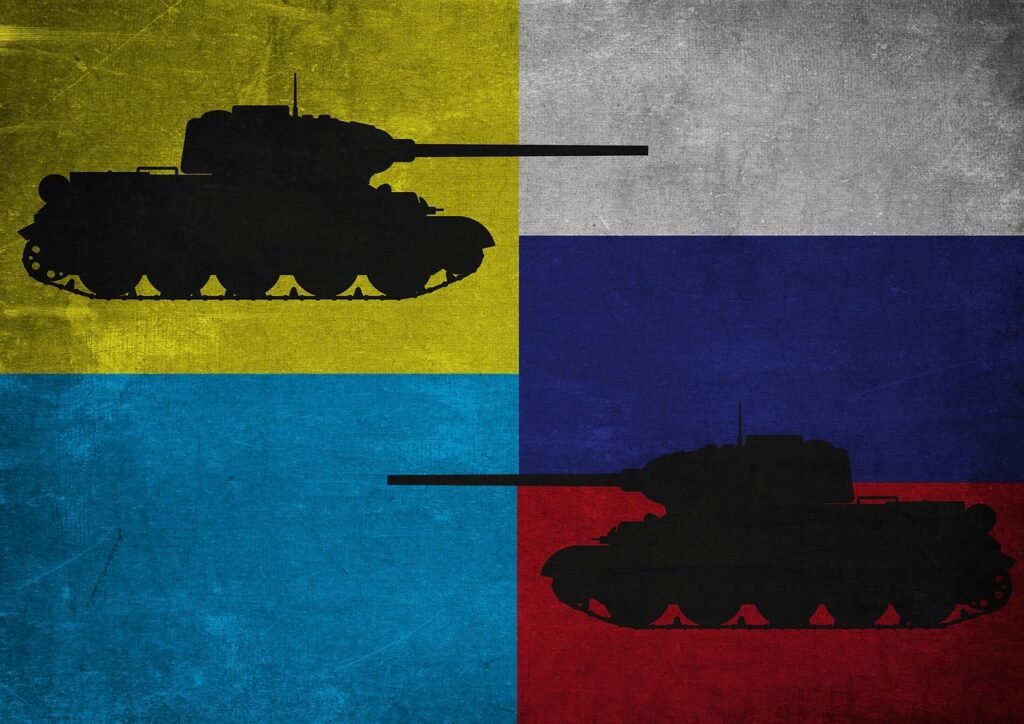
Ukraine holds immense strategic value for Russia. Historically, it served as a key industrial and military hub within the Soviet Union. Geographically, Ukraine provides Russia with access to the Black Sea and, by extension, the Mediterranean. Politically, Ukraine’s westward orientation challenges Russia’s vision of a buffer zone separating it from NATO.
From Moscow’s perspective, NATO’s eastward expansion represents a direct threat to Russian security. The prospect of Ukraine joining NATO has been framed by Russian leadership as a red line, with fears of missile defense systems and foreign military infrastructure appearing on Russia’s borders.
CHRONOLOGICAL EVOLUTION OF RUSSIA-UKRAINE CONFLICT
Origins after the Soviet Collapse (1991–2003)
The modern Russia–Ukraine conflict is rooted in the disintegration of the Soviet Union in 1991. Ukraine emerged as an independent state with internationally recognized borders, inheriting significant military assets, including nuclear weapons, which it later relinquished under the 1994 Budapest Memorandum in exchange for security assurances from Russia, the United States, and the United Kingdom. Despite these guarantees, relations between Kyiv and Moscow remained uneasy, shaped by disputes over energy supplies, the Black Sea Fleet, and Ukraine’s foreign policy orientation.
During the 1990s, Ukraine pursued a delicate balancing act between Russia and the West. While economic dependence on Russia persisted—particularly in energy—Ukraine gradually expanded political and economic engagement with Europe. Russia, for its part, increasingly viewed Ukraine as central to its regional influence and security architecture.
NATO, EU Aspirations, and Rising Tensions (2004–2013)
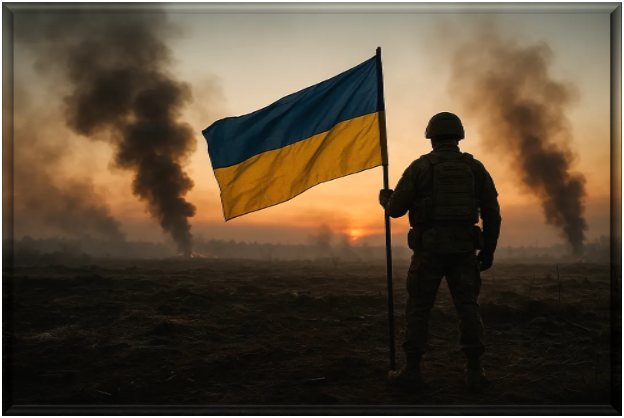
Tensions intensified following the 2004 Orange Revolution, which overturned a disputed presidential election and brought pro-Western leadership to power in Kyiv. Moscow interpreted the uprising as a Western-backed encroachment into its traditional sphere of influence. Although Ukraine did not immediately join NATO or the European Union, its stated aspirations alarmed Russian policymakers.
The issue resurfaced in 2013 when President Viktor Yanukovych suspended preparations for an EU association agreement in favor of closer ties with Russia. This decision triggered mass protests—known as the Euromaidan movement—across Ukraine. Months of demonstrations culminated in violent clashes, significant casualties, and Yanukovych’s removal from office in February 2014.
Crimea and the Donbas War (2014–2015)
In the aftermath of Yanukovych’s ouster, Russia moved swiftly to secure its interests. In February 2014, Russian troops without insignia took control of Crimea. A hastily organized referendum in March claimed overwhelming support for joining Russia, leading to the peninsula’s annexation. Ukraine and most of the international community rejected the move as illegal.
Simultaneously, pro-Russian separatist movements emerged in eastern Ukraine, particularly in Donetsk and Luhansk. Armed conflict erupted between Ukrainian forces and separatist groups backed by Russia. The downing of Malaysia Airlines Flight MH17 in July 2014, killing 298 civilians, underscored the conflict’s international ramifications.
Efforts to halt the fighting produced the Minsk I (2014) and Minsk II (2015) agreements, brokered by France and Germany. These accords established ceasefires and outlined political steps toward reintegration of separatist regions. However, repeated violations ensured that the conflict remained frozen rather than resolved.
Stalemate and Hybrid Warfare (2016–2020)
From 2016 onward, the conflict entered a prolonged phase of low-intensity warfare. While large-scale offensives subsided, sporadic fighting continued along the front lines. Russia employed a range of hybrid tactics, including cyberattacks, disinformation campaigns, and economic pressure. Notable incidents included cyber operations against Ukraine’s power grid and infrastructure.
During this period, Ukraine strengthened ties with NATO through joint exercises and military reforms, though formal membership remained elusive. Russia maintained its military presence in Crimea and continued supporting separatist forces in the Donbas.
Escalation and Military Buildup (2021)
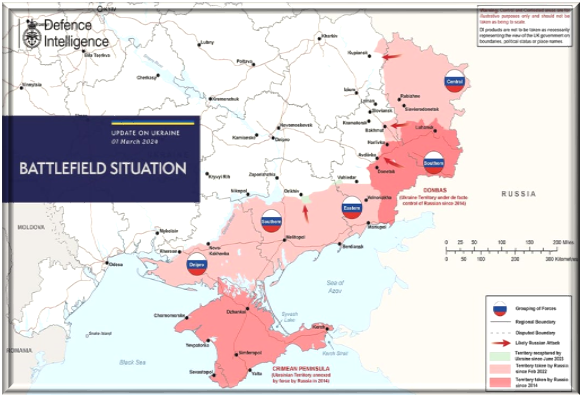
In 2021, Russia began massing troops near Ukraine’s borders, citing military exercises. The scale and scope of the buildup raised alarm across Europe and North America. Moscow issued demands to NATO, including legally binding guarantees against further eastward expansion and the withdrawal of alliance forces from Eastern Europe.
Diplomatic engagements between Russia, the United States, and NATO failed to reconcile these differences. Meanwhile, Ukraine intensified cooperation with Western partners and employed advanced systems, including Turkish-made Bayraktar TB2 drones, in the Donbas—further heightening tensions.
Full-Scale Invasion (2022)
On 21 February 2022, Russia formally recognized the self-proclaimed Donetsk and Luhansk People’s Republics. Three days later, President Vladimir Putin announced a “special military operation,” launching a full-scale invasion of Ukraine from multiple directions—north via Belarus, east from Russia, and south from Crimea.
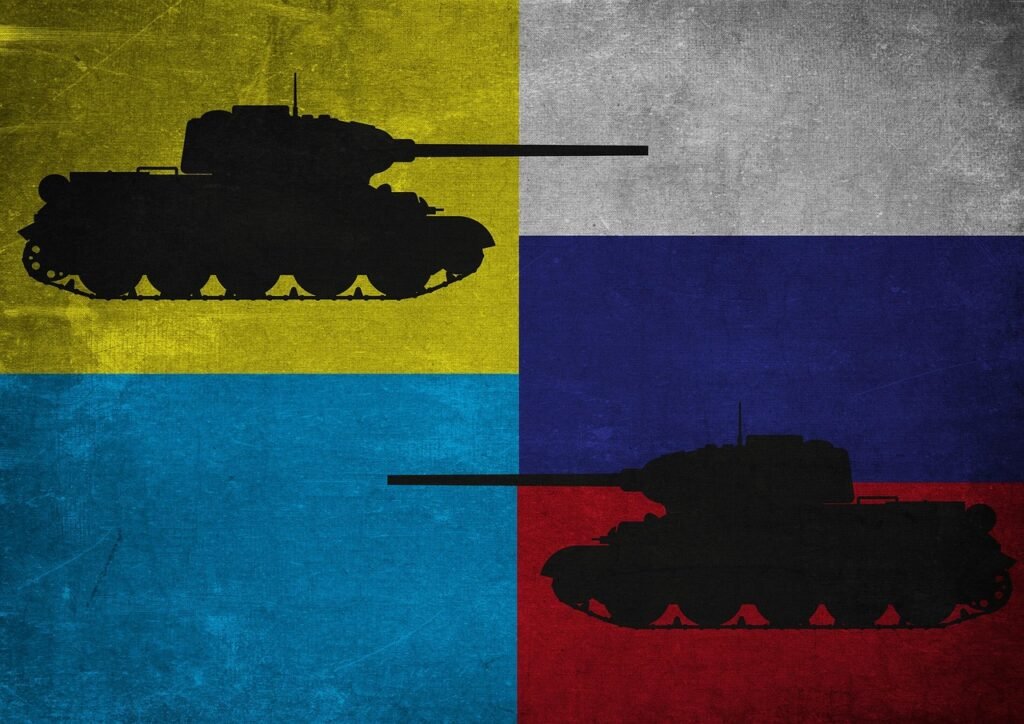
Missile strikes targeted military installations and major cities, including Kyiv, Kharkiv, and Odesa. Contrary to expectations of a rapid collapse, Ukrainian forces mounted determined resistance. The conflict quickly evolved into a high-intensity conventional war marked by artillery duels, armored engagements, drone warfare, and extensive civilian displacement.
Protracted War and Global Shockwaves (2023–Present)
As the war dragged on, neither side achieved decisive victory. Ukraine regained some territory through counteroffensives, while Russia consolidated control over parts of eastern and southern Ukraine. The conflict became a war of attrition, with heavy casualties and widespread destruction.
The humanitarian toll has been immense, with millions of refugees fleeing to neighboring European countries. The war has reshaped military doctrines, highlighted the growing role of unmanned systems, and reinforced the importance of logistics, morale, and industrial capacity in modern warfare.
Western Response
The United States, European Union, and allied states responded with unprecedented economic sanctions on Russia, targeting major banks, energy projects, defense industries, and access to global financial systems. Military assistance to Ukraine increased substantially, including advanced anti‑tank weapons, air defense systems, intelligence support, and training.
While NATO avoided direct military confrontation with Russia, the alliance reinforced its eastern flank, signaling a long‑term shift in European security architecture.
Global and European Impacts
The Russia–Ukraine war has profoundly altered the global strategic landscape. In Europe, it has triggered the most significant security crisis since the Cold War. NATO has expanded its presence along its eastern flank, while traditionally neutral states have reassessed their security policies, leading to increased defense spending across the continent.
Economically, the conflict disrupted global energy and food markets. Europe’s reliance on Russian gas was sharply reduced, prompting diversification toward alternative suppliers and accelerating investments in renewable energy. Global food insecurity worsened as exports of wheat, corn, and fertilizer from the Black Sea region were disrupted, affecting vulnerable regions far beyond Europe.
Politically, the war reinforced divisions between Western states and Russia, while compelling other global powers to recalibrate their foreign policies. Sanctions regimes reshaped international trade and finance, contributing to inflationary pressures worldwide. The conflict also reaffirmed the centrality of sovereignty and territorial integrity in international law, while exposing the limits of existing security guarantees.
RECENT KEY DEVELOPMENTS
Since President Donald Trump returned to office in early 2025, the United States has pushed for a negotiated end to the Russia–Ukraine war, now entering its fourth year. Trump was initially viewed as more sympathetic toward Russia than his predecessor, Joe Biden, and tensions with Ukrainian President Volodymyr Zelensky became public in February when Trump and Vice President JD Vance sharply criticized him during a televised Oval Office meeting.
Relations between Washington and Kyiv have since improved. Ukraine continues to rely heavily on U.S. military support, particularly advanced air-defense systems and intelligence, which are vital for countering Russian missile and air attacks.
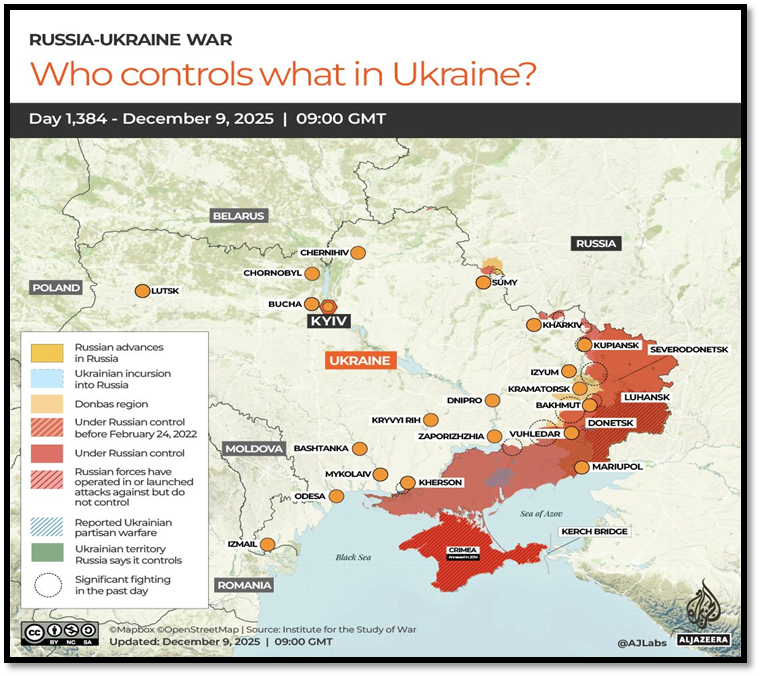
President Zelensky has warned that Ukraine could lose U.S. backing under the proposed peace plan. The draft reportedly includes painful concessions, such as surrendering territory, reducing the size of Ukraine’s armed forces, and abandoning any future bid to join NATO. Zelensky has discussed these proposals with European leaders, who later stated that stronger security guarantees for Ukraine were still needed. Russia, meanwhile, has shown little willingness to compromise, especially on its demand that Ukraine never be allowed to join NATO.On the battlefield, the situation has shifted several times. After failing to capture Kyiv, Russian forces withdrew from northern Ukraine by October 2022. A month later, Ukraine recaptured the southern city of Kherson. Since then, fighting has largely focused on eastern Ukraine, where Russian forces have made slow but steady advances. Military analysts estimate that between 165,000 and 235,000 Russian troops have been killed since the invasion began. Ukraine last updated its own casualty figures in December 2024, with President Zelensky reporting about 43,000 military deaths, though Western experts believe the true number is likely higher.
Way Forward
A sustainable resolution to the conflict will require renewed diplomacy involving Russia, Ukraine, and key international stakeholders. Confidence‑building measures, ceasefire arrangements, and a re‑energized peace framework—potentially building on the Minsk process—remain critical. Long‑term stability will depend on addressing security concerns, respecting sovereignty, and creating an inclusive regional security order.
Conclusion
The Russia–Ukraine war is not an isolated regional conflict but a defining episode in contemporary international relations. It reflects unresolved post‑Cold War tensions, competing security visions, and the enduring power of history in shaping modern geopolitics. Without meaningful de‑escalation, the conflict risks further destabilizing an already fragile global order. Diplomacy, restraint, and strategic foresight remain the only viable paths toward lasting peace.