
The Bloodiest Battles That Shaped the Modern World
From Stalingrad’s 2 million Dead to the Somme’s Bloodiest Day in British History: The Complete Military Analysis of History’s Most Catastrophic Battles
There’s no honorable way to kill, no gentle way to destroy. There is nothing good in war. Except its ending. (Abraham Lincoln)
THE TOP 10 AT A GLANCE
| Rank | Battle | War | Years | Estimated Casualties | Victor |
| 1 | Battle of Stalingrad | World War II | 1942–43 | ~2 million | Soviet Union |
| 2 | Battle of the Somme | World War I | 1916 | ~1.1 million | Inconclusive |
| 3 | Battle of Verdun | World War I | 1916 | ~700,000 | France (disputed) |
| 4 | Battle of Kiev | World War II | 1941 | ~700,000 (Soviet POWs) | Germany |
| 5 | Battle of Berlin | World War II | 1945 | ~1.3 million | Soviet Union |
| 6 | Battle of Kursk | World War II | 1943 | ~800,000+ | Soviet Union |
| 7 | Battle of Moscow | World War II | 1941–42 | ~1 million | Soviet Union |
| 8 | Battle of Cannae | Second Punic War | 216 BCE | ~70,000 Romans | Carthage |
| 9 | Siege of Leningrad | World War II | 1941–44 | ~1.1 million | Soviet Union |
| 10 | Battle of Gettysburg | American Civil War | 1863 | ~51,000 | Union (USA) |
Across the sweep of recorded human history, men have fought and died in conflicts so vast, so ferocious, and so catastrophically costly that the numbers of the dead alone strain comprehension. The top 10 deadliest battles in history are not merely historical footnotes. They are the moments when entire civilisations bent under the weight of organised violence on a scale that reshaped borders, toppled empires, ended ideologies, and changed the course of humanity in ways whose echoes reach into the present day. To study them is to understand not just how wars were fought, but why they mattered and what the human race paid in blood to learn the lessons each one taught.
The top 10 deadliest battles in history are overwhelmingly dominated by the two World Wars of the 20th century and overwhelmingly concentrated on the Eastern Front where Nazi Germany and the Soviet Union fought a conflict so total, so unsparing, and so ideologically absolute that it consumed human lives at rates no previous war in history had approached. Of the ten battles on this list, eight took place between 1916 and 1945. Seven involved Germany as either attacker or defender. Five were fought between Germany and the Soviet Union alone. The Western Front of World War I and the Pacific Theatre of World War II each contributed one entry each. Only two entries pre-date the 20th century: the ancient tactical masterpiece of Cannae in 216 BCE, and the pivotal American Civil War engagement at Gettysburg in 1863.
This Armorexa definitive account analyses each battle not merely for its casualty statistics but for its military context, its strategic significance, its decisive tactical moments, and its lasting legacy on the art and science of warfare. These are the battles that every student of military history, every defence professional, and every serious reader of strategic affairs needs to understand. They are the darkest chapters in the story of human conflict and the most important.
WHAT QUALIFIES AS A BATTLE?
Compiling any list of the deadliest battles in history immediately confronts the problem of definition. What distinguishes a ‘battle’ from a ‘campaign,’ a ‘siege,’ or a ‘war’? For this analysis, the engagement must be a defined military event with identifiable start and end dates, fought in a specific geographic theatre, between identified opposing forces, and producing documented or historically estimated casualty figures that include both killed and wounded combatants, and in many cases significant civilian losses where civilians were directly caught in military operations.
Campaigns that spanned months or years but maintained operational continuity such as Stalingrad and Leningrad are included because they represent single, connected military engagements rather than multiple separate battles. Broader strategic operations such as the entire Barbarossa campaign are not included, as these encompassed multiple distinct battles across enormous geographic areas. All casualty figures cited represent the best available historical estimates and, where sources differ significantly, a range or consensus figure is provided.
1. Battle of Stalingrad: The Deadliest Battle in Human History
There are battles that changed the course of wars. There are battles that changed the course of history. And then there is Stalingrad, the city that consumed approximately 2 million military and civilian casualties across 199 days of fighting so ferocious, so intimate, and so existentially total that historians have described it as approaching the theoretical maximum of absolute war. The Battle of Stalingrad stands without contest at the top of any list of the deadliest battles in history, and it stands there by a significant margin over everything else on this list.
The battle began in August 1942 as a component of Hitler’s Case Blue, a massive southern offensive designed to seize the oil fields of the Caucasus and sever Soviet supply lines along the Volga River. Against the advice of his senior commanders, Hitler diverted the German 6th Army under General Friedrich Paulus to capture the city of Stalingrad, a decision driven as much by the city’s symbolic significance (it bore the name of Hitler’s archenemy, Joseph Stalin) as by its genuine strategic value. The Luftwaffe’s opening bombardment on 23 August 1942 turned the city of 400,000 civilians into a burning wasteland, killing an estimated 40,000 people in a single day.
The rubble that resulted proved catastrophic for the German doctrine of combined-arms warfare: tanks and vehicles were channeled into killing grounds by the ruins, artillery lost its effectiveness in the close-quarters warren of destroyed buildings, and the battle became the kind of grinding, meter-by-meter infantry fight that German blitzkrieg was specifically designed to avoid.
The Germans pushed to within meters of the Volga River, at times controlling up to 90 percent of the city’s surface. Soviet defenders under the command of General Vasily Chuikov of the 62nd Army, who swore he would die in the city before surrendering it held on through tactics born of desperation and genius simultaneously: they kept their front lines so close to the German positions that German artillery and air support could not engage without killing their own troops. Individual buildings became fortresses that changed hands multiple times in a single day. Pavlov’s House, a single apartment block defended by a sergeant’s platoon held out for 60 days and inflicted more German casualties than the Wehrmacht had suffered in the entire 1940 conquest of France. The average life expectancy of a newly arrived Soviet soldier in the city was measured not in days but in hours.
While the 6th Army bled itself into the rubble of Stalingrad, Soviet Generals Zhukov and Vasilevsky were quietly amassing 1.2 million men, 1,400 tanks, and 1,500 aircraft in the steppes to the north and south. On 19 November 1942, Operation Uranus was launched: a massive double-envelopment that punched through the poorly equipped Romanian and Italian formations guarding the German flanks and, within four days, encircled the entire 6th Army of some 300,000 men in a frozen pocket. Hitler forbade a breakout. A relief attempt by Field Marshal Manstein came within 30 miles of the encircled army and was then halted. The trapped German soldiers slowly starved, froze, and died as Soviet forces contracted the pocket day by day. On 31 January 1943, Field Marshal Friedrich Paulus, the first German field marshal ever captured, surrendered. The last German resistance ended on 2 February 1943.
Of the 91,000 men who surrendered, fewer than 6,000 ever returned to Germany. The rest died in Soviet captivity. Total Axis casualties across the broader Stalingrad campaign exceeded 800,000. Soviet military casualties are estimated at 1.1 million, with a further 40,000 civilians killed in the city. The Germans also lost 900 aircraft, 500 tanks, and 6,000 artillery pieces, equipment that with Soviet factories outproducing them, they could not replace. Germany never again won a major offensive battle on the Eastern Front.
More Soviet soldiers died defending Stalingrad in five months than Americans died in the entire Second World War. The city held. The Wehrmacht broke. And the road to Berlin, however long and terrible, had already begun.
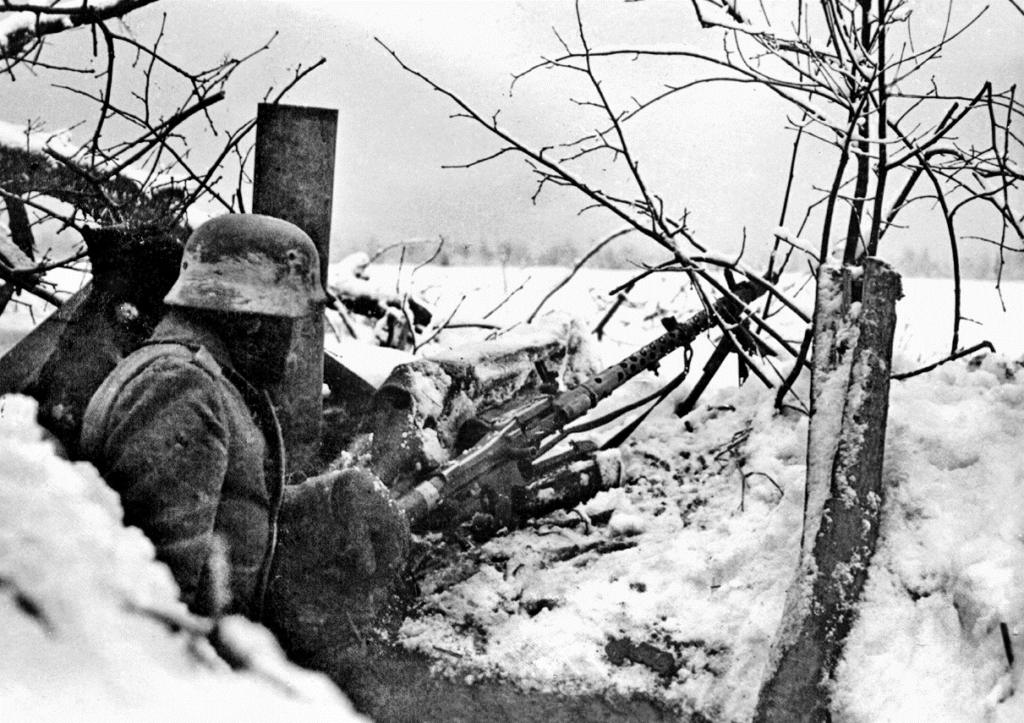
2. Battle of the Somme: The Bloodiest Day in British Military History
At 7:30 on the morning of 1 July 1916, whistles blew along a 30-kilometre front of the Western Front in France, and approximately 120,000 British and Commonwealth soldiers climbed from their trenches and walked, in many cases literally walked, as their commanders believed the preceding week-long artillery bombardment had destroyed all resistance toward the German lines. By nightfall, the British Army had suffered 57,470 casualties, including 19,240 killed: the single most catastrophic day in the history of the British military, a figure that has never been equaled before or since.
The Battle of the Somme was conceived as a massive Anglo-French offensive to break through the German lines on the Western Front and relieve pressure on the French Army at Verdun, where it was hemorrhaging men at a rate that threatened its ability to continue the war. The week-long preparatory bombardment fired approximately 1.7 million shells at the German lines, a barrage so intense that British commanders genuinely believed it had destroyed the defenders. It had not. The deep German dugouts, cut 10 meters into the chalk of the Somme valley, had sheltered their garrisons through the bombardment. When the barrage lifted and the British infantry advanced, the Germans emerged from their shelters, set up their machine guns, and cut down the advancing soldiers in lines. Entire battalions, raised from the same British towns and villages under Lord Kitchener’s ‘Pals’ program, were destroyed in minutes.
The battle continued for four and a half months, from 1 July to 18 November 1916. The tactical innovations it produced including the first operational use of the tank in warfare, on 15 September 1916 could not compensate for the fundamental impossibility of breaking a prepared defensive line with infantry and artillery alone in the face of machine guns, barbed wire, and deep fortifications. By the battle’s end, the Allies had advanced approximately 10 kilometres along a front of perhaps 50 kilometres. Total casualties for all sides exceeded 1.1 million: approximately 420,000 British and Commonwealth, 200,000 French, and 500,000 German. The Allied commander, Field Marshal Sir Douglas Haig, was and remains one of history’s most controversial military commanders, with his defenders arguing that the Somme fulfilled its strategic purpose of drawing German reserves from Verdun, and his critics arguing that the human cost was indefensible.
On the first day of the Somme, the British Army suffered more casualties than the United States suffered on D-Day, at Iwo Jima, and at the Battle of the Bulge combined. It remains the most catastrophic single day in British military history.
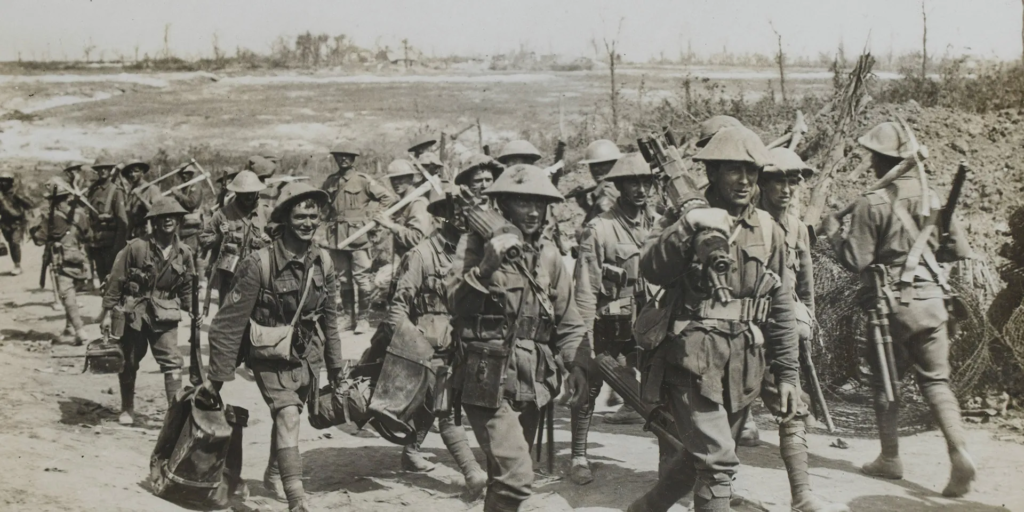
3. Battle of Verdun: The Meatgrinder of the Western Front
The Battle of Verdun is the longest major battle of World War I and one of the most deliberately cruel in military history because it was designed not to capture territory but to kill. German Chief of Staff Erich von Falkenhayn conceived the operation as a strategic ‘bleeding’ of the French Army: by attacking the ancient fortress city of Verdun, which French national honor would compel France to defend regardless of the cost, Germany would drain French manpower to the point of collapse. The plan was, in its clinical inhumanity, strategically coherent. Its execution became a catastrophe for both sides.
The German offensive opened on 21 February 1916 with a nine-hour artillery bombardment that was, at the time, the most intense in history, 2 million shells fired in the preliminary barrage alone. French resistance, which Falkenhayn had anticipated would be token before the strategic calculation forced abandonment of Verdun, proved instead to be total. The French poured division after division into the furnace of Verdun’s fortifications, cycling approximately 70 percent of the entire French Army through the battle over ten months.
The rotation system la Nória, the waterwheel ensured that the psychological and physical trauma of Verdun was distributed across the widest possible cross-section of French military manpower, creating a generational wound in the French national consciousness that endured for decades. German forces, following precisely the same strategic logic in reverse, suffered similar casualties in prosecuting their own offensive, turning Falkenhayn’s scheme of attrition into a mutual bleeding that gained neither side any decisive advantage.
The battle lasted 303 days. When the final French counteroffensives of October and December 1916 recovered virtually all the ground lost in the opening German advances, the net territorial change was essentially zero. The casualty bill was approximately 400,000 French and 340,000 German, a combined total of approximately 700,000 to 750,000 men killed, wounded, or captured for a battle that ended where it began. Verdun became the symbol of the Western Front’s fundamental futility, of industrial-age warfare applied to human bodies at a scale that defied any conventional strategic logic.
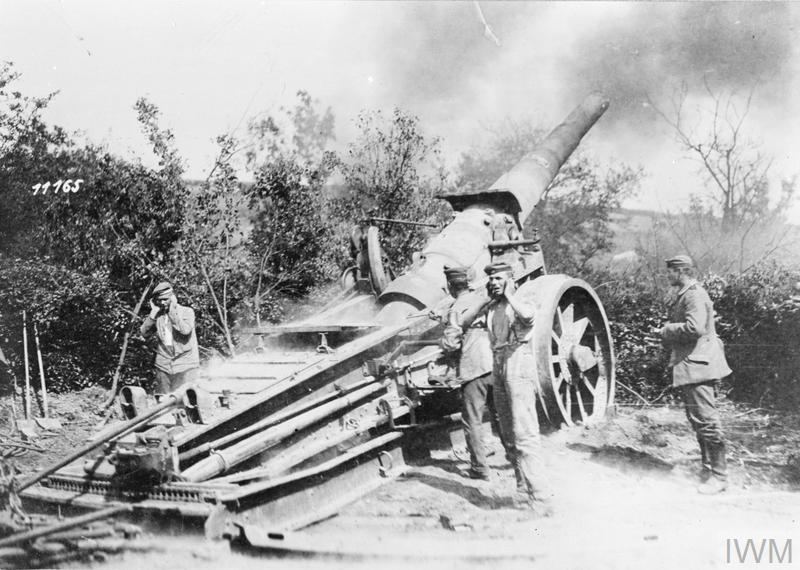
4. Battle of Kiev: The Largest Military Encirclement in History
The Battle of Kiev in September 1941 does not resemble the other entries on this list in character or duration. It was not a grinding battle of attrition measured in months. It was a catastrophic encirclement that produced the largest single military surrender in history in a matter of weeks, consuming approximately 700,000 Soviet soldiers in a pocket whose closing should have been prevented but was not, due to a combination of Soviet command rigidity and Hitler’s temporary strategic brilliance.
As part of Operation Barbarossa, German Army Group South drove eastward through Ukraine in the summer of 1941 with a speed and devastation that shocked Soviet commanders still reeling from the German invasion’s opening blows. General Heinz Guderian’s Panzer Group 2, advancing south from Army Group Centre, and General Ewald von Kleist’s Panzer Group 1, driving north from Army Group South, executed a massive double envelopment of the Soviet South-Western Front. Stalin, against the desperate advice of his commanders in the field who could see the pincers closing around them, refused to authorise a withdrawal. By 19 September 1941, the pincers had closed. Approximately 650,000 to 700,000 Soviet soldiers were trapped in a pocket east of Kiev.
The encirclement was the Wehrmacht at the peak of its operational excellence: a classic Cannae double envelopment executed at the largest scale in the history of warfare. The Soviets recovered 250,000 corpses in the pocket after the battle. Of the approximately 700,000 men encircled, only a fraction escaped. Most died in the pocket or in German captivity afterward. Kiev itself fell on 19 September 1941. The battle demonstrated both the Wehrmacht’s extraordinary operational capability in 1941 and the catastrophic cost of Stalin’s refusal to allow tactical withdrawals in the face of operational reality.
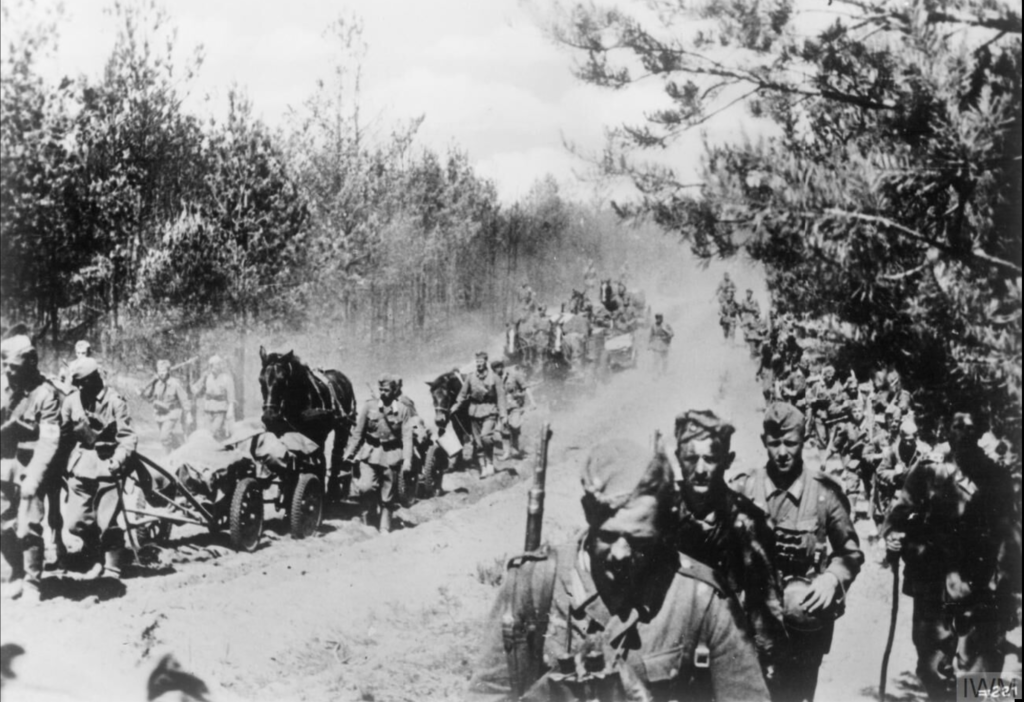
5. Battle of Berlin: The Final Reckoning of the Third Reich
By the time the Red Army reached Berlin in April 1945, the outcome of World War II in Europe was not in doubt. What was in doubt was how many more people would die before Hitler accepted the inevitable and the answer, as the Battle of Berlin demonstrated, was approximately 1.3 million more casualties in three weeks of fighting that reduced Germany’s capital to rubble.
The Soviet assault on Berlin was the largest urban battle in the European theatre of World War II. Marshal Georgy Zhukov’s 1st Belorussian Front and Marshal Ivan Konev’s 1st Ukrainian Front converged on the city with a combined force of approximately 2.5 million men, 6,250 tanks, 7,500 aircraft, and 41,600 artillery pieces. Against them, the German defenders could muster perhaps 1 million men of wildly varying quality from hardened Waffen-SS veterans to teenage members of the Volksturm militia who had been issued rifles and told to fight. Hitler, in his bunker beneath the Reich Chancellery, issued orders to phantom armies and demanded counterattacks that existed only in his deteriorating imagination.
The fighting for Berlin was brutal beyond any tactical justification. Soviet soldiers, who had watched their country devastated and their families killed over four years of war of unimaginable ferocity, brought their full accumulated rage to bear on the German capital. German soldiers and civilians who surrendered to Soviet forces faced execution or deportation; many preferred to fight to the death rather than fall into Soviet hands. Building by building, floor by floor, room by room, the Red Army ground its way to the Reich Chancellery. Hitler killed himself on 30 April 1945. Berlin surrendered on 2 May 1945. Total casualties across all forces: approximately 1.3 million, including an estimated 125,000 Berlin civilians killed in the fighting.
The Battle of Berlin was not a battle anyone needed to fight. Germany had already lost the war. Every one of those 1.3 million casualties of Soviet, German, civilian died because one man in a bunker beneath a burning city refused to accept the reality that his generals, his allies, and his own armies had already acknowledged.
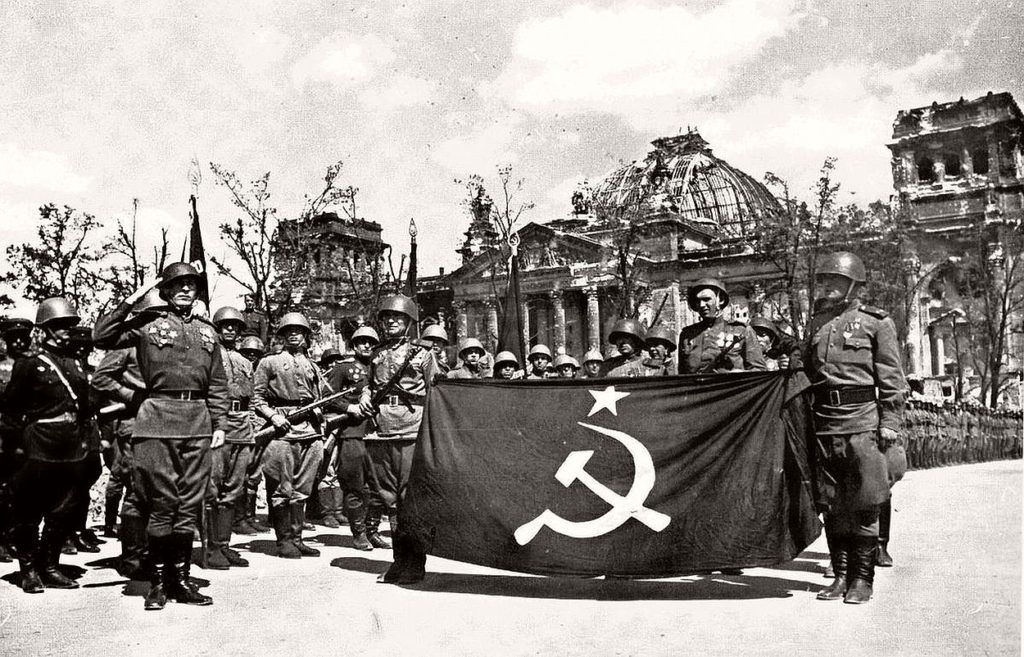
6. Battle of Kursk: The Largest Tank Battle in History
The Battle of Kursk in July 1943 is unique among the entries on this list in that it was a German defeat that was strategically pre-ordained before the first shot was fired. Soviet intelligence, partly through the ULTRA intercepts of German communications, had provided the Red Army with precise knowledge of the German offensive’s timing, direction, and force composition weeks before the attack began. Generals Zhukov and Vasilevsky used this intelligence to construct the most elaborate defensive system in the history of land warfare: eight concentric defensive belts, each several kilometers deep, packed with anti-tank guns, minefields, tank destroyers, artillery, and infantry positions, extending up to 300 kilometers behind the front line.
On 5 July 1943, the German attack of Operation Citadel began against the Kursk salient with 900,000 troops, 2,700 tanks including the new Tiger I and Panther heavy tanks, and 2,000 aircraft. From the first hours, German units encountered resistance so dense and so well-prepared that the offensive’s pace was measured in meters rather than kilometers. The most famous engagement of the battle, the tank battle at Prokhorovka on 12 July 1943, where approximately 800 Soviet and 600 German tanks clashed in a single day has been mythologised as a Soviet victory. Historians have subsequently established that Soviet losses at Prokhorovka were actually heavier than German ones, but the battle’s strategic significance is unchanged: the Germans could not break through.
On 12 July, the Soviets launched Operation Kutuzov, a massive counteroffensive against the German salient at Orel north of Kursk, forcing the Germans to begin pulling forces from the Kursk battle to stem the new crisis. Operation Citadel was cancelled on 17 July. The Soviet Belgorod-Kharkov offensive then struck the southern German forces on 3 August, completing the reversal. At Kursk, Germany expended its last operational reserve of quality armoured formations in an offensive that achieved nothing. The Red Army, though suffering heavier casualties than the Germans, could replace its losses. The Wehrmacht could not. Germany’s strategic initiative on the Eastern Front ended at Kursk and never returned. Combined casualties for both sides exceeded 800,000.
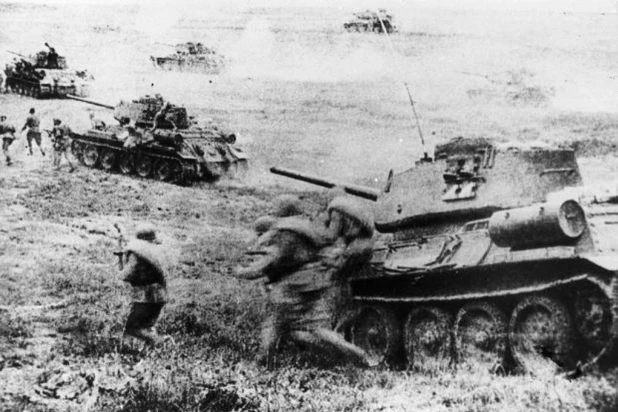
7. Battle of Moscow: The Battle That Shattered the Myth of German Invincibility
In October 1941, few informed observers outside the Soviet Union believed that Moscow could be saved. The Wehrmacht had advanced 1,000 miles in four months, destroying Soviet armies in their path with a speed and efficiency that had no precedent in the history of warfare. Army Group Centre’s Operation Typhoon, launched on 2 October, quickly encircled two more Soviet army groups at Vyazma and Bryansk, capturing over 600,000 more prisoners. German soldiers on the outskirts of Moscow could see the spires of the Kremlin through their binoculars. Soviet government ministries were evacuating to Kuibyshev on the Volga. Stalin’s own family had been evacuated. It appeared that the capital of the Soviet Union was about to fall.
It did not fall because of three things that German commanders had failed to adequately account for: the depth of Soviet reserves, the severity of the Russian winter, and the extraordinary resilience of the Soviet people and their military when fighting with their backs against the wall of their own capital city. Stalin, in a moment of calculated symbolism that electrified the nation, held the traditional 7 November parade on Red Square commemorating the October Revolution while German troops were within 50 miles of Moscow and the parade’s marching units went directly from the square to the front. Fresh Siberian divisions, transferred west after Soviet intelligence confirmed that Japan would not attack from the east, arrived at the critical moment.
In December 1941, temperatures dropped to minus 30 to minus 40 degrees Fahrenheit. German troops, who had been told they would be home by Christmas in a campaign lasting weeks, were fighting in summer uniforms with equipment that froze and weapons that refused to fire. On 5 December 1941, the Soviets launched a massive counteroffensive that pushed the Germans back 100 to 200 kilometres from Moscow and inflicted approximately 500,000 German casualties. It was the first time the Wehrmacht had been decisively defeated in the field. The myth of German invincibility, the psychological foundation of Hitler’s entire strategic position was broken. Total casualties on both sides for the Moscow campaign are estimated at approximately 1 million.
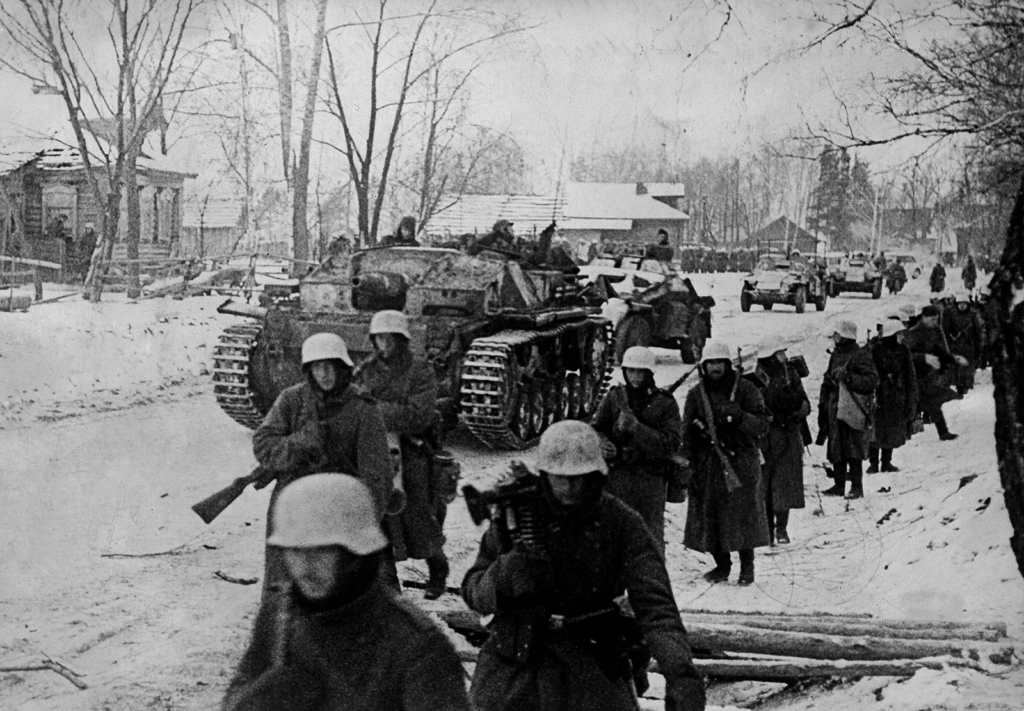
8. Battle of Cannae: The Greatest Tactical Victory in Military History
The Battle of Cannae is the only entry on this list that predates the 20th century by more than a millennium, and it earns its place not through the absolute size of its casualty figures which are dwarfed by the World War entries above but through the proportion of the force engaged that was destroyed, the tactical brilliance that produced that destruction, and the enduring influence of Hannibal Barca’s encirclement manoeuvre on every serious military mind from Caesar through Napoleon to the German General Staff of the 20th century.
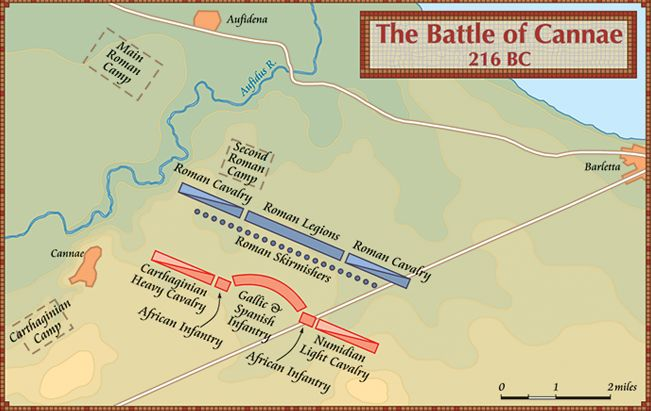
In 216 BCE, during the Second Punic War, the Carthaginian general Hannibal Barca faced a Roman army of approximately 86,000 men the largest force Rome had ever assembled, sent to end the Carthaginian threat once and for all. Hannibal’s force was perhaps 50,000. Outnumbered and outmatched in infantry, Hannibal devised a tactical solution of such elegant simplicity and such perfect execution that it has been studied, replicated, and taught in every serious military academy for 2,200 years. He deployed his weakest troops, Gallic and Spanish infantry in the center of his line, in a convex bulge toward the Romans. His strongest troops, his African veterans, anchored the flanks. His cavalry, superior to the Roman horsemen, covered the extreme flanks.
As the Romans advanced in their characteristic mass formation, their sheer weight pushed the Carthaginian centre back, drawing the Roman mass inward and compressing it. As the Romans surged forward into what they believed was a collapsing enemy centre, the African infantry on the flanks wheeled inward, enveloping the Roman mass on both sides. The Carthaginian cavalry, having routed the Roman horse on both flanks, then closed the encirclement from behind. The Romans were completely surrounded and compressed into a mass so tight they could no longer raise their swords. In approximately six hours, between 50,000 and 70,000 Roman soldiers were killed, a rate of approximately 8,000 to 12,000 per hour. Roman senators were among the dead. The consul Lucius Aemilius Paullus died fighting. Rome nearly sued for peace.
Cannae is the military operations research benchmark for the ‘perfect battle’, the complete destruction of an opposing force through double envelopment. The German Schlieffen Plan of 1914 was explicitly modelled on Cannae. Operation Barbarossa’s encirclement battles were its direct descendants. Every modern military doctrine of encirclement and annihilation traces its intellectual lineage to a Carthaginian general on a flat plain in Apulia in 216 BCE.
Hannibal did not merely win at Cannae. He invented, at near-perfect scale, the tactical template that military planners have been trying to replicate for 2,200 years. The double envelopment. The encirclement. The annihilation. He called it nothing. Military history calls it everything.
9. Siege of Leningrad: 872 Days of Starvation and Defiance
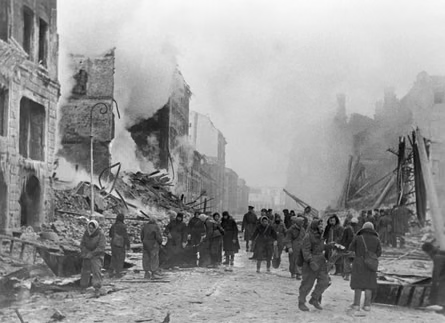
The Siege of Leningrad does not fit the conventional definition of a battle in the same way that Stalingrad or Kursk does. It was not primarily a fight between opposing armies across a defined front. It was an 872-day siege during which the city of Leningrad, the former imperial capital of Russia, home to three million people, the cradle of the Russian Revolution was surrounded, starved, and bombarded by German and Finnish forces while its inhabitants died by the hundreds of thousands and refused, with a stubbornness that became one of the defining acts of Soviet national identity, to surrender.
German Army Group North, advancing as part of Operation Barbarossa, reached the outskirts of Leningrad by September 1941 and closed the ring around the city. Hitler’s plan was not to take Leningrad by assault but to starve it into submission, a decision driven partly by the desire to avoid the street-by-street fighting that urban assault would require, and partly by a genocidal calculation that the city’s population need not survive the siege. Food stocks inside the besieged city were sufficient for approximately two months. As winter descended, the city’s bread ration fell to 125 grams per day for civilians, approximately the weight of a deck of cards.
In the winter of 1941 to 1942, approximately 650,000 Leningraders died of starvation, disease, and cold. Cannibalism was documented. Bodies lay in the streets, frozen, unburied, too numerous for survivors to clear. The only supply route into the city ran across the frozen surface of Lake Ladoga, the ‘Road of Life,’ under constant German bombardment, over which trucks carried supplies in and evacuated civilians out under conditions of extraordinary courage and loss. The Soviet Army mounted multiple attempts to break the siege over three years. A partial corridor was opened in January 1943, allowing limited supplies to enter. The full siege was finally broken on 27 January 1944, after 872 days. Total casualties, military and civilian combined are estimated at approximately 1.1 million, the majority of them civilians who died not in combat but of starvation and cold.
10. Battle of Gettysburg: Three Days That Saved the Union
The Battle of Gettysburg is the only American entry on this list, and by the standards of the Eastern Front battles above, its casualty figure of approximately 51,000 is relatively modest. But Gettysburg earns its place among the deadliest battles in history not merely through raw numbers but through the proportion of the forces engaged that became casualties, the brevity of the fighting across three days, and the strategic consequence of its outcome which was, in the judgment of most historians, nothing less than the survival of the United States as a unified nation.
Confederate General Robert E. Lee led his Army of Northern Virginia into Pennsylvania in June 1863 in his second and most ambitious invasion of the North, a campaign designed to win a decisive victory on Northern soil that would force the Lincoln government to negotiate a peace settlement recognising Confederate independence. His force of approximately 75,000 men encountered the Union Army of the Potomac, now commanded by General George Meade, near the small town of Gettysburg by accident, as Confederate cavalry searching for shoes made contact with Union forces on the roads leading into the town.
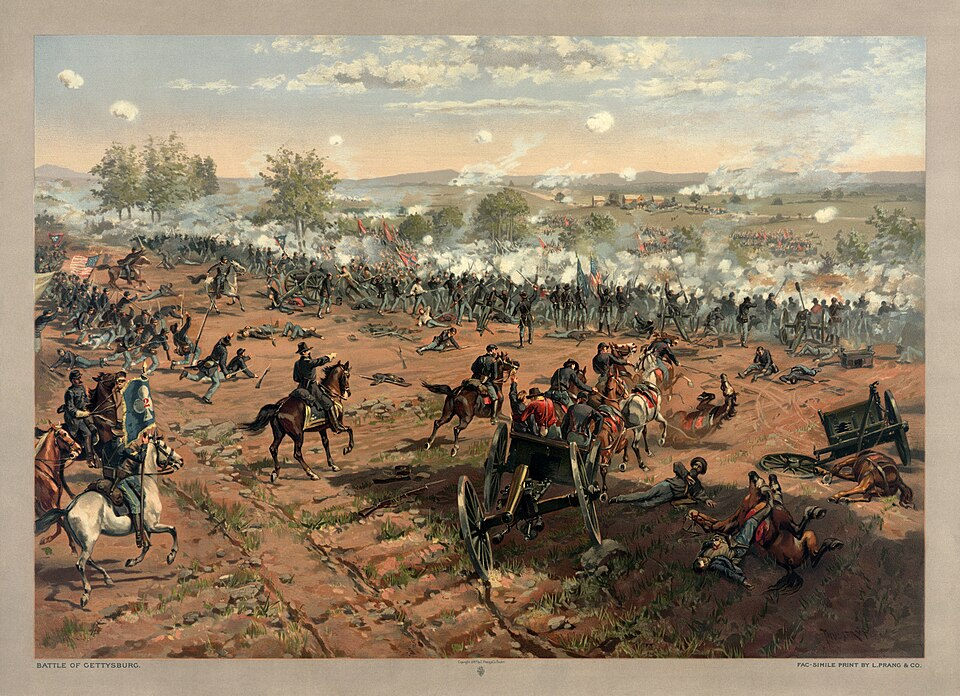
The three days of fighting that followed were among the most intense in the history of land warfare in the Western Hemisphere. The first day, 1 July, saw Confederate forces drive Union defenders through Gettysburg and onto the high ground south of the town; Cemetery Hill, Cemetery Ridge, and Culp’s Hill that would prove decisive. Lee, against the advice of his most trusted corps commander General James Longstreet, chose to attack these positions rather than maneuver around them. The second day’s attacks at Devil’s Den, Little Round Top, the Peach Orchard, and the Wheat Field came close to breaking the Union left but ultimately failed. The third day brought Pickett’s Charge, the direct infantry assault across a kilometer of open ground against the center of the Union line on Cemetery Ridge, ordered by Lee over Longstreet’s desperate objections. Of the approximately 12,500 Confederate soldiers who stepped off in Pickett’s Charge, fewer than half returned. The assault was broken, and Lee’s army with it.
The battle cost approximately 51,000 total casualties: 28,000 Confederate and 23,000 Union. Lee retreated to Virginia and never again mounted a major offensive operation. President Lincoln, visiting the battlefield four months later for the dedication of the Soldiers’ National Cemetery, delivered the Gettysburg Address, 272 words that redefined the purpose of the war and the meaning of the nation that was fighting it. The Union would be preserved. The Confederacy would not recover from Gettysburg.
Gettysburg was the battle that Robert E. Lee never should have fought, fought on ground he never should have chosen, in a charge he never should have ordered. And yet, on those three days in July 1863, the fate of the United States and of four million enslaved people hung in the balance on a Pennsylvania hillside.
WHAT THE DEADLIEST BATTLES IN HISTORY TEACH US
The Recurring Patterns of Military Catastrophe
Across the top 10 deadliest battles in history, certain strategic and tactical patterns recur with enough consistency to constitute genuine lessons for the study of military affairs. The first and most consistent is the catastrophic cost of ideological rigidity overriding operational reality. At Stalingrad, Hitler’s refusal to allow Paulus to break out of the encirclement condemned 300,000 men to death or captivity. At Kiev, Stalin’s refusal to authorise a withdrawal condemned 700,000 men to encirclement. At Gettysburg, Lee’s insistence on Pickett’s Charge against Longstreet’s advice condemned 12,500 Confederate soldiers to an assault with no realistic chance of success. The deadliest battles in history are disproportionately battles in which commanders allowed pride, prestige, or ideology to override the military calculus that should have governed their decisions.
The second pattern is the decisive advantage of prepared defense over unsupported infantry attack in the industrial age. The Somme and Verdun demonstrated this with brutal clarity in 1916 that no volume of preliminary bombardment could reliably destroy a prepared defensive system, and that infantry advancing across open ground against machine guns and artillery would suffer casualties that bore no relationship to any achievable military objective. Kursk demonstrated it again in 1943 in the era of armored warfare: even the most sophisticated tank attack cannot break through a sufficiently prepared defensive system at acceptable cost. These lessons were paid for in blood at virtually every entry on this list. They remain directly applicable to modern military planning.
The third pattern is the decisive importance of logistics and industrial capacity in determining the outcomes of attritional battles. Stalingrad, Verdun, the Somme, Leningrad, Moscow each of these battles was ultimately decided not by tactical brilliance on the day but by which side could continue to feed men, munitions, food, and equipment into the engagement for longer. Germany, fighting against industrial adversaries whose capacity exceeded its own and who were being supplied by American industrial output through Lend-Lease, could not sustain the attrition rates that the Eastern Front demanded. The Soviet Union, despite catastrophic initial losses, could. Industrial capacity and logistical sustainability are not the most dramatic elements of military history. They are the most decisive ones.
FREQUENTLY ASKED QUESTIONS
Q1. What is the deadliest battle in human history?
The Battle of Stalingrad (August 1942 – February 1943) is the deadliest battle in human history, with approximately 2 million total casualties including Soviet military, Axis military, and civilian deaths. More than four million combatants were engaged at various stages of the battle. It lasted 199 days and ended with the surrender of the German 6th Army under Field Marshal Friedrich Paulus, the first German field marshal ever captured. The Soviet Union lost more soldiers defending Stalingrad than the United States lost in the entire Second World War.
Q2. What was the bloodiest battle of World War I?
The Battle of the Somme (July – November 1916) was the bloodiest battle of World War I, producing approximately 1.1 million total casualties across British, French, and German forces. Its first day, 1 July 1916, was the bloodiest single day in British military history, with 57,470 British casualties including 19,240 killed. The Battle of Verdun (February – December 1916) was longer, 303 days and produced approximately 700,000 casualties. Both battles are considered symbols of World War I’s devastating attrition warfare.
Q3. What was the largest tank battle in history?
The Battle of Kursk (July – August 1943) is widely considered the largest tank battle in history. The battle involved approximately 6,000 tanks across both sides at various stages, with the tank engagement at Prokhorovka on 12 July 1943 featuring approximately 1,200 tanks fighting directly. Germany deployed its new Tiger I and Panther heavy tanks in the offensive, but the well-prepared Soviet defences, combined with Soviet foreknowledge of the German plan, prevented any significant German breakthrough. Combined casualties exceeded 800,000 on both sides.
Q4. What was the longest battle in history?
The Siege of Leningrad (September 1941 – January 1944) lasted 872 days, making it one of the longest sieges or battles in modern history. German and Finnish forces surrounded the Soviet city of Leningrad, cutting off food and supplies for nearly three years. Approximately 650,000 Leningrad civilians died of starvation in the winter of 1941–42 alone. The battle’s total casualties are estimated at approximately 1.1 million. The Battle of Verdun in World War I, at 303 days, was the longest sustained major ground battle of the First World War.
Q5. What is the significance of the Battle of Cannae?
The Battle of Cannae (216 BCE) is militarily significant as the tactical benchmark of annihilation warfare. Carthaginian general Hannibal Barca’s double envelopment of a Roman army twice his size, killing an estimated 50,000 to 70,000 Romans in a single day, produced the template for every major encirclement battle in subsequent military history. The German Schlieffen Plan of 1914 and the Wehrmacht’s encirclement battles on the Eastern Front in 1941 were all explicitly modelled on Cannae’s double-envelopment concept. It remains the most studied single battle in military history.
Q6. Why was Stalingrad the turning point of World War II?
Stalingrad was the turning point of World War II in Europe because it destroyed Germany’s best army and ended Germany’s strategic initiative on the Eastern Front permanently. The German 6th Army, the finest collection of divisions in the Wehrmacht was annihilated. Germany also lost 900 aircraft, 500 tanks, and 6,000 artillery pieces in losses it could not replace, given Soviet factories outproducing German ones. More fundamentally, Stalingrad was the first major German defeat to be publicly acknowledged in Germany, breaking the psychological myth of German invincibility. Germany never again launched a major strategic offensive in the East.
Q7. How many soldiers died at Gettysburg?
Approximately 51,000 total casualties were suffered at the Battle of Gettysburg (1–3 July 1863): approximately 28,000 Confederate and 23,000 Union. Of these, approximately 7,000 were killed outright on the battlefield, with the remainder wounded or captured. Pickett’s Charge on the third day was the battle’s single most costly action: of approximately 12,500 Confederate soldiers who participated, over half became casualties in less than an hour of fighting. Gettysburg was the bloodiest battle of the American Civil War and the largest battle ever fought in North America.
Q8. What caused such high casualties in World War I battles?
The catastrophically high casualties of World War I battles like the Somme and Verdun were caused by a fundamental imbalance between defensive and offensive technology. Machine guns, barbed wire, deep dugouts, and artillery could defend prepared positions far more effectively than infantry could attack them. Preliminary artillery bombardments, intended to destroy these defences, often failed because defenders sheltered in deep bunkers. Attacking infantry advancing across open ground faced machine gun fire at ranges of 1,000 metres or less. This tactical reality, combined with commanders’ persistent belief that sufficient bombardment would eventually solve the problem, produced the sustained attritional killing that defines the Western Front’s historical reputation.
CONCLUSION: THE MATHEMATICS OF HUMAN COST
The combined casualties of the top 10 deadliest battles in history exceed 10 million people. Most of them were soldiers doing what their nations, their commanders, and the military logic of their era demanded of them. Some of them were civilians whose only crime was proximity to a battle they had no role in starting and no power to stop. All of them were human beings whose deaths represent not just statistical footnotes in military history but the full weight of the grief and loss and horror of families, communities, and nations.
What the deadliest battles in history teach the student of military affairs is not that war is glorious, though individual courage within these battles sometimes achieved a genuine sublimity. What they teach is that the decisions made by commanders and political leaders before and during these battles carried consequences that no subsequent revision of orders, no belated exercise of common sense, and no amount of courage by the soldiers in the field could mitigate once the killing had begun. The 19,240 British soldiers who died on the first day of the Somme could not be brought back by Haig’s realisation that the preliminary bombardment had not destroyed the German machine-gun positions. The 300,000 men of the German 6th Army could not be saved by Hitler’s belated acknowledgement that Stalingrad could not be held. The 650,000 Leningraders who starved in the winter of 1941 to 1942 could not be rescued by the delayed relief operations that might have opened the corridor months earlier.
Military history is, at its most serious, the study of consequences. The deadliest battles in history are the most consequential events in the human story of organized violence: the moments when decisions made by individuals in positions of power translated into millions of deaths, the reshaping of continents, and the transformation of the global order. They deserve to be studied not with detachment but with the gravity that millions of human lives demand and with the determination that the lessons they contain should never need to be relearned at the same price.
About Armorexa
Armorexa is a dedicated military intelligence and defence analysis platform delivering in-depth, rigorously researched analysis across weapons systems, warfare technology, military history, and strategic doctrine for defence professionals, students, and military enthusiasts worldwide.
Hey there! I could have sworn I’ve been to this site before but after checking through some of
the post I realized it’s new to me. Anyways, I’m definitely happy I found it and I’ll be book-marking and checking back often!
Thanks Alot for visiting and giving your valuable time and input.