Strategic bombers are in a class of their own. They do not just drop bombs. They project power across continents, hold entire nations at risk from tens of thousands of feet, and serve as the airborne leg of nuclear deterrence for the world’s most powerful militaries. In 2026, only three countries operate strategic bombers at scale: the United States, Russia, and China. Each has a different philosophy. The US has invested in stealth and precision. Russia has doubled down on speed and payload. China is racing to close the gap with a platform the world has not yet officially seen in the air.
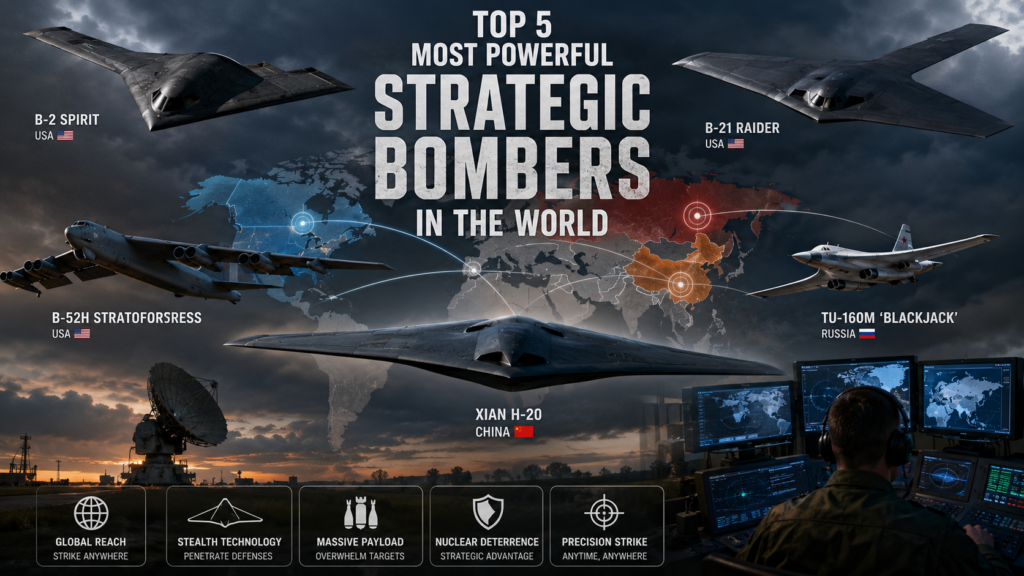
This article ranks the five most powerful strategic bombers currently operational or entering service. The ranking is based on a combination of stealth, range, payload capacity, weapons integration, strategic impact, and real-world deployment record. One entry is included that has not yet flown publicly but cannot be ignored. Each bomber gets a full breakdown. No fluff. Just what these aircraft actually are, what they carry, and why they matter on the modern battlefield.
Quick Comparison: All 5 Bombers at a Glance
| Aircraft | Country | Speed | Range | Payload | Stealth | Status 2026 |
| B-21 Raider | USA | Mach 0.95 | Intercontinental | ~13,600 kg | 6th-gen | Testing / IOC 2027 |
| B-2 Spirit | USA | Mach 0.95 | 11,000 km | 27,000 kg | 5th-gen | 19 operational |
| B-52H Stratofortress | USA | Mach 0.84 | 14,162 km | 31,500 kg | None | 76 active (B-52J pending) |
| Tu-160M | Russia | Mach 2.05 | 12,300 km | 40,000 kg | None | ~16 in service |
| Xian H-20 | China | Subsonic (est) | 8,500-10,000 km | ~45,000 kg (est) | Flying wing | Not yet operational |
1. B-21 Raider (USA)
The World’s Most Advanced Strategic Bomber
The B-21 Raider is the most advanced combat aircraft ever built. That statement is not marketing. It is the most accurate description of what Northrop Grumman and the US Air Force have been developing since the Long Range Strike Bomber programme began in 2011.
It made its first public flight on November 10, 2023, at Palmdale, California. Since then, it has moved through a flight test campaign at Edwards Air Force Base with a speed that surprised even seasoned program observers. In May 2026, Northrop Grumman confirmed the Combined Test Force had compressed a 180-day test plan into 73 days, including successful aerial refueling demonstrations that confirm the aircraft can operate on intercontinental missions without range limitations.
The B-21 is described by Northrop Grumman and the Air Force as a sixth-generation aircraft. That designation refers not just to stealth but to its entire design architecture: open systems that can be upgraded continuously, an integrated sensor and communications suite, AI-assisted mission systems, and a manufacturing process that uses digital twin technology to drive down both build costs and maintenance burden. The US Air Force plans to procure at least 100 airframes, with first deliveries to Ellsworth Air Force Base planned for 2027.
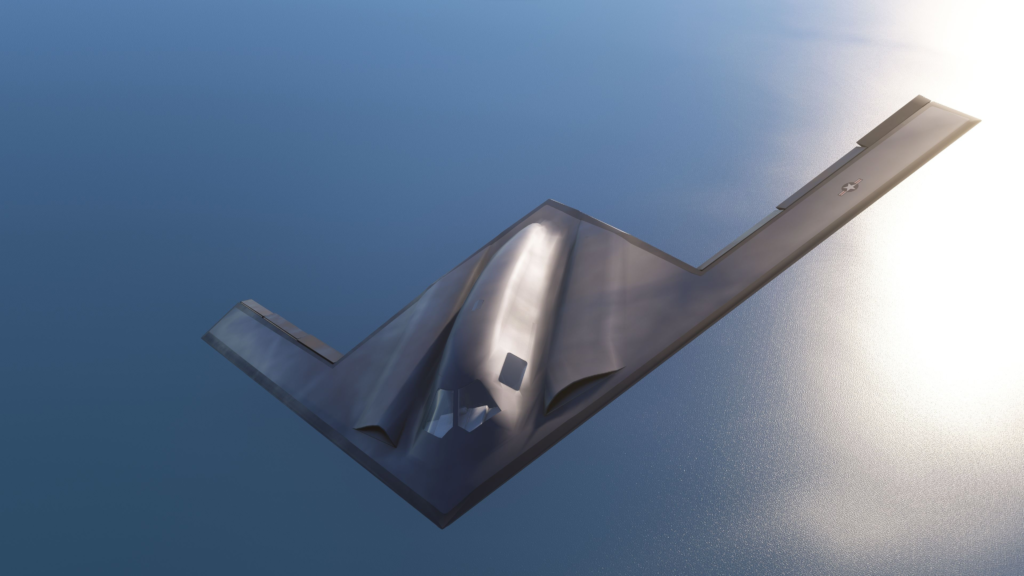
| KEY SPECIFICATIONS Manufacturer: Northrop Grumman Type: 6th-generation stealth strategic bomber First flight: 10 November 2023 Speed: Subsonic, approx. Mach 0.95 Range: Intercontinental (classified; aerial refuelling confirmed) Payload: Approximately 13,600 kg (classified) Stealth: Most advanced low-observable design ever built Weapons: Conventional and nuclear; B61-12 gravity bomb; AGM-181 LRSO (future) Status 2026: Advanced flight testing; IOC planned 2027 Unit cost: Approx. $692 million per aircraft (FY2019 dollars) Fleet planned: Minimum 100 airframes |
What Makes the B-21 Different
Every strategic bomber before the B-21 was optimised for a specific era’s threat environment. The B-52 was built for high-altitude Cold War missions. The B-2 was built to penetrate Soviet air defences. The B-21 was built for a world where China and Russia have spent thirty years reverse-engineering those threats and building countermeasures to both.
Its stealth architecture goes beyond the B-2. It is designed to defeat radar systems across a broader range of frequencies, including the low-frequency bands that give some older stealth aircraft problems. Its surface coatings are easier to maintain than the B-2’s labour-intensive tiles, which is a significant operational factor when you need to generate sorties at wartime tempo.
The open architecture approach is arguably its most important long-term advantage. The avionics and weapons systems are designed to be upgraded through software and modular hardware rather than costly structural modifications. In a conflict environment where adversary systems are improving continuously, the ability to upgrade mid-conflict matters enormously.
Combat Role in 2026
The B-21 is still in testing but its strategic role is already defined. It will carry both conventional precision munitions and nuclear weapons, including the B61-12 guided nuclear gravity bomb and eventually the AGM-181 Long Range Stand-Off (LRSO) nuclear cruise missile currently in development by RTX Corporation. It will serve as the penetrating strike capability that neither the B-52 nor any other current bomber can provide against a peer adversary’s air defences.
The FY2027 US defence budget, released in April 2026, allocated $6.1 billion to accelerate B-21 development and early production. That level of investment signals the seriousness with which the Air Force views the timeline pressure from China’s H-20 programme and the broader deterioration of the security environment in the Indo-Pacific.
| The B-21 is in a category of its own. No other strategic bomber in the world can penetrate the air defences China and Russia are currently fielding. When it reaches full operational capability, it will redefine the benchmark for everything that follows. |
2. B-2 Spirit (USA)
The Strategic Bomber That Changed Everything
The B-2 Spirit has been the world’s only operational stealth strategic bomber for over two decades. It entered service in 1997 and has never lost a single airframe in combat. That record alone says more about its capability than any specification sheet. Only 21 were built. The unit cost exceeded $2.1 billion at the time, making it by far the most expensive combat aircraft in history on a per-unit basis. The small fleet size has always been its primary limitation. But what those 21 aircraft represent in terms of strategic capability is wildly disproportionate to their number.
In 2025, six B-2s were deployed to Diego Garcia in the Indian Ocean and used to strike Iranian nuclear and military facilities during Operation Midnight Hammer. These strikes demonstrated what the B-2 was always designed for: penetrating some of the most advanced air defence networks in the world and delivering precision munitions against hardened, deeply buried targets. No other aircraft on the planet could have done what the B-2 did in that operation.
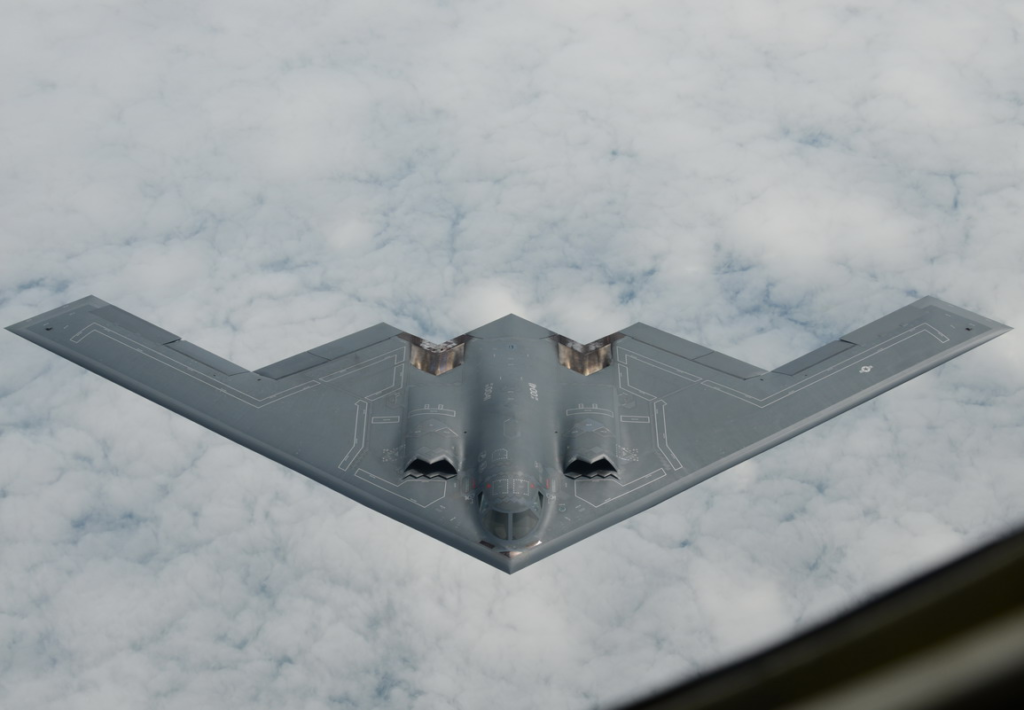
| KEY SPECIFICATIONS Manufacturer: Northrop Grumman Type: 5th-generation stealth strategic bomber Entered service: 1997 Speed: Subsonic, approx. Mach 0.95 Range: 11,000 km unrefueled; 18,000 km+ with aerial refueling Combat radius: 6,500 km Payload: Up to 27,000 kg post-upgrade Weapons: GBU-57 Massive Ordnance Penetrator (MOP); GBU-28 bunker buster; B61-12 nuclear; AGM-158 JASSM Radar cross section: Approximately 0.001 sq meters (estimated) Crew: 2 pilots Fleet: 19 airframes remaining (one lost in 2008 accident, one retired) Operating cost: Approx. $135,000 per flight hour |
The GBU-57: A Weapon Only the B-2 Can Deliver
The B-2’s most distinctive weapon is the GBU-57A/B Massive Ordnance Penetrator. Each bomb weighs over 13,600 kg and is designed to penetrate up to 60 metres of reinforced concrete before detonating. The B-2 can carry two of them simultaneously. No other aircraft in the world can carry this weapon at all.
This is not an abstract capability. The GBU-57 was specifically designed to destroy deeply buried hardened bunkers of the type used for nuclear weapons storage and command facilities. Its deployment in the 2025 Iran operation confirmed it in combat for the first time, and the results validated years of testing. The targets hit included underground facilities that had been assessed as immune to conventional air attack.
Stealth That Still Works
When the B-2 was designed in the 1980s, its stealth technology was decades ahead of anything else in the world. The question that has occupied analysts for the past decade is whether that technology remains effective against modern radars. The honest answer is that it largely does for frontal and upper aspect angles, though rear-aspect detection risk has increased with the proliferation of L-band and VHF radars. The B-2’s actual RCS figures remain classified, but independent estimates consistently place it below 0.01 square meters in optimized aspect angles.
The B-2 remains the only aircraft other than the B-21 that can realistically penetrate Chinese and Russian integrated air defence systems for a precision strike mission. That will remain true until the B-21 accumulates enough airframes to absorb the B-2’s mission set, which is unlikely before the early 2030s.
| The B-2 is the most battle-proven stealth strategic bomber in the world. With 19 airframes remaining and the B-21 still years from full production, it carries an irreplaceable strategic burden that nothing else can currently absorb. |
3. B-52H Stratofortress (USA)
B-52H Stratofortress: 70 Years and Still Flying
The B-52 Stratofortress first flew in 1952. The airframes currently in service were built between 1961 and 1962. The youngest B-52 in the US Air Force fleet is older than most of the pilots flying it. And yet in March 2026, B-52Hs were conducting strike operations against Iranian command and control posts during the opening phase of US Central Command operations, delivering precision-guided and standoff weapons against defended targets.
That combination of age and relevance is not accidental. It is the result of continuous, deliberate investment in upgrading an airframe whose fundamental advantage was never speed or stealth but payload capacity, range, and the ability to carry virtually every weapon in the US arsenal.
The US Air Force operates 76 B-52Hs, all undergoing a comprehensive modernisation programme that will eventually result in redesignation to B-52J. The centrepiece of this upgrade is the replacement of the original Pratt & Whitney TF33 engines, in service since the early 1960s, with Rolls-Royce F130 commercial turbofan engines. These new engines deliver up to 30 percent better fuel efficiency, meaningfully extending the aircraft’s already impressive 8,800-mile unrefuelled range. A new AESA radar entered test flight from Boeing’s San Antonio facility in December 2025, derived from the F/A-18 Super Hornet’s radar system.
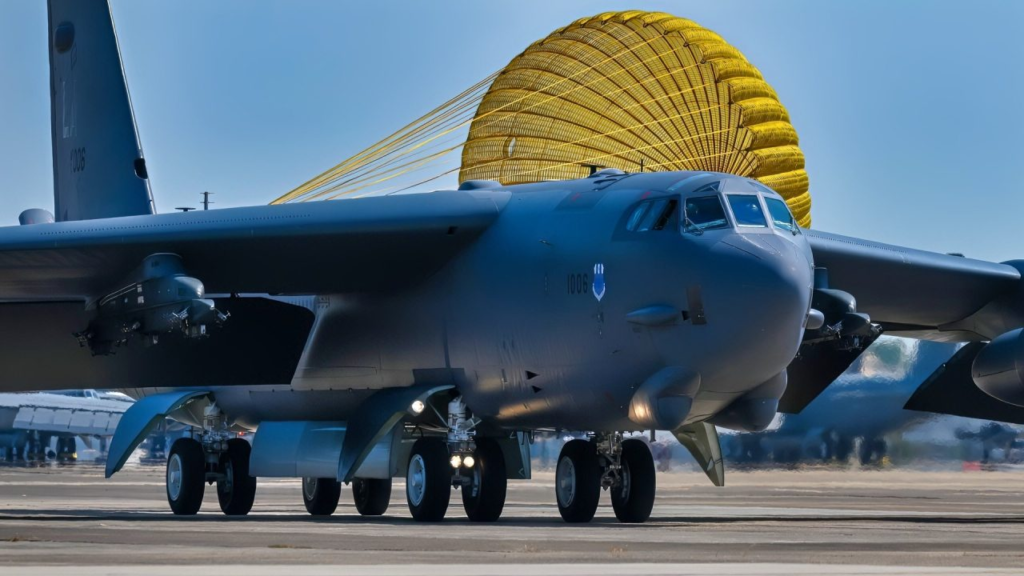
| KEY SPECIFICATIONS Manufacturer: Boeing Type: Long-range strategic bomber (conventional and nuclear) In service: 1955 to present (B-52H variant from 1961) Speed: Mach 0.84 (650 mph) Range: 8,800 miles (14,162 km) unrefueled Service ceiling: 50,000 feet Payload: Up to 31,500 kg Nuclear weapons: 12 x AGM-86B ALCMs externally; 8 internally; future AGM-181 LRSO Conventional weapons: AGM-158 JASSM-ER; GBU-31/38 JDAM; AGM-86C/D CALCM; naval mines Crew: 2 pilots, navigator, EWO Active fleet: 76 airframes B-52J IOC: Expected early 2030s Service life target: 2050 and beyond |
The Arsenal Bomber Concept
The B-52 is no longer a penetrating bomber. It has not operated in contested airspace in any meaningful sense since the 1991 Gulf War, and even then it operated from high standoff ranges. What the B-52 does is serve as an airborne magazine: a platform that can carry an enormous quantity of standoff weapons to a launch point outside an adversary’s inner air defence ring, then release cruise missiles that cover the final leg of the journey.
The AGM-86B air-launched cruise missile, with a range of approximately 2,500 km, gives the B-52 a strike radius that extends far beyond what its own unrefuelled range would suggest. A B-52H launching from Diego Garcia can hold targets across the entire Middle East at risk without entering a defended air zone. The same principle applies in the Pacific, where B-52Hs operating from Guam or Diego Garcia can threaten targets across the first and second island chains.
The future AGM-181 LRSO nuclear cruise missile, currently in development, will extend this capability into the nuclear domain and allow the B-52 to remain a credible nuclear delivery platform well into the 2040s alongside the B-21.
Why It Still Ranks Third
A bomber with no stealth and a design from the 1950s ranking among the world’s top five strategic bombers in 2026 tells you something important about the combination of payload capacity, range, and weapons versatility that the B-52 brings. No other aircraft carries the volume of standoff munitions that the B-52 can put in the air simultaneously. In a conflict scenario where the opening moves are made by B-2s and B-21s clearing corridors through air defenses, the B-52 is the follow-on force that exploits those corridors with overwhelming firepower.
| The B-52 is the most operationally proven long-range bomber in history. It has been in every major US conflict since Vietnam and will be flying missions in 2050. Its rank here reflects not just current capability but the massive investment being made to keep it lethal for decades to come. |
4. Tupolev Tu-160M ‘Blackjack’ (Russia)
Tu-160M White Swan: Russia’s Fastest Bomber
The Tupolev Tu-160 is the fastest and heaviest combat aircraft currently flying anywhere in the world. It weighs approximately 275 tones at maximum takeoff weight. Its four Kuznetsov NK-32 afterburning turbofan engines push it past Mach 2.05, making it faster than most dedicated interceptor aircraft. NATO calls it the Blackjack. Russians call it the White Swan, a name that captures both its swept white fuselage and the peculiar elegance of an aircraft this large moving at twice the speed of sound.
The original Tu-160 entered Soviet Air Force service in 1987. The modernised Tu-160M variant, with updated NK-32-02 engines, digital avionics, and expanded weapons compatibility, entered Russian Aerospace Forces service with the first new-production aircraft delivered in 2022. Russia plans to overhaul 16 existing airframes and build at least 50 new Tu-160Ms, a goal whose achievability has been complicated by the sanctions regime and the industrial demands of the Ukraine conflict.
The Tu-160 has been used in combat. Its first combat deployment came in November 2015 over Syria, where it launched Kh-101 and Kh-555 cruise missiles against targets near Raqqa and Aleppo. Since 2022 it has participated in multiple standoff missile strikes against Ukrainian electrical infrastructure, operating from Engels-2 Air Base in Saratov Oblast and releasing Kh-101 cruise missiles from standoff ranges without approaching Ukrainian air defence coverage.
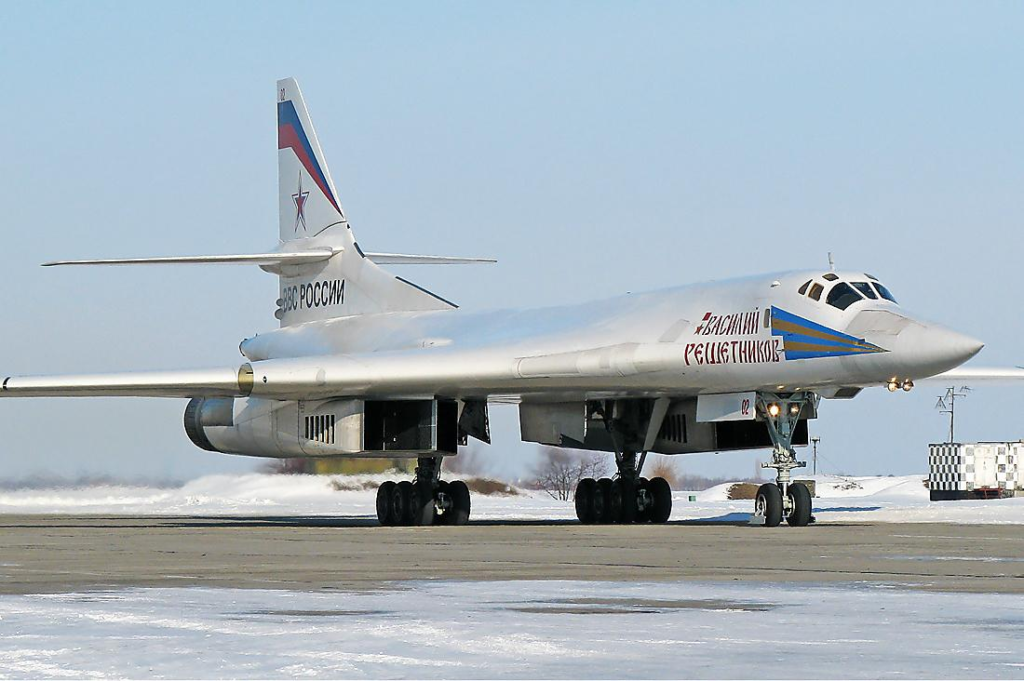
| KEY SPECIFICATIONS Manufacturer: Tupolev Design Bureau / Kazan Aircraft Plant Type: Supersonic variable-sweep wing strategic bomber Crew: 4 (pilot, co-pilot, navigator, systems operator) Speed: Mach 2.05 (2,220 km/h maximum) Range: 12,300 km unrefueled (7,640 miles) Service ceiling: 52,493 feet (16,000 m) Maximum payload: 40,000 kg (88,185 lb.) Primary weapons: Kh-101 cruise missile (range 4,500 km); Kh-102 nuclear variant; Kh-55; up to 12 cruise missiles internally Engines: 4 x Kuznetsov NK-32-02 afterburning turbofans Airframe: Variable-sweep wing; titanium and aluminum alloy structure Active fleet: Approximately 16 in service (as of 2026) Stealth: None; no radar-absorbing design features |
Speed as a Strategic Tool
The Tu-160’s Mach 2 capability serves a specific operational purpose. At supersonic dash speeds, it can close on launch points faster than adversary interceptors can be scrambled and positioned. It also provides a degree of protection during egress after weapons release. This is fundamentally different from the US approach, which prioritises stealth over speed. Russia chose to make the bomber hard to catch rather than hard to detect.
The Kh-101 cruise missile is the weapon that makes the Tu-160 genuinely dangerous in today’s environment. With an estimated range of up to 4,500 km and a conventional warhead, it allows the Tu-160 to strike targets across Europe from Russian airspace without crossing any defended perimeter. The nuclear-tipped Kh-102 variant provides Russia with a long-range airborne nuclear strike capability from standoff ranges that complicate any adversary’s defence planning.
The Stealth Problem
The Tu-160 has no stealth capability at all. Its radar cross section is enormous. A Ukraine-operated system detected and engaged a Tu-22M Backfire at approximately 300 km during the Ukraine conflict, a range that illustrates how detectable these large, non-stealthy bombers are to modern radar systems. The Tu-160 would face similar detection challenges in any conflict against a peer adversary with advanced integrated air defence.
This is why Russia operates the Tu-160 exclusively as a standoff missile platform. It does not fly into defended airspace. It flies to a launch point outside the engagement envelope, releases its cruise missiles, and turns for home. That is a credible and dangerous capability, but it is a fundamentally different strategic tool from a stealth bomber that can operate inside defended airspace.
| The Tu-160 is a Cold War masterpiece still earning its place in 2026. Its Mach 2 speed and 40-tonne payload are unmatched by anything else flying. Its lack of stealth keeps it off the target list for missions that require penetration. Russia cannot build the PAK-DA to replace it, so the Tu-160M will carry Russia’s airborne nuclear deterrent for decades more. |
5. Xian H-20 (China)
Xian H-20: China’s Stealth Strategic Bomber That Has Not Flown Yet
The Xian H-20 is the most discussed strategic bomber in the world that nobody has officially seen fly. China’s existence of the programme was confirmed in 2016. By 2018 officials declared it was making ‘great progress.’ In 2024, the PLAAF Air Force Deputy Commander issued what amounted to a teaser announcement that it was nearly ready. In 2025, public information went almost completely dark.
As of early 2026, the H-20 has not made a public first flight and has not entered operational production. General Stephen Davis, commander of US Air Force Global Strike Command, characterized China’s bomber force as a ‘regional bombing force’ still grappling with the engineering challenges of genuine high-end low observability. Multiple US intelligence assessments now project that the H-20 will not reach operational capability until the 2030s.
So why does it rank fifth on this list? Because when it does fly, and most credible analysts believe it eventually will, it will represent the most significant shift in the strategic bomber balance since the B-2 entered service. China does not build weapons systems for show. The H-20 is real, its development is serious, and its projected capabilities deserve analysis.
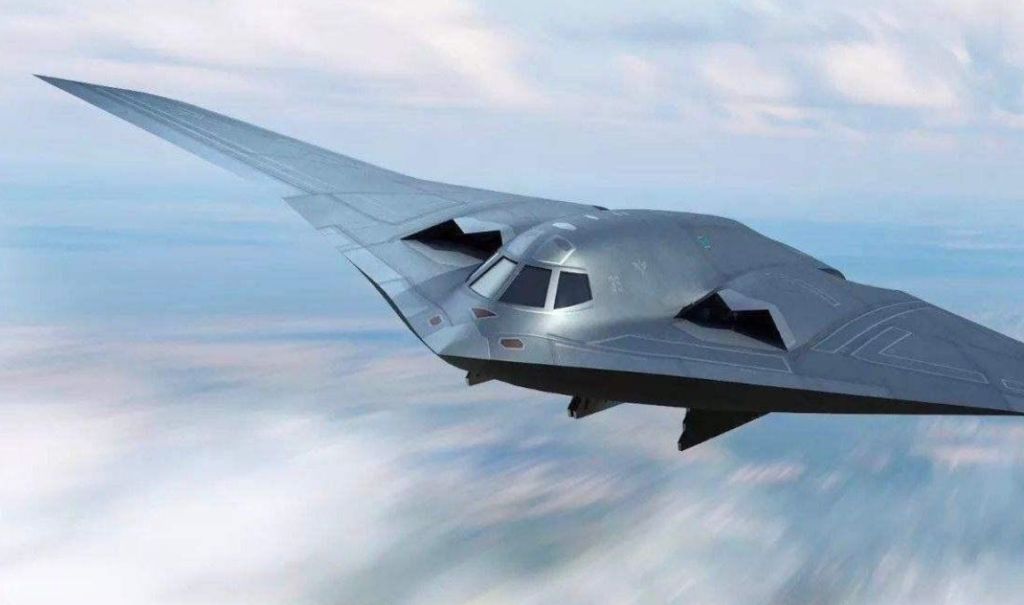
| PROJECTED SPECIFICATIONS (based on open-source intelligence) Manufacturer: Xian Aircraft Industrial Corporation (AVIC) Type: Subsonic stealth strategic bomber (flying wing design) Status: Under development; not yet operational as of 2026 Speed: Subsonic (estimated Mach 0.8) Range: 8,500 km minimum; up to 10,000 km estimated; 13,000 km with aerial refueling Combat radius: Approximately 5,000 km Payload: Estimated over 45,000 kg (unconfirmed) Weapons: Nuclear and conventional; likely PL-15 air-to-air for self-defense; land attack cruise missiles Design: Flying wing, similar planform to B-2 Note: All specifications are intelligence estimates; China has not officially released any figures |
What China Is Actually Building
From what analysts can piece together through satellite imagery, Chinese defence publications, and US intelligence reporting, the H-20 is a flying wing stealth bomber broadly comparable in concept to the B-2 Spirit. A flying wing is the optimal aerodynamic configuration for a stealth bomber because it minimises radar-reflective surfaces while maximising internal volume for fuel and weapons.
China’s engineers at the Xian Aircraft Industrial Corporation have the advantage of studying thirty years of publicly available information about the B-2’s design, and the documented history of Chinese cyber operations against Lockheed Martin and other US defence contractors adds context to the sophistication of the design approach. The projected range of 8,500 to 10,000 km would give the H-20 the ability to strike targets across the entire Indo-Pacific region, including Guam, from mainland China, and to reach the continental United States with aerial refuelling support.
The Real Problem: Engines and Experience
China’s strategic weakness in advanced aircraft programmes has consistently been propulsion. The difficulty of producing high-performance jet engines domestically has affected every major Chinese aviation programme from the J-20 fighter to the Y-20 transport. A strategic bomber requires engines capable of long-endurance subsonic cruise at altitude with a heavy fuel and weapons load. China’s WS-20 turbofan, developed for the Y-20 transport, has been suggested as a candidate for the H-20, but whether it meets the reliability and performance requirements for a strategic bomber role remains unverified.
The information blackout on the programme in 2025 is the most telling data point of all. When China is confident in a programme, it publicises it. The J-35 carrier fighter, the J-36 sixth-generation prototype, the Type 003 carrier all received extensive official coverage as milestones were reached. The H-20’s silence suggests a programme working through significant technical challenges rather than one approaching a triumphant public debut.
| The H-20 earns fifth place not on current performance but on strategic trajectory. If China solves its propulsion and manufacturing challenges, a flying operational H-20 fleet in the 2030s would fundamentally alter the balance of long-range strike power in the Indo-Pacific. The question is not whether China intends to build it, but whether it can. |
Final Assessment: How the Balance Stands in 2026
The gap between the United States and everyone else in strategic bomber capability remains wide, but it is narrowing in ways that matter. The US operates the only stealth strategic bombers in the world that are currently flying and combat proven. The B-2 Spirit has demonstrated its capability in the Iran strikes of 2025 in a way that eliminated any lingering doubt about its operational effectiveness. The B-52 carries an irreplaceable volume of standoff weaponry. And the B-21 Raider is on the verge of entering service with capabilities that no adversary’s air defense system is currently designed to handle.
Russia’s Tu-160M is a formidable platform for standoff cruise missile delivery but has no path to stealth. The PAK-DA program, Russia’s intended stealth bomber, has been delayed for nearly two decades and shows no credible sign of entering production before the 2030s at the earliest. Russia’s strategic air arm is ageing and cannot be meaningfully reinforced under current sanctions and industrial constraints.
China is the variable that drives every long-range bomber acquisition decision the US makes today. The H-20’s delays buy time, but time is not unlimited. When China eventually fields a credible stealth bomber in meaningful numbers, it will complete the third leg of what would effectively be a global strategic bomber triad outside US control, joining Russia’s standoff platforms and China’s own growing nuclear forces.
The B-21 exists because of that calculus. The $6.1 billion FY2027 budget allocation for it exists because of that calculus. Every dollar spent accelerating B-21 production is, in the most direct sense, a response to a bomber that has not yet flown. That is how consequential strategic bombers are, even in 2026. They do not just shape wars. They shape the decisions that prevent them.
The aircraft that can go anywhere, unseen, and strike anything defines the floor of a nation’s strategic options. Everything else is a ceiling below it.